US Senate passes bipartisan bill on forced organ harvesting in China
Synopsis
In a rare show of bipartisan unity, the US Senate has passed a bill that would sanction Chinese officials responsible for forced organ harvesting — a practice the legislation links specifically to Falun Gong practitioners. Co-led by Republican Ted Cruz and Democrat Jeff Merkley, the bill now heads to a House vote that will determine whether it becomes the most concrete US legislative action yet on China's transplant system.
Key Takeaways
The US Senate passed the Falun Gong and Victims of Forced Organ Harvesting Protection Act on 30 September 2026 .
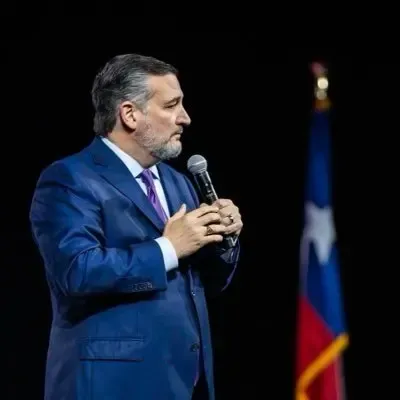
The bill was co-led by Republican Senator Ted Cruz of Texas and Democratic Senator Jeff Merkley of Oregon.
It would impose targeted sanctions on officials responsible for forced organ harvesting in China and require a State Department report on China's transplant system.
The measure has 10 bipartisan co-sponsors from both Republican and Democratic parties.
The legislation was first introduced in March 2026 ; it now moves to the House of Representatives for approval before it can reach the President.
China outlawed Falun Gong in 1999 and has denied allegations of forced organ harvesting, which it attributes to fabrication by the movement's supporters.
The US Senate on 30 September 2026 passed bipartisan legislation seeking to impose sanctions on officials responsible for forced organ harvesting in China, advancing a measure that has drawn support from lawmakers across party lines. The bill now moves to the House of Representatives, where it must win approval before reaching the President's desk.
What the Legislation Does
The Falun Gong and Victims of Forced Organ Harvesting Protection Act was co-led by Republican Senator Ted Cruz of Texas and Democratic Senator Jeff Merkley of Oregon, both members of the Senate Foreign Relations Committee. The bill would direct the US Secretary of State to report to Congress on the Chinese Communist Party's organ harvesting policies and transplant system, and authorise targeted sanctions against individuals found responsible for the practice.
Cruz and Merkley introduced the legislation in March 2026. Cruz had separately introduced the Falun Gong Protection Act in March 2025, signalling sustained congressional focus on the issue.
What Senators Said
'The Chinese Communist Party continues to target Falun Gong practitioners through its brutal, state-sponsored organ harvesting industry,' Cruz said following the Senate vote. 'These atrocities are an assault on religious liberty and fundamental human rights. I am proud to have worked with Senator Merkley to get this bipartisan bill through the Senate, and I urge my colleagues in the House to pass it and send it to the President's desk.'
Merkley cited reports implicating multiple vulnerable groups. 'China's campaign of repression and human rights abuses continues to have horrific consequences, including reports of forced organ harvesting from vulnerable groups across the PRC,' he said. 'We must stand up for the victims of these crimes, and our bipartisan effort holds the Chinese government accountable for its abuses.'
Broad Bipartisan Support
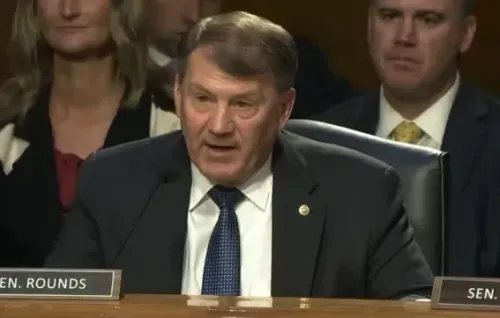
The bill's co-sponsors span both parties. On the Republican side, Senators Todd Young, Ron Johnson, Mike Rounds, Roger Marshall, Dave McCormick, and James Lankford are listed as co-sponsors. Democratic co-sponsors include Senators Adam Schiff, Ron Wyden, Catherine Cortez Masto, and Raphael Warnock.
Background on Falun Gong and China's Crackdown
Falun Gong was founded by Li Hongzhi in China in the early 1990s and grew rapidly over that decade. Chinese authorities outlawed the spiritual movement in 1999 and launched a sustained campaign against its practitioners. According to materials released by Cruz's office, authorities have carried out mass arrests, torture, and detention of practitioners in labour camps, with some allegedly subjected to forced organ harvesting. These claims have not been independently verified by the Chinese government, which has consistently denied them.
Wider Context: US-China Human Rights Tensions
The Senate's passage comes as human rights remain a persistent flashpoint in US-China relations. American legislators from both parties have pursued bills and congressional scrutiny over religious freedom, treatment of dissidents, and China's policies in Hong Kong and Xinjiang. This legislation represents one of the more concrete legislative responses, moving beyond resolutions to propose enforceable sanctions. The bill's next test will be the House, where leadership scheduling and floor time will determine how quickly — if at all — it advances.
Point of View
But the House remains the real test — and historically, human rights legislation targeting China has stalled there under competing trade and strategic pressures. What distinguishes this measure from previous resolutions is its enforcement teeth: sanctions, not just condemnations. Yet the Chinese government's blanket denial of organ harvesting allegations means any State Department report will be contested before it is even published. The bipartisan breadth — from Schiff to Cruz, Wyden to Johnson — suggests this is not purely performative, but translating Senate momentum into a House floor vote will require political will that past Congresses have not reliably demonstrated on China human rights bills.
NationPress
30 Sept 2026
Frequently Asked Questions
What is the Falun Gong and Victims of Forced Organ Harvesting Protection Act?
It is a bipartisan US Senate bill passed on 30 September 2026 that would impose targeted sanctions on Chinese officials responsible for forced organ harvesting and require the US Secretary of State to report to Congress on China's organ transplant system and related Communist Party policies. The bill was co-led by Senators Ted Cruz and Jeff Merkley.
What happens next after the Senate passed this bill?
The bill now moves to the US House of Representatives, where it must pass before being sent to the President for signature. There is no confirmed House floor date yet.
Who are the co-sponsors of the bill?
The bill has ten co-sponsors: Republican Senators Todd Young, Ron Johnson, Mike Rounds, Roger Marshall, Dave McCormick, and James Lankford, and Democratic Senators Adam Schiff, Ron Wyden, Catherine Cortez Masto, and Raphael Warnock.
Why does the bill focus on Falun Gong practitioners?
The legislation specifically addresses allegations that Falun Gong practitioners in China have been subjected to forced organ harvesting. According to materials from Senator Cruz's office, Chinese authorities have conducted mass arrests, torture, and labour camp detentions of practitioners since the movement was outlawed in 1999, with some allegedly killed for their organs. China denies these allegations.
How does this bill fit into broader US-China relations?
Human rights has been a persistent source of friction between Washington and Beijing, with US lawmakers previously pursuing legislation on religious freedom, Hong Kong, and Xinjiang. This bill is notable for proposing enforceable sanctions rather than non-binding resolutions, making it one of the more concrete legislative actions targeting Chinese officials over human rights abuses.