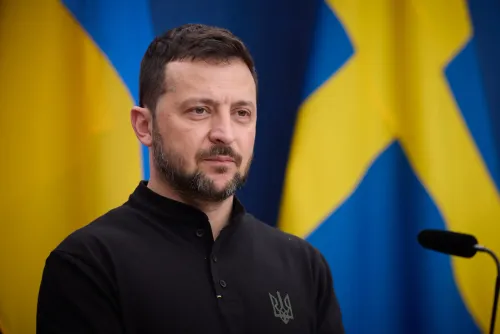
Trump warns Zelensky: Make deal with Russia now or face worse terms
Synopsis
Trump's Oval Office warning to Zelensky was unusually direct: settle now or Ukraine's negotiating position will only worsen. With envoy Steve Witkoff heading to Moscow after Oslo talks, the US is pushing hard for a deal — and Trump's claim that Russia and Ukraine lost 32,000 people last month alone signals why he sees the clock as ticking against Kyiv.
Key Takeaways
President Trump warned Zelensky on 21 October 2026 that delaying a peace deal with Russia would leave Ukraine with worse terms than currently available.
Trump claimed Russia and Ukraine had together lost 32,000 people in the previous month — a figure he presented as his own assessment, not independently verified.
Trump's special envoy Steve Witkoff was reportedly preparing to travel to Russia following diplomatic discussions in Oslo .
Trump disclosed he had personally asked Vladimir Putin to release American prisoner Stephen Hubbard , hinting at developments within days.
Trump cited deep personal hostility between Putin and Zelensky as a key obstacle to reaching a negotiated settlement.
Trump criticised US spending of 'hundreds of billions of dollars' on Ukraine and said European governments were also growing fatigued by the financial burden.
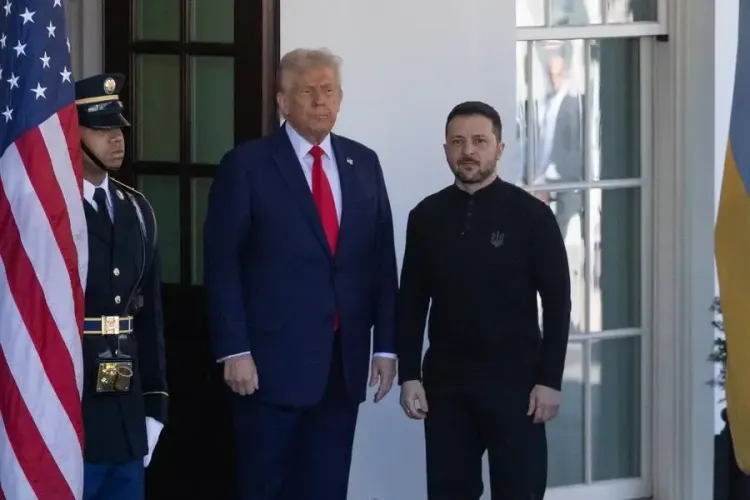
US President Donald Trump on 21 October 2026 issued a pointed warning to Ukrainian President Volodymyr Zelensky, saying that continued delays in reaching a peace agreement with Russia could leave Kyiv in an increasingly untenable position. Speaking from the Oval Office alongside Vice President JD Vance, Trump argued that Moscow was steadily gaining territory and that Ukraine might no longer be able to secure the terms that were available earlier in the conflict.
Trump's Stark Assessment of the Battlefield
Trump painted a bleak picture of Ukraine's military situation, claiming Russian forces were continuing to capture territory week by week. 'Russia's a big machine. They just keep grinding forward, and that's what they've done,' he told reporters. He argued that Russia's larger population gave it a structural advantage in sustaining a prolonged war of attrition, and that Ukraine faced greater demographic constraints in keeping pace with casualties.
'They've taken a very large piece of land. And, you know, you can say that Ukraine is doing well or poorly, but the land gets bigger and bigger all the time, week by week,' Trump said. It should be noted that his description of battlefield developments was not accompanied by independently verified territorial data.
Warning Directly to Zelensky
Trump's remarks carried an explicit message for the Ukrainian leader. 'Ukraine has to want to settle this war. Zelensky has to want to settle this war. And if he doesn't, I think it's going to be a very bad thing,' he said. The President argued that Zelensky had already missed a more favourable window for negotiations, referencing a previous Oval Office meeting involving the two leaders and Vance. 'Could have made a good deal then. Could have made a much better deal then probably, possibly, that he can make now,' Trump said.
US Spending and European Fatigue
Trump also renewed his criticism of the scale of American financial and military support for Ukraine, claiming Washington had spent hundreds of billions of dollars backing Kyiv with limited returns. He acknowledged arrangements involving Ukrainian land and rare-earth resources but maintained that the overall balance was unfavourable for the United States. He further suggested that European governments were also growing weary of the financial burden of sustaining Ukraine's war effort.
Trump estimated that Russia and Ukraine had together lost 32,000 people during the previous month, describing most as soldiers. The figure was presented as his personal assessment and was not independently verified. He cited the continuing casualties as a primary driver of his urgency to reach a settlement. 'I thought — you know, I settled eight wars. I thought that would be the easiest one,' he said.
Personal Hostility Between Putin and Zelensky Cited as Obstacle
Trump attributed much of the difficulty in reaching a deal to what he described as deep personal animosity between Russian President Vladimir Putin and Zelensky. 'The hatred between President Putin and President Zelensky is tremendous. I think that's most of the reason they haven't been able to make a deal, actually,' he said. Asked whether a face-to-face meeting between the two leaders would be necessary, Trump said it was not essential, adding: 'They don't have to be in the same room; I guess I can do it another way,' without elaborating on what alternative diplomatic format he envisaged.
American Prisoner and Diplomatic Moves
In a separate disclosure, Trump revealed that he had personally raised the case of American citizen Stephen Hubbard, who is being held in Russia, directly with Putin. 'I've been talking to President Putin about Mr. Hubbard. I've been talking to him at length. I've asked him to release him, let's see what happens,' Trump said. He declined to confirm whether an agreement was imminent but suggested reporters revisit the matter within a few days, adding: 'I'd love to get him back. It's time to have Mr. Hubbard back.'
The remarks came as Trump's special envoy, Steve Witkoff, was reportedly preparing to travel to Russia following diplomatic discussions held in Oslo, as part of broader efforts to advance a negotiated end to the war. No agreement or concrete timetable has been announced.
Point of View
Combined with repeated invocations of US spending and European fatigue, signals that Washington's patience is approaching a limit, and that future American support could become conditional on Kyiv's willingness to negotiate. What mainstream coverage tends to underplay is the compounded pressure: Trump's envoy is moving toward Moscow simultaneously with this public pressure campaign on Kyiv, a sequencing that structurally advantages Russia at the table. The unverified casualty figure of 32,000 in a single month, offered without sourcing, is the kind of claim that can shape public perception of the war's trajectory regardless of its accuracy.
NationPress
21 Oct 2026
Frequently Asked Questions
What did Trump say to Zelensky about the Russia-Ukraine war?
Trump warned Zelensky that continuing to delay a peace settlement with Russia would leave Ukraine in a worse negotiating position, arguing that Moscow was steadily gaining territory. He said Zelensky had already missed a more favourable opportunity for a deal and that further delay would be 'a very bad thing' for Ukraine.
Who is Steve Witkoff and what is his role in Russia-Ukraine talks?
Steve Witkoff is Trump's special envoy who was reportedly preparing to travel to Russia following diplomatic discussions in Oslo. His mission is part of the administration's broader effort to broker a negotiated end to the conflict between Russia and Ukraine.
Who is Stephen Hubbard and what did Trump say about him?
Stephen Hubbard is an American citizen being held in Russia. Trump disclosed on 21 October 2026 that he had personally spoken to President Putin and asked for Hubbard's release, hinting that there could be developments in the case within days, though no agreement or timetable was confirmed.
Why did Trump say a Russia-Ukraine peace deal is urgent?
Trump cited mounting casualties — estimating that Russia and Ukraine had together lost 32,000 people in the previous month — and argued that Russia's larger population gave it a long-term advantage in a war of attrition. He said the ongoing deaths were among his principal reasons for pushing urgently for a settlement.
How does Trump explain the difficulty in reaching a peace agreement?
Trump attributed much of the deadlock to what he described as intense personal animosity between Putin and Zelensky. He added that a face-to-face meeting between the two leaders was not essential, suggesting he could broker an agreement through other diplomatic means, without specifying what those would be.