Trump signs 2 new executive orders on birthright citizenship after Supreme Court loss
Synopsis
Days after the Supreme Court dealt a 6-3 defeat to his original birthright citizenship order, Trump signed two new executive orders — targeting birth tourism and fraud-linked cases. It is a narrower, legally recalibrated push that sets up a fresh round of court battles over the 14th Amendment's century-old guarantee.
Key Takeaways
President Trump signed two executive orders on 7 August to narrow birthright citizenship following a Supreme Court defeat.
The first order targets 'birth tourism' — foreign nationals entering the US on nonimmigrant visas to give birth.
The second expands ineligibility to children of foreign government employees , members of designated Foreign Terrorist Organisations , and those who obtained citizenship through fraud .
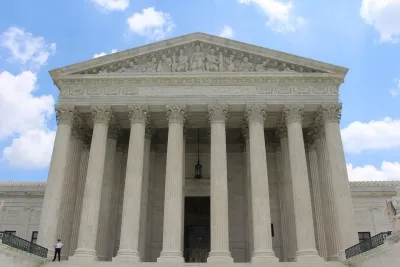
The Supreme Court had rejected Trump's original January 2025 birthright citizenship order by a 6-3 vote on 30 June .
The 14th Amendment , ratified in 1868 , guarantees citizenship to all persons born on US soil and subject to its jurisdiction.
Legal challenges to the new orders are widely expected.
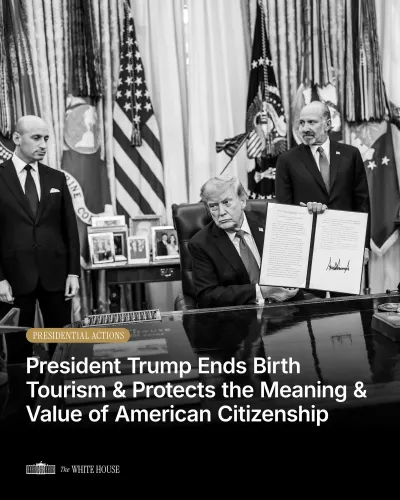
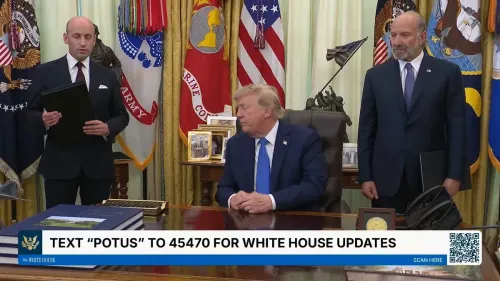
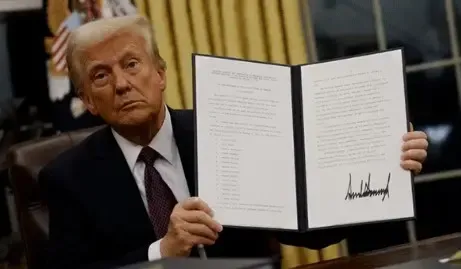
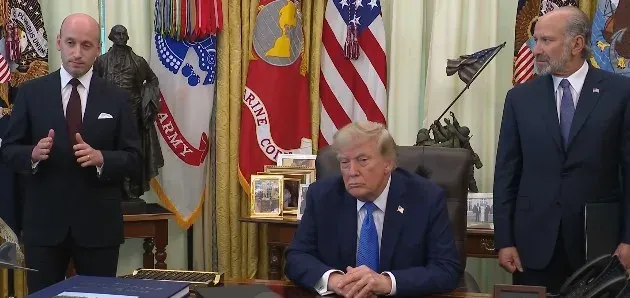
US President Donald Trump signed two new executive orders on 7 August aimed at narrowing birthright citizenship, marking the administration's renewed push following the Supreme Court's 6-3 ruling in June that struck down his earlier attempt. The orders were signed in the White House Oval Office and represent a recalibrated legal strategy rather than a direct reversal of the court's decision.
What the Two Orders Cover
The first order targets what the administration calls 'birth tourism' — defined as the entry of foreign nationals into the United States on a nonimmigrant visa for the explicit purpose of giving birth on US soil, or any effort by foreign nationals to facilitate such entry, according to the White House.
The second order broadens the categories of individuals ineligible for birthright citizenship. These include children of foreign government employees, children of members of a designated Foreign Terrorist Organisation, and children of individuals who obtained citizenship through fraudulent means.
Trump's Remarks at the Signing
'We had a very unfortunate decision in the Supreme Court concerning birthright, it was close,' Trump said as he signed the orders. 'So we're making adjustments.' The comments signal the administration views the new orders as legally distinct from the one the court rejected, though legal challenges are widely anticipated.
Background: The 14th Amendment and the Court's Ruling
The 14th Amendment of the US Constitution, ratified in 1868, guarantees citizenship to 'all persons born or naturalised in the United States, and subject to the jurisdiction thereof.' On 20 January 2025 — Trump's second-term inauguration day — he signed an earlier executive order declaring that children born to undocumented immigrants or temporary residents were not 'subject to the jurisdiction' of the United States and therefore ineligible for citizenship under the amendment.
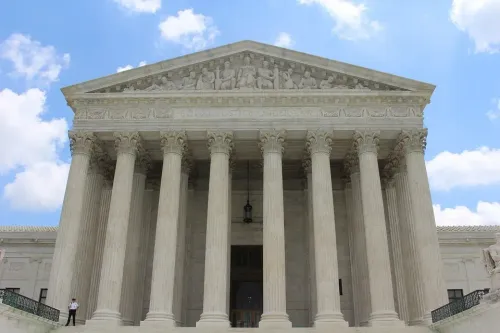
Multiple lower courts blocked that order, ruling in favour of the plaintiffs — parents who had filed suit on their own behalf and on behalf of their children. The order never took effect. On 30 June, the Supreme Court, in a 6-3 vote, formally rejected the original executive order, upholding birthright citizenship as it has long been interpreted.
What Happens Next
The new orders are expected to face immediate legal scrutiny. Constitutional scholars and immigration advocacy groups have consistently argued that the 14th Amendment's citizenship guarantee cannot be narrowed by executive action alone and requires a constitutional amendment or, at minimum, an act of Congress. The administration's approach of targeting specific sub-categories — birth tourism and fraud-linked cases — may be designed to present a narrower legal target than the sweeping January 2025 order. Courts will likely be the next arena for this dispute.
Point of View
Not a policy retreat. By carving out sub-categories rather than challenging the 14th Amendment wholesale, the administration is fishing for a circuit split or a more sympathetic fact pattern that could reach the Supreme Court on different terms. The core constitutional question — whether the executive branch can redefine 'subject to the jurisdiction thereof' without a constitutional amendment — remains unresolved. What the administration is betting on is that a narrower order survives long enough to reshape enforcement on the ground, even if courts ultimately strike it down again.
NationPress
7 Aug 2026
Frequently Asked Questions
Why did Trump sign new birthright citizenship orders after the Supreme Court ruling?
Trump signed two new executive orders on 7 August to narrow birthright citizenship through a recalibrated legal approach after the Supreme Court voted 6-3 on 30 June to strike down his original January 2025 order. The new orders target specific sub-categories — birth tourism and fraud-linked cases — rather than issuing a blanket restriction.
What is 'birth tourism' as defined in Trump's new executive order?
According to the White House, birth tourism refers to the entry of foreign nationals into the United States on a nonimmigrant visa for the purpose of giving birth on US soil, or any effort to facilitate such entry. The executive order targets this practice as a basis for denying birthright citizenship.
What does the 14th Amendment say about birthright citizenship?
The 14th Amendment, ratified in 1868, states that all persons born or naturalised in the United States and subject to its jurisdiction are citizens. Courts have long interpreted this as granting citizenship to virtually all persons born on US soil, regardless of their parents' immigration status.
What happened to Trump's original birthright citizenship order?
Trump signed the original order on 20 January 2025, his second-term inauguration day. Multiple lower courts blocked it after parents filed suit, and it never took effect. The Supreme Court formally rejected it in a 6-3 ruling on 30 June, upholding birthright citizenship.
Who is affected by the new executive orders?
The new orders could affect children born in the US to foreign government employees, members of designated Foreign Terrorist Organisations, individuals who obtained citizenship through fraud, and foreign nationals who entered on nonimmigrant visas specifically to give birth. Legal challenges are expected before any enforcement begins.