Trump confirms Iran on agenda for Xi summit at White House
Synopsis
The Trump-Xi White House summit was already the most consequential bilateral meeting of 2026 — and Trump just raised the stakes by confirming Iran is on the table. With no joint outcome document pre-agreed and Congress pressing for wins on trade, AI and detained Americans, this is a high-wire diplomatic moment where the gaps between the world's two largest powers are as telling as any agreement they might reach.
Key Takeaways
President Trump confirmed on 24 September 2026 that he will raise the Iran conflict with Chinese President Xi Jinping at the White House on Thursday.
Xi Jinping arrived at Joint Base Andrews on Wednesday, greeted by Trump and First Lady Melania Trump with a red carpet, cannon fire, and a B-1 bomber flyover.
Treasury Secretary Scott Bessent met Chinese representatives on Sunday for trade talks described as 'frank, open and direct.' 17 Democratic senators led by Senator Chris Van Hollen urged Trump to pursue an AI safety agreement with China, including common testing standards and a mutual development pause.
No joint outcome document was confirmed ahead of the summit; Thursday's programme includes a formal state ceremony and an evening state dinner .
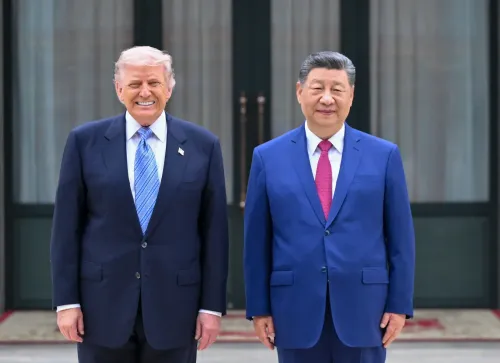
US President Donald Trump confirmed on Wednesday, 24 September 2026 that he will raise the Iran conflict with Chinese President Xi Jinping during high-stakes talks at the White House on Thursday, as the two leaders prepare for a summit that will also touch on trade, artificial intelligence safety, and the fate of detained Americans. The confirmation came directly from Trump after Secretary of State Marco Rubio declined to offer a detailed agenda for the meeting.
Trump's Confirmation and Rubio's Caution
Speaking to reporters on Wednesday evening, Trump said, 'I'll be talking about that and many other subjects, but it's all coming along, including that,' when asked about discussing Iran with Xi. Rubio, speaking separately in New York, declined to specify what Washington would ask Beijing to do, but said the president would raise 'everything that's relevant' and 'everything that's important.' He added that any positive outcomes or joint announcements would be made public, arguing that negotiations worked best when conducted privately.
Xi's Arrival and State Ceremony
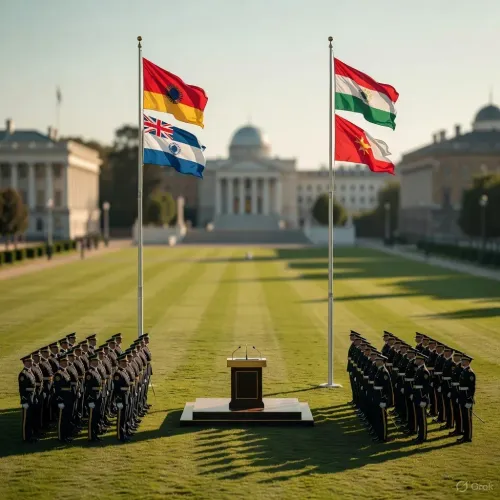
President Xi Jinping arrived at Joint Base Andrews on Wednesday evening, where he was greeted by Trump and First Lady Melania Trump. The welcome included a red carpet, ceremonial cannon fire, and a flyover by two B-1 bombers. Thursday's programme includes a formal state arrival ceremony and an evening state dinner, with the schedule extending into Friday with tea for both presidential couples and a visit to the National Archives. Notably, no joint outcome document was included in pre-summit announcements.
Trade, Iran and Russia in Focus
Trade discussions have already begun at the official level, with Treasury Secretary Scott Bessent meeting Chinese representatives on Sunday to discuss bilateral commerce — exchanges Rubio described as 'frank, open and direct.' Members of Congress have urged Trump to secure results on market access, technology safeguards, and the protection of Americans abroad. Republican Senator Pete Ricketts and Representative Zach Nunn separately called on the administration to lock in dependable Chinese purchases of American soybeans and improved access for US beef. Rubio also reiterated Washington's position that Iran must never acquire a nuclear weapon, while noting the administration remained open to a negotiated agreement.
AI Safety and Congressional Requests
On technology, 17 Democratic senators led by Senator Chris Van Hollen have written to Trump urging him to pursue an AI safety agreement with China, proposing common testing standards, oversight of advanced systems, and a mutual pause in AI development. These remain congressional requests rather than confirmed agenda items agreed by both governments. Senator Ted Budd separately pressed Trump to raise religious freedom and seek the release of detained Americans and religious figures held in China.
What to Watch Next
With no joint communiqué confirmed ahead of the meeting, the summit's concrete outcomes remain uncertain. Analysts will watch closely for any signals on Iran, where US-China coordination — or its absence — could significantly shape the trajectory of the conflict. The absence of a pre-agreed outcome document suggests both sides are leaving room for negotiation, and possibly a degree of strategic ambiguity. How much daylight remains between Washington and Beijing on Iran, trade enforcement, and AI governance will become clearer in post-summit readouts.
Point of View
Or is reluctant to show its hand. The absence of a pre-agreed joint document is equally revealing: it leaves both sides free to claim success without being bound by specifics. Congressional pressure on trade enforcement, AI governance and detained Americans reflects a broader anxiety that Trump may prioritise atmospherics over durable structural gains — a pattern critics have noted in past summits.
NationPress
24 Sept 2026
Frequently Asked Questions
What is the Trump-Xi White House summit about?
US President Donald Trump is hosting Chinese President Xi Jinping at the White House on 25 September 2026 for talks covering Iran, bilateral trade, artificial intelligence safety, and the cases of detained Americans. Trump confirmed Iran is on the agenda after Secretary of State Marco Rubio declined to detail the full list of subjects.
Why is Iran being raised at the US-China summit?
The US views China as holding significant influence over Iran and believes Beijing can play a role in shaping the trajectory of the Iran conflict. Secretary of State Rubio has reiterated Washington's position that Iran must never acquire a nuclear weapon and said the administration remains open to a negotiated agreement.
What trade issues are on the table between the US and China?
Treasury Secretary Scott Bessent met Chinese representatives on Sunday for trade discussions described as frank, open and direct. Congressional lawmakers have separately urged Trump to secure dependable Chinese purchases of American soybeans, better access for US beef, and stronger enforcement of existing market-access commitments.
What did US senators ask Trump to pursue on AI at the summit?
Seventeen Democratic senators led by Senator Chris Van Hollen asked Trump to seek an AI safety agreement with China, including common testing standards, oversight of advanced AI systems, and a mutual development pause. These are congressional requests and have not been confirmed as agreed agenda items by both governments.
Will there be a joint statement after the Trump-Xi meeting?
No joint outcome document was included in pre-summit announcements reviewed ahead of the talks. Secretary of State Rubio indicated that any positive outcomes or agreements would be made public after the discussions conclude.