Trump's Camp David Cabinet meet: Economy, border, drugs top agenda
Synopsis
Trump turned Camp David into a prime-time showcase — the first Cabinet meeting there ever broadcast live. From $230 billion in alleged fraud to 600% drug discounts and a reshoring boom, the administration's claims were sweeping. With midterms approaching, the televised session was as much political theatre as policy review.
Key Takeaways
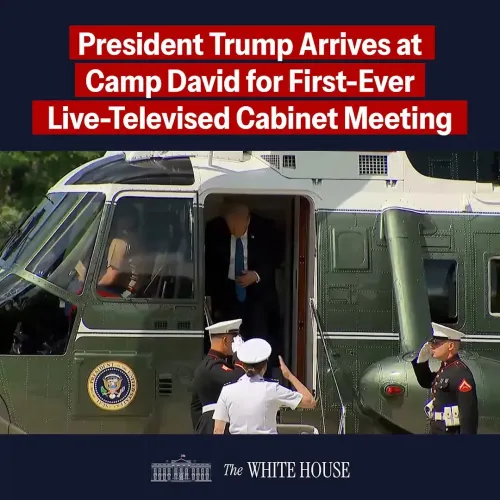
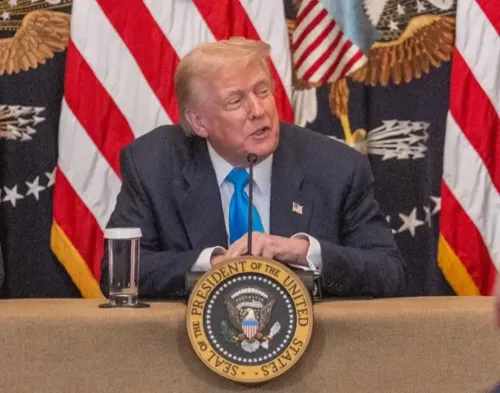
US President Donald Trump held the first-ever live televised Cabinet meeting at Camp David on 1 August .
Vice President JD Vance said the anti-fraud task force had identified $230 billion in fraud and halted $56 billion of it.
Trump's Trump Accounts savings scheme, launched on 4 July , has reportedly been activated by over 7 million children .
Defence Secretary Pete Hegseth announced $75 billion in private defence manufacturing investment commitments.
HHS Secretary Robert F.
Kennedy Jr. said the TrumpRx programme has saved Americans $700 million with 800 drugs listed.
Treasury Secretary Scott Bessent said US manufacturing expanded for the sixth consecutive month in June.
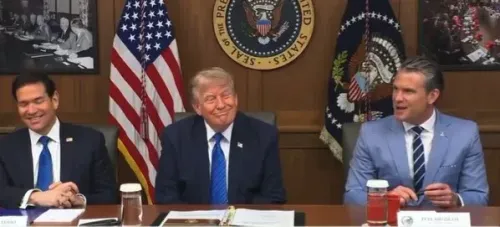
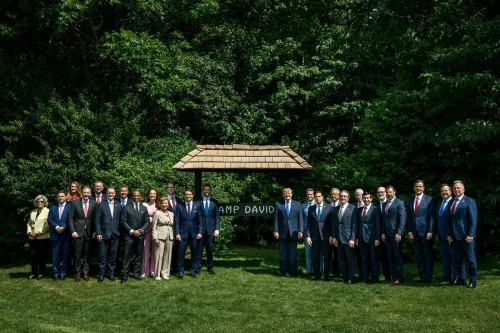
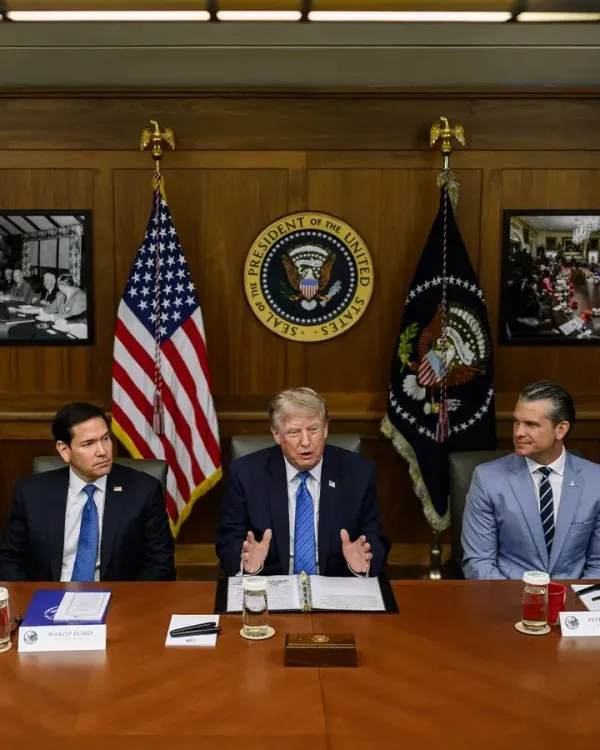
US President Donald Trump on 1 August convened the first-ever live televised Cabinet meeting at Camp David, the presidential retreat in Maryland, using the historic setting to claim sweeping achievements across the economy, border security, healthcare, defence, and government efficiency. Senior Cabinet members joined the session to outline administration priorities ahead of the midterm elections.
Trump's Opening Claims
Opening the meeting, Trump argued his administration had reversed what he characterised as four years of national decline — in under 18 months. 'When we took office, we inherited a total catastrophe,' Trump said. 'In less than 18 months, we've turned around four years of disaster and we now have the strongest border in American history.'
Trump also pointed to falling inflation, record stock market gains, manufacturing investment, and a new children's savings initiative. 'On July 4th, we launched Trump Accounts, a key provision of our Great Big Beautiful Bill. These tax-free investment savings accounts have already been activated by over seven million children. These are investments made in our future,' he said.
On prescription drug pricing, Trump defended his administration's 'Most Favored Nation' policy, claiming 'price discounts of 300 per cent, 400 per cent, 500 per cent, 600 per cent' — figures that critics note lack independent verification and are inconsistently defined across drug categories.
Vance on Fraud, Rubio on Foreign Policy
Vice President JD Vance said the administration's anti-fraud task force had identified $230 billion in fraud against American citizens and had already halted $56 billion of it. He announced '17 new anti-fraud actions' valued at roughly a third of a billion dollars.
Secretary of State Marco Rubio addressed foreign policy, describing the International Criminal Court as 'an illegitimate international organization' and saying Washington had launched an effort to 'bring that court to heel.' Rubio also cited diplomatic progress in the Middle East, calling the Lebanon-Israel engagement 'unprecedented' — 'the first time the Israelis and the Lebanese government have spoken at the official level in close to 30 years,' he said.
Defence and Economic Commitments
Defence Secretary Pete Hegseth credited the removal of diversity, equity, and inclusion (DEI) programmes with driving what he called 'historic reenlistment' in the military. He added that defence companies had committed $75 billion in private investment to expand manufacturing capacity for future weapons systems.
Treasury Secretary Scott Bessent said manufacturing had expanded for the sixth straight month in June, calling it 'the greatest reshoring wave in our history.' He also praised the administration's tax agenda for combining business investment incentives with worker tax relief.
Kennedy on Healthcare Savings
Health and Human Services Secretary Robert F. Kennedy Jr. said the administration's TrumpRx programme had saved Americans $700 million since its launch, with 800 drugs now listed and partnerships in place with Amazon and GoodRx. 'We are adding more and more drugs every day,' Kennedy said.
Historic Format, Broad Agenda
According to Trump, it was the first time television cameras had been allowed inside a Cabinet meeting at Camp David. The session combined formal Cabinet presentations with an extended question-and-answer segment in which Trump also addressed Iran, Hamas, Ukraine, and domestic political issues. This comes amid heightened scrutiny of the administration's record as the midterm election cycle intensifies, with opposition figures contesting several of the figures cited during the meeting.
Point of View
Historic setting, and a roster of superlatives designed to dominate the news cycle. But several headline figures, including drug discounts of '600 per cent' and $230 billion in identified fraud, were presented without independent sourcing or methodological context, making them difficult to verify. The administration's record on manufacturing and border security may be its strongest ground, but the gap between claimed outcomes and independently audited results remains the central accountability question heading into the elections. Notably, no dissenting voices or departmental shortfalls were surfaced during the session — a structural limitation of a format the administration itself controlled.
NationPress
1 Aug 2026
Frequently Asked Questions
What happened at Trump's Camp David Cabinet meeting?
US President Donald Trump convened the first-ever live televised Cabinet meeting at Camp David on 1 August, where he and senior officials claimed major achievements in the economy, border security, healthcare, defence, and anti-fraud efforts. The session also included a question-and-answer segment covering Iran, Hamas, Ukraine, and domestic politics.
What are Trump Accounts and how many children have signed up?
Trump Accounts are tax-free investment savings accounts for children, introduced as part of what Trump called the 'Great Big Beautiful Bill' and launched on 4 July. According to Trump, over seven million children have already had accounts activated.
How much fraud has the Vance-led task force identified?
Vice President JD Vance said the administration's anti-fraud task force had identified $230 billion in fraud perpetrated against American citizens and had already halted $56 billion of it. He also announced 17 new anti-fraud actions worth approximately a third of a billion dollars.
What did Pete Hegseth say about US military and defence investment?
Defence Secretary Pete Hegseth said removing DEI programmes had driven what he described as historic reenlistment rates. He also said defence companies had committed $75 billion in private investment to expand manufacturing capacity for future weapons systems.
What is the TrumpRx programme and how much has it saved?
TrumpRx is a prescription drug cost-reduction programme run by the Department of Health and Human Services. Secretary Robert F. Kennedy Jr. said it has saved Americans $700 million since launch, with 800 drugs listed and partnerships in place with Amazon and GoodRx.