Trump, Xi launch AI safety channel and 'Super Intelligence' dialogue at Washington summit
Synopsis
Trump and Xi didn't just meet in Washington — they quietly rewrote the rules of US-China tech diplomacy. By renaming AI as 'Super Intelligence' and launching a dedicated incident channel, the two superpowers are signalling that the next frontier of great-power risk management is algorithmic, not just military.
Key Takeaways
Trump and Xi agreed on 26 September 2026 to establish a bilateral communication channel for Super Intelligence (SI) incidents at their Washington summit.
The U.S.-China Super Intelligence Dialogue was formally launched; the next exchange is set for November 2026 , coinciding with the APEC summit in Shenzhen .
The two sides agreed on more favourable tariff treatment for US$30 billion of nonsensitive goods in each direction under the newly operationalised Board of Trade .
China committed to importing at least 10 million metric tonnes of US coal in both 2027 and 2028 .
Both leaders agreed Iran can never acquire a nuclear weapon and that no country can impose tolls on international waterways — amid Tehran's assertions over the Strait of Hormuz .
Xi's visit was his first trip to Washington in over a decade and the leaders' third in-person summit since Trump's return to office.
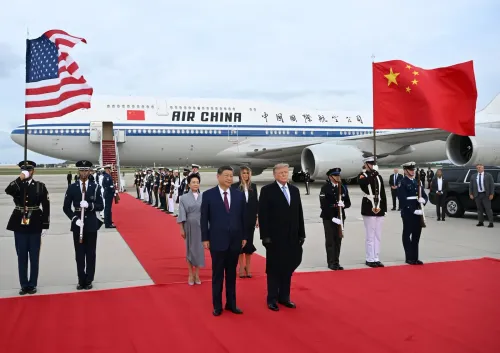
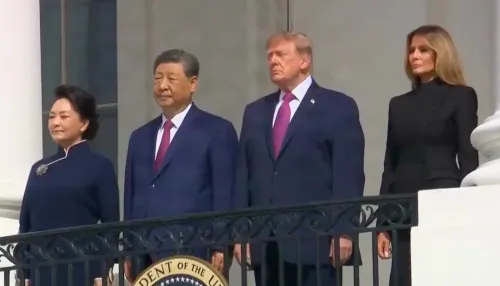
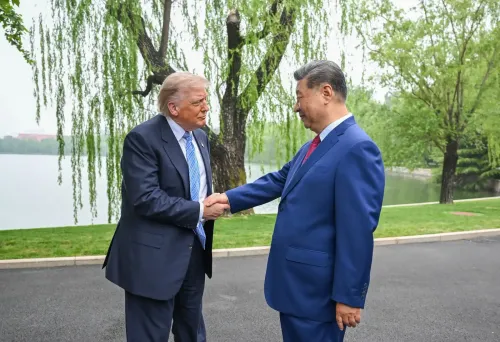
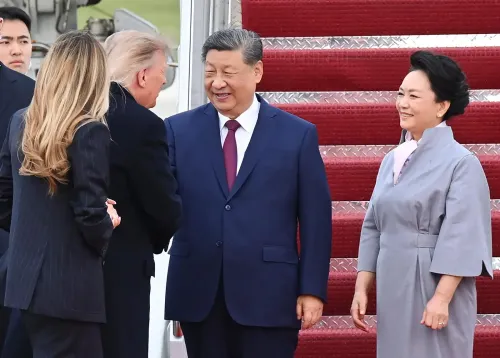
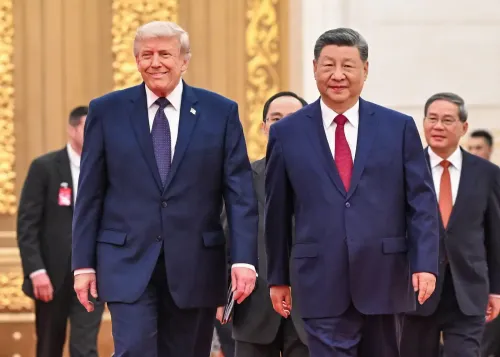
US President Donald Trump and Chinese President Xi Jinping agreed on 26 September 2026 to establish a bilateral communication channel for artificial intelligence incidents and launch a formal dialogue under the new label 'Super Intelligence' (SI) — rejecting the conventional term 'AI' — during their high-stakes summit in Washington, the White House confirmed in an official fact sheet.
The Super Intelligence Dialogue Framework
The two nations formalised the U.S.-China Super Intelligence (SI) Dialogue, designed to exchange views on the risks and benefits of advanced AI systems. According to the White House fact sheet, the next SI exchange is scheduled for November 2026, coinciding with China's hosting of the Asia-Pacific Economic Cooperation (APEC) summit in Shenzhen, which is expected to include a fourth Trump-Xi in-person meeting.
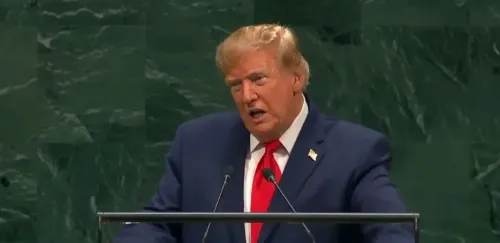
Separately, the two countries agreed to establish a dedicated bilateral communication channel for SI incidents — a move analysts are likely to read as an early-warning mechanism for potential AI-driven crises, military or otherwise. Trump has championed the shift in terminology, arguing that the word 'artificial' makes intelligence sound 'fake' and that 'super intelligence' is 'much more accurate.'
Key Agreements on Trade, Energy and Rare Earths
Beyond technology governance, the summit produced a substantive economic package. Under the Board of Trade — operationalised at this summit following its charter at the May Beijing meeting — the two sides reached consensus on more favourable tariff treatment for US$30 billion worth of nonsensitive goods flowing in each direction. A working group focused on agricultural market access barriers was also launched.
On energy, China agreed to import at least 10 million metric tonnes of US coal in both 2027 and 2028. Trump urged Xi to increase production of refined petroleum products to stabilise global supply, amid concerns over elevated energy prices that could weigh on US voter sentiment ahead of November's midterm elections.
On rare earths and critical minerals, the fact sheet noted ongoing work to address US supply chain concerns, with the stated goal of returning shipment levels to 'appropriate levels.'
Iran, North Korea and Global Security
The leaders agreed that Iran can never be permitted to acquire a nuclear weapon and that no country or institution can be allowed to impose tolls on international waterways — a pointed statement as Iran asserts increasing control over the Strait of Hormuz, a critical chokepoint for global oil and gas trade. The White House fact sheet notably did not mention the Strait by name.
The two presidents also discussed North Korea and Russia, though the White House offered no detail on those exchanges. Questions remain over whether both leaders reaffirmed a shared commitment to North Korean denuclearisation, a cornerstone of past US-China security coordination.
Bilateral Stability and What Comes Next
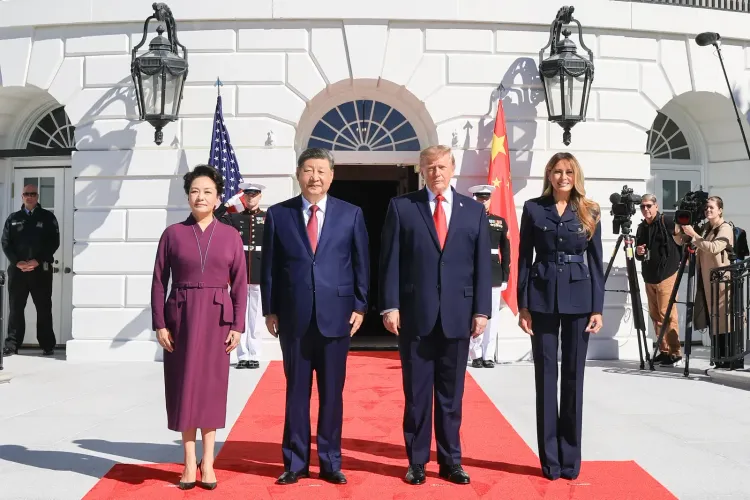
The summit — Xi's first visit to Washington in over a decade and his third in-person meeting with Trump since January — closed a three-day state visit. The two sides described their intent to build a 'constructive relationship of strategic stability on the basis of respect, fairness, and reciprocity,' according to the fact sheet.
The Board of Investment, a government-to-government forum for investment issues, was also operationalised alongside the Board of Trade. Both boards were originally chartered during the May Beijing summit. With the APEC meeting in Shenzhen on the horizon, Washington and Beijing appear to be managing a structured, summit-driven engagement cycle — a notable departure from the friction-heavy dynamic of recent years.
Point of View
But the institutional scaffolding beneath it — a bilateral incident channel, a formal SI Dialogue, a November timeline — points to something more consequential: the US and China are beginning to build the governance architecture for a technology neither fully controls. The parallel trade and energy deals, including China's coal import commitment, suggest both sides are using summit outcomes to manage domestic political pressures as much as geopolitical ones. What's conspicuously absent is any detail on North Korea or a verified denuclearisation reaffirmation — a silence that may prove more significant than the agreements announced. The structured summit cycle — Busan, Beijing, Washington, Shenzhen — also raises the question of whether this is genuine strategic stabilisation or a managed coexistence that papers over fundamental rivalries.
NationPress
26 Sept 2026
Frequently Asked Questions
What is the US-China Super Intelligence Dialogue?
It is a formal bilateral forum established by President Trump and President Xi at their Washington summit to exchange views on the risks and benefits of advanced AI — referred to officially as 'Super Intelligence' or SI. The next exchange is scheduled for November 2026, likely on the sidelines of the APEC summit in Shenzhen.
Why is the US calling AI 'Super Intelligence'?
President Trump has pushed for the terminology shift, arguing that the word 'artificial' makes intelligence sound 'fake' and that 'super intelligence' is a 'much more accurate' description. The White House said all US documents will use the new term.
What trade and energy deals were agreed at the Washington summit?
The two sides agreed on more favourable tariff treatment for US$30 billion of nonsensitive goods in each direction under the Board of Trade. China also committed to importing at least 10 million metric tonnes of US coal in both 2027 and 2028. A working group on agricultural market access barriers was also launched.
What did Trump and Xi agree on regarding Iran and international waterways?
The leaders agreed that Iran can never be allowed to acquire a nuclear weapon and that no country or institution can impose tolls on international waterways. The statement comes as Iran asserts control over the Strait of Hormuz, though the fact sheet did not name the strait explicitly.
How significant is Xi Jinping's Washington visit?
It was Xi's first visit to Washington in over a decade and his third in-person meeting with Trump since Trump's return to office. The three-day state visit follows earlier summits in Busan in October and Beijing in May, reflecting an increasingly structured US-China engagement calendar.