Trump-Xi Shenzhen talks: Chip curbs, minerals and AI risks on the table
Synopsis
Trump walks into Shenzhen carrying a split administration — hawks pushing harder chip curbs, commerce officials urging restraint, and critics warning he may trade away the restrictions he just announced. With US rare-earth imports from China down 75% and India's magnet supply 85-90% China-dependent, the minerals dimension alone makes this week's talks consequential far beyond Washington and Beijing.
Key Takeaways
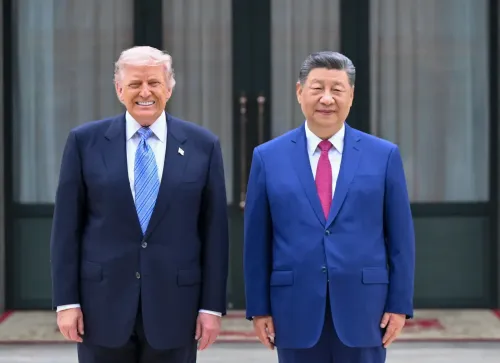
Trump and Xi Jinping are scheduled to meet bilaterally in Shenzhen on Thursday, 20 November 2026 , followed by three-way talks with Putin on 19 November .
The Trump administration is internally divided: Rubio , Greer , and NSC staff back broader AI chip curbs, while Commerce Secretary Lutnick reportedly favours a softer line.
US imports of rare-earth compounds from China fell roughly 75% after Beijing's April 2025 restrictions, dropping from 76.8 to 19.3 metric tonnes per month, per CSIS data.
China supplies between 84.8% and 90.4% of India's permanent-magnet imports — a vulnerability India is addressing with a ₹7,280 crore domestic production scheme.
Quad leaders met in Manila on Tuesday and affirmed cooperation on critical-mineral supply chains ahead of the China talks.
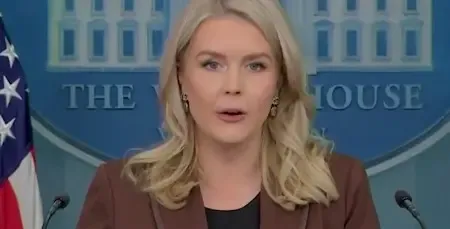
Treasury Secretary Bessent confirmed a US-China AI risk-dialogue, including model-testing cooperation and a direct incident-notification channel.
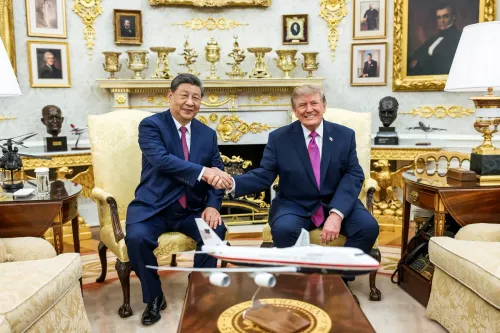
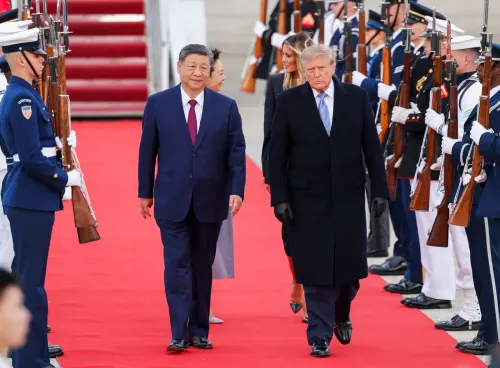
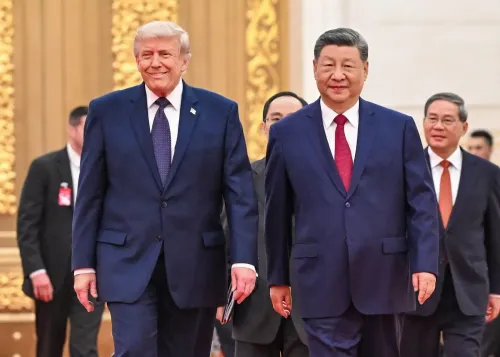
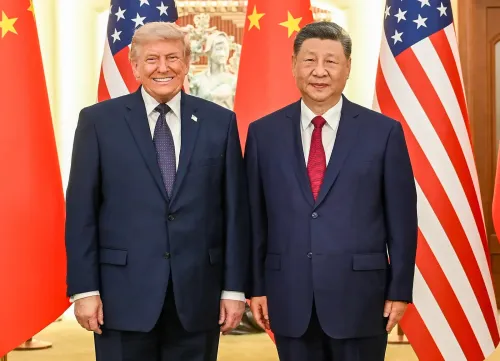
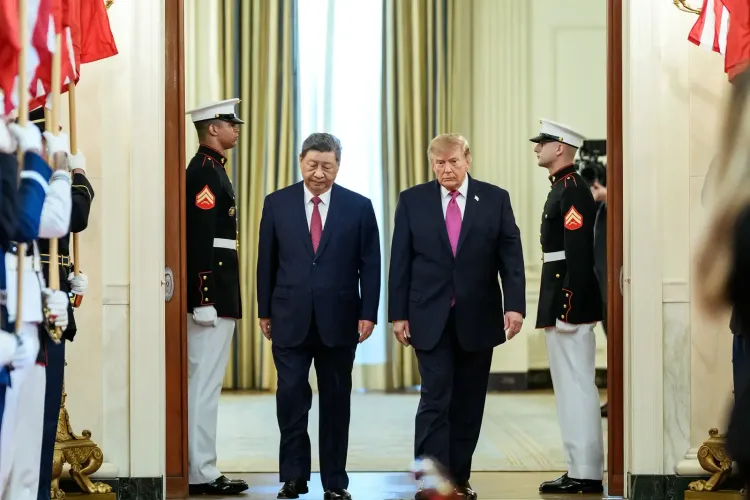
US President Donald Trump heads into a bilateral meeting with Chinese President Xi Jinping in Shenzhen on Thursday, 20 November 2026, with his administration internally divided over how hard to push technology restrictions — even as Washington and Beijing seek to manage artificial intelligence risks and preserve their fragile trade truce.
Divisions Inside the Administration
According to a report by The New York Times, the disagreement over China's access to advanced technology runs deeper than previously known. Secretary of State Marco Rubio, US Trade Representative Jamieson Greer, and much of the National Security Council staff have reportedly backed broader curbs on China's access to advanced AI chips. By contrast, Commerce Secretary Howard Lutnick is said to have pushed for a softer approach, according to current and former officials cited by the newspaper.
Concerns have also emerged among advocates of a tougher China policy that Trump could reverse recently announced restrictions — or deploy them as bargaining chips in his talks with Xi. Those concerns, however, do not establish that Trump intends to offer any such concession, the report noted.
Former US National Security Advisor H.R. McMaster offered a pointed assessment. 'I think President Trump is often impeded by his belief that he can get the deal nobody else can get,' he said. On Monday, the administration announced fresh restrictions designed to prevent Chinese companies from accessing advanced American computing technology remotely through overseas data centres.
AI Cooperation Runs Parallel to Competition
Treasury Secretary Scott Bessent outlined a separate, concurrent diplomatic track. Washington and Beijing, he said, have begun a dialogue aimed at reducing shared AI risks and preventing misunderstandings. The initiative includes plans to exchange best practices for evaluating advanced AI models before release and to establish a direct notification channel for serious incidents involving either country's AI systems.
Bessent also framed the administration's broader economic posture in unusually direct terms: 'our objective is to de-risk, not to decouple.' The Washington Post separately highlighted cooperation on AI model-testing and an incident-notification mechanism as parallel threads running alongside the technology competition.
Critical Minerals: A Shared Vulnerability
The talks arrive against a backdrop of significant rare-earth supply disruption. A 10 November 2026 analysis by the Center for Strategic and International Studies (CSIS) in Washington found that US imports of covered rare-earth compounds and metals from China averaged just 19.3 metric tonnes per month between November 2025 and September 2026 — down sharply from a monthly average of 76.8 metric tonnes before Beijing's April 2025 restrictions. That represents a decline of roughly 75%.
India faces an analogous exposure. An Indian government background paper published in December 2025 found that China accounted for between 84.8% and 90.4% of India's permanent-magnet imports by quantity across financial years 2022-23 through 2024-25. In response, India has approved a ₹7,280 crore scheme to build domestic manufacturing capacity of 6,000 metric tonnes annually for sintered rare-earth permanent magnets — materials critical to electric vehicles, renewable energy, electronics, aerospace, and defence.
The Quad Dimension
Trump's regional engagement sharpens the strategic backdrop for the Shenzhen talks. Quad leaders convened in Manila on Tuesday, discussing Iran, safe navigation, energy security, and affirming cooperation on critical-mineral supply chains. At a 9 November briefing, CSIS senior adviser Edgard Kagan noted that a Quad meeting ahead of the China talks would serve as a reminder to Beijing of Washington's 'significant regional relationships.'
The bilateral meeting in Shenzhen will be followed by three-way talks involving Russian President Vladimir Putin. China's Foreign Ministry has confirmed the trilateral session for 19 November. The outcome of these layered negotiations — covering technology, minerals, AI governance, and great-power geometry — will carry consequences well beyond the two delegations in the room.
Point of View
The leverage nominally held by Washington erodes before the first handshake. Former NSA McMaster's warning about Trump's dealmaker confidence is well-placed: the administration announced fresh chip restrictions on Monday, but credible policy is only credible if the other side believes it will not be traded away on Thursday. The minerals data is the more sobering story that mainstream coverage is underweighting — a 75% US import drop and an 85-90% Indian import dependency on Chinese permanent magnets illustrate that 'de-risking' remains a declared objective far more than a commercial reality. Until alternative supply chains at scale exist, every summit in Shenzhen is conducted from a structurally weaker position than Washington's rhetoric acknowledges.
NationPress
18 Nov 2026
Frequently Asked Questions
When and where are Trump and Xi meeting in November 2026?
The bilateral meeting between Trump and Xi Jinping is scheduled in Shenzhen on Thursday, 20 November 2026 . It will be followed by three-way talks involving Russian President Vladimir Putin , confirmed by China's Foreign Ministry for 19 November .
What is the disagreement inside the Trump administration over China chip curbs?
According to The New York Times , Secretary of State Rubio , US Trade Representative Greer , and much of the NSC staff favour broader restrictions on China's access to advanced AI chips, while Commerce Secretary Lutnick has reportedly pushed for a softer approach. Critics within the administration also fear Trump may reverse or use the restrictions as bargaining material with Xi.
How much have US rare-earth imports from China fallen?
A 10 November 2026 CSIS analysis found US imports of covered rare-earth compounds from China averaged 19.3 metric tonnes per month between November 2025 and September 2026, down from 76.8 metric tonnes before Beijing's April 2025 restrictions — a decline of roughly 75% .
Why do India's rare-earth imports matter in the context of US-China talks?
An Indian government background paper from December 2025 found China accounted for 84.8% to 90.4% of India's permanent-magnet imports between FY2022-23 and FY2024-25. India has approved a ₹7,280 crore scheme to build 6,000 metric tonnes of annual domestic capacity — but the dependency underscores how broadly China's mineral leverage extends beyond the US.
What AI cooperation is Washington and Beijing pursuing alongside their rivalry?
Treasury Secretary Bessent confirmed that the two sides have launched a dialogue to reduce shared AI risks, including plans to exchange model-evaluation practices and establish a direct channel to notify each other of serious AI incidents. He described the approach as 'de-risk, not decouple.'