US Congress returns as Trump's $1.5 trillion defence budget divides lawmakers
Synopsis
US lawmakers returned to Washington on 9 November facing a December 11 shutdown deadline and a billion-dollar standoff: Trump wants $1.5 trillion for defence in FY2027, while senior House Democrats are drawing a hard line at $1 trillion. With no deal in sight and a stopgap law set to expire, the next few weeks could force a reckoning over America's military spending ambitions.
Key Takeaways
US Congress reconvened on 9 November 2026 with a December 11 government funding deadline under the Continuing Appropriations and Extensions Act, 2027 .
President Trump's fiscal 2027 defence budget requests roughly $1.5 trillion , including $350 billion in additional mandatory funding.
House Budget Committee Chairman Jodey Arrington supports the proposal; his committee puts total defence funding at $1.504 trillion and non-defence discretionary spending at $660 billion — a $73 billion cut.
Senior House Democrat Representative Adam Smith opposes annual defence spending above $1 trillion and has called for greater Pentagon oversight and scrutiny of private contracts.
The Golden Dome missile defence programme and defence industrial base expansion are among the administration's stated priorities for the additional funding.
The stopgap law, approved 2 September , restricts new military programme starts and production increases until a full-year bill is passed.
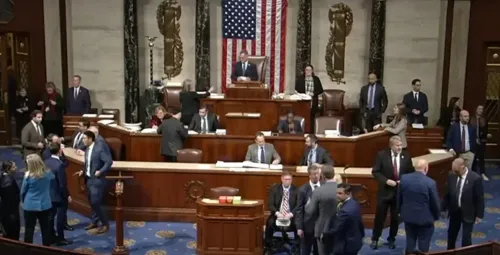
US lawmakers returned to Washington on Monday, 9 November 2026, with a December 11 government funding deadline bearing down and a stark divide over President Donald Trump's proposed $1.5 trillion defence budget for fiscal year 2027. The standoff sets the stage for a potentially contentious appropriations battle in the weeks ahead.
The Funding Deadline and What It Means
The immediate pressure point is the Continuing Appropriations and Extensions Act, 2027, a stopgap funding law approved on 2 September that keeps federal activities running at fiscal 2026 funding rates until December 11 — unless full-year legislation is enacted earlier. The deadline does not, however, constitute congressional approval of the administration's expanded defence request.
The Senate Press Gallery confirmed senators returned for business on Monday, with the first scheduled vote set for 5:30 pm. The temporary law also restricts use of continuing military appropriations for previously unfunded production increases and new programmes.
What the White House Is Asking For
The Trump administration's fiscal 2027 defence proposal, unveiled in April, seeks roughly $1.5 trillion in total defence resources — comprising $350 billion in additional mandatory funding on top of the base request. The Pentagon said the budget covers capabilities across air, land, sea, space, and cyberspace, with particular emphasis on munitions availability and expansion of the defence industrial base.
Among the administration's stated priorities is the Golden Dome missile defence programme. House Budget Committee Chairman Jodey Arrington welcomed the proposal when it was released, with his committee's summary putting total proposed national defence funding at $1.504 trillion and non-defence discretionary funding at $660 billion — the latter representing a $73 billion reduction from the prior year. Arrington argued the plan paired national security investment with cuts to what he characterised as wasteful spending.
Democratic Pushback and Oversight Demands
Representative Adam Smith, the senior Democrat on the House Armed Services Committee, outlined a sharply different framework in a 4 November statement setting out House Armed Services Democrats' priorities for the incoming Congress. Smith called for a national security posture that does not require annual defence spending above $1 trillion.
Smith also called for more public testimony from senior Pentagon officials and proposed restoring an oversight and investigations subcommittee. He identified the Iran war and the handling of contracts awarded to private companies as subjects requiring closer scrutiny. He advocated more economical weapons development informed by lessons from recent conflicts, while supporting bipartisan efforts to reform military procurement.
Notably, Smith's statement laid out priorities for the coming Congress rather than announcing any agreement on the current funding impasse or a timetable for resolution.
What's Next
With the December 11 stopgap expiry approaching and the two parties holding fundamentally different positions on defence spending levels, lawmakers face limited time to reach consensus. A failure to pass full-year funding could lead to a government shutdown, while any deal will likely require significant negotiation over the scale of the military build-up versus non-defence cuts. The Golden Dome programme and the defence industrial base expansion are expected to remain central flashpoints in the debate.
Point of View
While Smith's pushback on procurement opacity and private contracts suggests the debate is as much about accountability as it is about dollars. Crucially, the December 11 deadline is a forcing mechanism neither side fully controls: a shutdown would hurt both parties politically, yet neither has the votes for a clean win. What mainstream coverage underplays is that the stopgap law's existing restrictions on new programme starts already constrain the Pentagon's room to manoeuvre — meaning the defence build-up the White House wants cannot fully begin until Congress settles the funding fight.
NationPress
9 Nov 2026
Frequently Asked Questions
Why did the US Congress return to Washington on 9 November 2026?
Lawmakers returned to address a looming December 11 government funding deadline set by the Continuing Appropriations and Extensions Act, 2027, which keeps federal activities funded at fiscal 2026 rates until a full-year bill is passed. The session also comes amid a sharp dispute over President Trump's $1.5 trillion defence budget for fiscal year 2027.
What does President Trump's fiscal 2027 defence budget propose?
The Trump administration is seeking roughly $1.5 trillion in total defence resources, including $350 billion in additional mandatory funding. Priorities include munitions availability, expansion of the defence industrial base, and the Golden Dome missile defence programme.
What is the Democratic position on the defence budget?
Representative Adam Smith, the senior Democrat on the House Armed Services Committee, has called for a national security approach that keeps annual defence spending below $1 trillion . He has also called for more public Pentagon testimony, restoration of an oversight subcommittee, and scrutiny of private defence contracts.
What happens if Congress misses the December 11 funding deadline?
If no full-year appropriations bill is passed by December 11 , the stopgap funding law expires and the federal government faces a potential shutdown. The current law also restricts new military programme starts and production increases, limiting the Pentagon's ability to begin the build-up the White House has requested.
What is the Golden Dome programme?
The Golden Dome is a missile defence programme identified by the Trump administration as one of the key priorities for the additional $350 billion in mandatory defence funding requested for fiscal year 2027. Further details on the programme's scope and cost have not been publicly disclosed beyond the budget request.