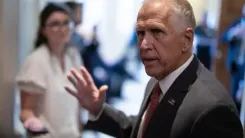
US lawmakers grill Hegseth on Trump's China trip and Indo-Pacific allies' fears
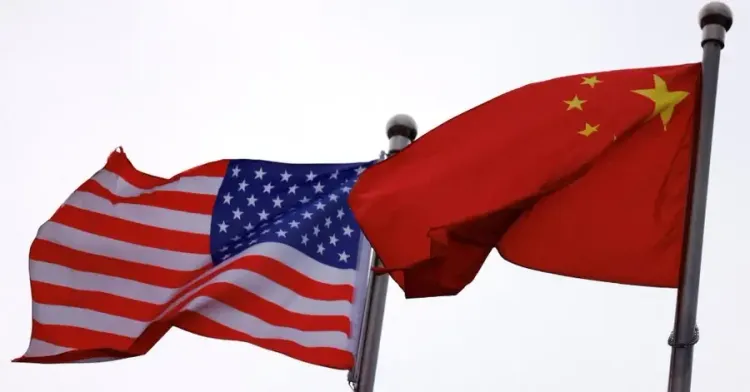
Synopsis
As Trump prepares to visit Beijing, US senators from both parties used a $1.5 trillion defence budget hearing to demand assurances that Indo-Pacific allies — Taiwan, Japan, and the Philippines — would not be sidelined. Hegseth's carefully hedged answers underscored just how much diplomatic uncertainty surrounds the visit.
Key Takeaways
US lawmakers pressed Secretary of Defense Pete Hegseth on 13 May over President Trump's upcoming trip to China .
The hearing centred on Trump's proposed $1.5 trillion defence budget, with China identified as America's greatest long-term strategic challenge.
Chairman Mitch McConnell sought assurances that Taiwan , Japan , and the Philippines would not see their security interests compromised.
Senator Lindsey Graham accused China of financially sustaining Iran and Russia through oil purchases; Hegseth acknowledged China's significant leverage.
Hegseth confirmed the fiscal 2027 Pentagon budget heavily reflects Indo-Pacific Command priorities under Admiral Samuel Paparo .
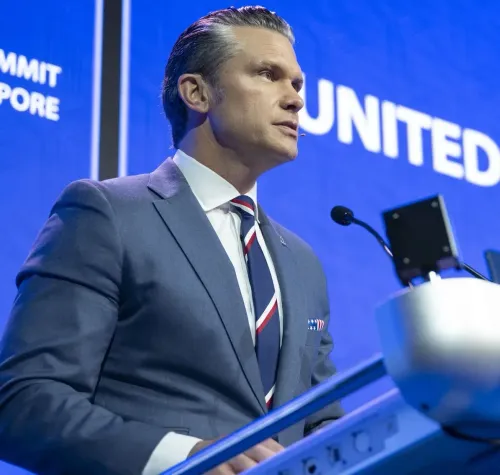
US lawmakers on 13 May pressed Secretary of Defense Pete Hegseth over President Donald Trump's upcoming trip to China, warning that allies including Taiwan, Japan, and the Philippines were closely watching whether Washington would hold firm against Beijing's expanding military and economic influence. The exchange took place during a lengthy Senate Appropriations Subcommittee on Defence hearing focused on Trump's proposed $1.5 trillion defence budget.
China Dominates the Defence Budget Hearing
Beijing emerged as the central theme across party lines, with lawmakers from both sides describing China as America's greatest long-term strategic challenge. Committee Chairman Mitch McConnell directly questioned Hegseth on whether Indo-Pacific allies could trust the United States not to compromise their security interests during Trump's planned meetings in Beijing.
McConnell said: "We all agree they're the greatest long-term military and economic challenge to US and our Western allies as well," adding that "Taiwan, Japan and Philippines look to us." He also sought assurances that freedom of navigation in the South China Sea would remain protected during any diplomatic engagement with Beijing.
Hegseth Defends the Administration's Indo-Pacific Strategy
Hegseth declined to detail Trump's specific negotiating strategy but insisted the administration remained committed to strengthening America's position across the region. "Every aspect of what he pursues inside this relationship is to ensure that American interests are advanced," he said. Pressed specifically on maritime security, Hegseth declared plainly: "American ships should sail freely."
The defence secretary said the Pentagon had intensified cooperation with regional allies, including Japan and the Philippines, to build stronger military coordination and deterrence. He noted that Admiral Paparo, chief of Indo-Pacific Command, had been given every option necessary to create strategic dilemmas for adversaries and preserve America's advantage in the region.
Lawmakers Link China to Iran and Russia
Senator Chris Coons warned that Russia, China, North Korea, and Iran were increasingly coordinating against the United States and its allies. He argued that Beijing and Moscow were helping Iran replenish military supplies, including drones used to threaten shipping in the Strait of Hormuz.
Republican Senator Lindsey Graham accused China of financially sustaining both Iran and Russia through large-scale oil purchases. "China buys a very large percentage of Iranian oil," Hegseth acknowledged. Graham argued Beijing had the leverage to significantly influence the wars in both Ukraine and the Middle East if it chose to cut economic ties with Tehran and Moscow. "Ultimately, China has a lot of leverage," Hegseth responded.
Taiwan at the Forefront of Beijing's Ambitions
Senator Jerry Moran, who recently returned from China, warned that Taiwan remained "at the forefront" of Beijing's ambitions. He questioned whether the Pentagon budget sufficiently reflected the need for stronger deterrence in the Indo-Pacific. Hegseth said the fiscal 2027 budget request had heavily incorporated the priorities of Admiral Samuel Paparo, including stronger partnerships, access arrangements, and operational readiness across the region.
Broader Strategic Context
China's growing military expansion, intensifying pressure on Taiwan, and deepening strategic partnerships with Russia, Iran, and North Korea have become major concerns in Washington. The Indo-Pacific is now widely regarded by US defence planners as the primary arena for long-term geopolitical competition between Washington and Beijing. With Trump's China visit approaching, the diplomatic stakes — and the anxieties of regional allies — are only set to rise.
Frequently Asked Questions
Why are US lawmakers concerned about Trump's trip to China?
Lawmakers are worried that Trump's diplomatic meetings in Beijing could lead to concessions that compromise the security of Indo-Pacific allies such as Taiwan, Japan, and the Philippines. During the 13 May Senate hearing, senators from both parties pressed Defense Secretary Pete Hegseth for assurances that Washington would not soften its stance on issues like freedom of navigation in the South China Sea.
What did Pete Hegseth say about China at the Senate hearing?
Hegseth declined to detail Trump's negotiating strategy but insisted every aspect of the relationship was aimed at advancing American interests. He also acknowledged that China has significant leverage over Iran and Russia through large-scale oil purchases, and stated plainly that American ships should sail freely in international waters.
How does China's role in Iran and Russia factor into the US defence debate?
Senators Chris Coons and Lindsey Graham argued that China is financially sustaining both Iran and Russia, with Beijing purchasing a large share of Iranian oil and enabling Moscow's war effort. Graham contended that Beijing could significantly influence both the Ukraine conflict and Middle East tensions if it chose to cut economic ties with Tehran and Moscow.
What is the US fiscal 2027 defence budget request and how does it address China?
President Trump has proposed a $1.5 trillion defence budget. Hegseth said the fiscal 2027 request heavily incorporated the priorities of Indo-Pacific Command chief Admiral Samuel Paparo, including stronger partnerships, access arrangements, and operational readiness across the region to counter China's growing military expansion.
What is the strategic significance of Taiwan in the US-China relationship?
Taiwan remains a central flashpoint. Senator Jerry Moran, recently returned from China, warned that Taiwan is at the forefront of Beijing's ambitions. US defence planners now widely regard the Indo-Pacific as the primary arena for long-term geopolitical competition between Washington and Beijing.