Does Trump Deserve the Nobel Peace Prize for His Role in Preventing Wars?
Synopsis
President Donald Trump claims he deserves the Nobel Peace Prize for averting major conflicts, including tensions between India and Pakistan. He cites saving tens of millions of lives, while critics challenge the accuracy of his assertions. Dive into Trump's controversial stance amidst debates surrounding his foreign policy achievements.
Key Takeaways
Trump claims to have averted eight major wars.
He cites significant life-saving impacts from his interventions.
India denies third-party mediation in ceasefire agreements.
Pakistan's officials challenge Trump's assertions.
Trump contrasts his achievements with Obama's Nobel recognition.
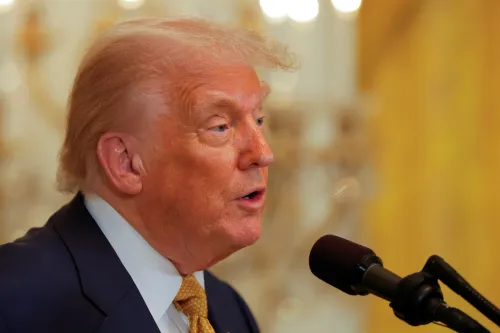
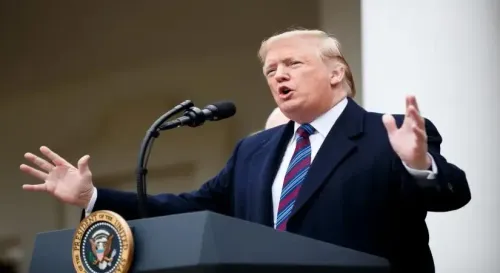
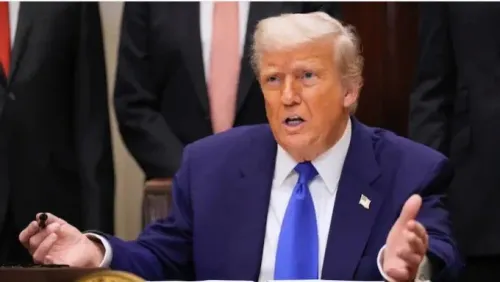
Washington, Jan 10 (NationPress) President Donald Trump has asserted that he merits the Nobel Peace Prize due to his alleged contributions in preventing significant wars, including the avoidance of a potential confrontation between India and Pakistan. He contends that no other leader has accomplished results of a similar magnitude.
However, New Delhi has consistently refuted claims of any external facilitation regarding the ceasefire agreement with Pakistan, maintaining that it was Islamabad that prompted the Indian military to cease operations.
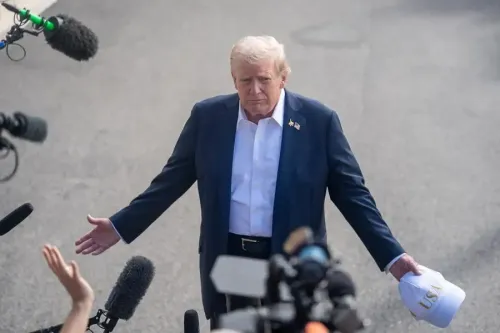
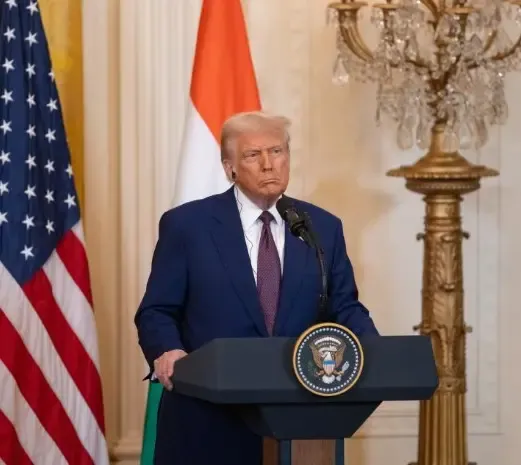
Addressing the media at the White House, Trump remarked that he has resolved long-standing conflicts and prevented fresh wars from escalating, often without resorting to military force.
"Regardless of personal opinions about Trump, I have mediated eight wars," he stated.
Trump enumerated various conflicts he claimed were resolved during his presidency, highlighting their extensive duration and significance.
"Major ones, some lasting 36 years, 32 years, 31 years, 28 years, 25 years," he noted.
He pointed to South Asia as a particularly perilous region, asserting that U.S. intervention helped mitigate tensions between India and Pakistan.
"Some were on the brink, such as India and Pakistan, where eight jets had already been shot down," Trump remarked.
He claimed the crisis was swiftly resolved without nuclear armament.
"And I accomplished that promptly without nuclear weapons," he added.
Trump suggested that the vast number of lives saved warranted Nobel acknowledgment.
"I have saved tens of millions of lives," he stated.
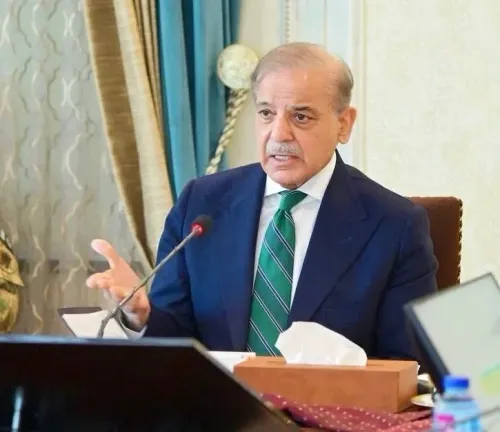
The President referred to a public statement made by the Prime Minister of Pakistan to bolster his assertion.
"The Prime Minister of Pakistan visited here and made a very public remark," Trump said. "He indicated that I saved at least 10 million lives related to Pakistan and India."
In a rare admission last September, Pakistan's Foreign Minister Ishaq Dar acknowledged that New Delhi had never consented to third-party mediation regarding issues between India and Pakistan, thereby undermining Trump's repeated assertions of having brokered a ceasefire following Operation Sindoor.
Trump stated that his strategy emphasized direct dialogue and leverage instead of extended warfare.
"These were significant wars," he noted. "These were conflicts that no one believed could be halted."
He contrasted his achievements with those of former President Barack Obama, who received the Nobel Peace Prize early in his term.
"Obama received the Nobel Prize," Trump remarked. "He had no understanding of why. He still does not."
Trump pointed out that Obama was awarded the honor shortly after taking office.
"He secured it almost immediately after taking office, and he did nothing," Trump stated.
The President asserted that he did not seek accolades but argued that the criteria for the prize favored his accomplishments.
"I can't think of anyone in history more deserving of the Nobel Prize than myself," he claimed. "And I'm not one to boast."
"In theory, leaders should receive the Nobel Prize for every conflict they halted," Trump added.
He further claimed that Russian President Vladimir Putin acknowledged his role in resolving conflicts.
"President Putin called me, and he remarked about two wars that he had been trying to halt for ten years, which he was unable to do," Trump stated. "He was astounded."
He insisted that his primary motivation was humanitarian rather than for recognition.
"But I am indifferent to that," Trump expressed. "My focus is on saving lives."
Trump emphasized the critical importance of preventing escalation among nuclear powers.
"And that situation was on the verge of erupting," he reiterated, referring back to the India-Pakistan conflict.
These comments arose as he defended his overall foreign policy amid inquiries regarding Ukraine, Iran, and other global issues, reaffirming that deterrence and diplomacy have supplanted prolonged military involvement.
Point of View
It's essential to present both sides of Trump's claims regarding the Nobel Peace Prize. While he asserts significant accomplishments in peacekeeping and conflict resolution, skepticism exists regarding the validity of his statements and their implications on international relations. A balanced perspective is vital in analyzing these claims.
NationPress
7 Oct 2026
Frequently Asked Questions
What claims did Trump make about the Nobel Peace Prize?
Trump asserted that he deserves the Nobel Peace Prize for preventing major wars, including averting conflict between India and Pakistan, claiming to have saved tens of millions of lives.
How has India responded to Trump's claims?
India has denied any third-party involvement in ceasefire agreements and emphasized that it was Pakistan that prompted the halt in military actions.
What did Pakistan's officials say regarding Trump's role?
Pakistan's Foreign Minister acknowledged that New Delhi never agreed to third-party mediation, challenging Trump's assertion of having brokered a ceasefire.
What is Trump's stance on his foreign policy?
Trump contends that his approach focused on direct engagement and leverage rather than prolonged warfare, contrasting his record with that of former President Obama.
What is the significance of Trump's statement on lives saved?
Trump claims that the number of lives saved through his interventions justifies his consideration for the Nobel Peace Prize, emphasizing humanitarian motivations.