CM Mohan Yadav Expands Natural Farming Across MP

Synopsis
Madhya Pradesh's Chief Minister's Office says natural and organic farming is expanding steadily under CM Dr. Mohan Yadav, positioning the state's farmers for greater economic empowerment. MP already holds the largest certified organic farming area in India, backed by central and state schemes targeting small and marginal cultivators.
Key Takeaways
Madhya Pradesh is expanding natural and organic farming under CM Dr.
Mohan Yadav , according to an official CMO post dated 8 July 2026 .
Madhya Pradesh holds the largest certified organic farming area among all Indian states, a position built over more than a decade.
The state has developed multiple organic clusters under the central Paramparagat Krishi Vikas Yojana (PKVY) , launched in 2015 .
Small and marginal farmers are the primary target group, with reduced chemical input costs cited as a key economic benefit.
The initiative aligns with the National Mission for Sustainable Agriculture and mirrors successful models in Andhra Pradesh and Sikkim .
Budget allocations and district-level income data in the next financial year will be critical to assessing on-ground impact.
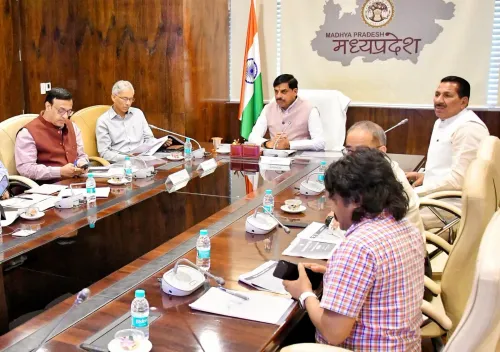
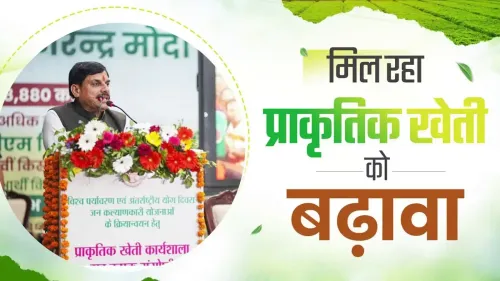
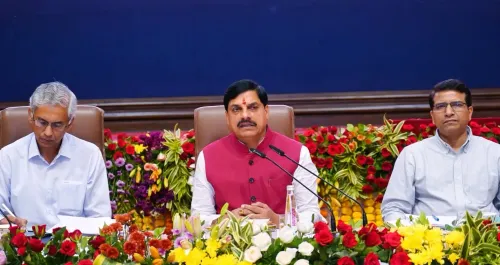
The Chief Minister's Office of Madhya Pradesh announced on Wednesday, 8 July 2026 that the state is steadily expanding the scope of natural and organic farming under the leadership of Chief Minister Dr. Mohan Yadav, with the initiative aimed at opening new avenues of prosperity for farmers and making them economically stronger.
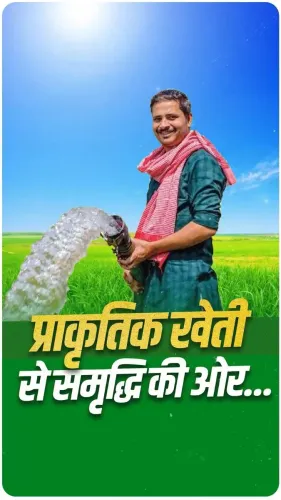
The post, shared from the official CMO handle, stated in Hindi: 'जैविक कृषि से समृद्धि की ओर बढ़ता मध्यप्रदेश' — translating to 'Madhya Pradesh moving towards prosperity through organic farming' — and noted that the reach of natural farming in the state is continuously growing, unlocking new doors of prosperity for farmers and making them more economically empowered.
Context
Madhya Pradesh holds the distinction of having the largest certified organic farming area among all Indian states, a position it has built over more than a decade of sustained policy focus. The state's push under Dr. Mohan Yadav, who assumed office as Chief Minister in December 2023, continues this trajectory by scaling up natural farming demonstrations and outreach to small and marginal farmers.
The CMO's communication underscores a deliberate framing of organic agriculture not merely as an environmental choice but as a direct instrument of rural economic empowerment — linking reduced chemical input costs with improved farmer incomes.
Policy Backdrop
The state's organic farming expansion draws support from the central government's Paramparagat Krishi Vikas Yojana (PKVY), launched in 2015, which funds cluster formation, certification support, and training for farmers transitioning away from chemical-intensive agriculture. Madhya Pradesh developed multiple organic clusters under this scheme and by 2017-18 had already reported the highest area under organic certification in the country.
In 2020, the state government further accelerated natural farming demonstrations and training programmes, with a particular focus on small and marginal farmers who stand to benefit most from lower input costs. These efforts align with the National Mission for Sustainable Agriculture, which sets broader national objectives around soil health, water conservation, and climate-resilient farming practices.
Stakeholders and Impact
The primary beneficiaries of this push are Madhya Pradesh's small and marginal farmers, who form the bulk of the state's agricultural workforce. For these cultivators, a shift to natural farming can reduce dependence on expensive chemical fertilisers and pesticides, potentially improving net margins even before any premium-market gains are realised.
The approach mirrors efforts in states such as Andhra Pradesh and Sikkim, which have linked reduced chemical use with measurable farmer income gains. A broader organic produce market — both domestic and export-oriented — stands to benefit as certified acreage in Madhya Pradesh grows, though district-level income and volume data remain the key metric to watch.
What's Next
Observers and farm-sector analysts will look closely at Madhya Pradesh's next state budget for specific allocations toward natural farming inputs, certification infrastructure, and market linkages. District-level data on shifts in farmer incomes and volumes of marketed organic produce will be the clearest indicators of whether the policy is translating into tangible economic gains on the ground.
With the CMO actively amplifying the organic farming narrative through official channels, the political messaging signals that this will remain a flagship rural welfare priority for the Mohan Yadav government in the months ahead.
Point of View
The Madhya Pradesh government is building a personal policy brand for Dr. Mohan Yadav in a domain where the state already holds a nationally recognised lead. The emphasis on economic empowerment over ecological benefit also signals an attempt to make natural farming aspirational for farmers, not just compliant. Whether the rhetoric is matched by measurable income gains will determine the durability of this positioning.
NationPress
8 Jul 2026
Frequently Asked Questions
Is Madhya Pradesh the largest organic farming state in India?
Yes, Madhya Pradesh has reported the highest area under certified organic farming among all Indian states, a position it has held since at least 2017-18 following sustained promotion of organic clusters under central and state schemes.
What is the Paramparagat Krishi Vikas Yojana and how does MP benefit?
The Paramparagat Krishi Vikas Yojana (PKVY) is a central government scheme launched in 2015 that provides funding for organic cluster formation, farmer training, and certification support. Madhya Pradesh has developed multiple clusters under this scheme, helping farmers transition away from chemical-intensive agriculture.
What is CM Mohan Yadav doing for farmers in Madhya Pradesh?
Chief Minister Dr. Mohan Yadav, in office since December 2023, has continued and expanded the state's natural and organic farming programmes, with a focus on making small and marginal farmers economically stronger by reducing input costs and opening access to premium markets.
How does natural farming help small farmers in Madhya Pradesh?
Natural farming reduces dependence on expensive chemical fertilisers and pesticides, which can improve net margins for small and marginal farmers even before any premium-market price gains are factored in, making it a cost-reduction as much as an income-enhancement strategy.
Which other Indian states have successful organic farming models?
Andhra Pradesh and Sikkim are frequently cited alongside Madhya Pradesh as states that have linked reduced chemical use with measurable farmer income gains, and their models inform the broader national push under the National Mission for Sustainable Agriculture.