Trump Issues Stern Warning to Iran Over Oil Shipping in Hormuz
Synopsis
In a recent statement, President Trump accused Iran of violating ceasefire terms by limiting oil shipments through the Strait of Hormuz, threatening action against any transit fees Iran may impose. This situation raises significant concerns for global energy markets.
Key Takeaways
Trump accused Iran of violating ceasefire terms.
Concerns raised over limited oil shipments through Hormuz.
Iran may be charging transit fees to tankers.
Stability in Hormuz is crucial for global energy markets.
Impact on India's energy security is significant.
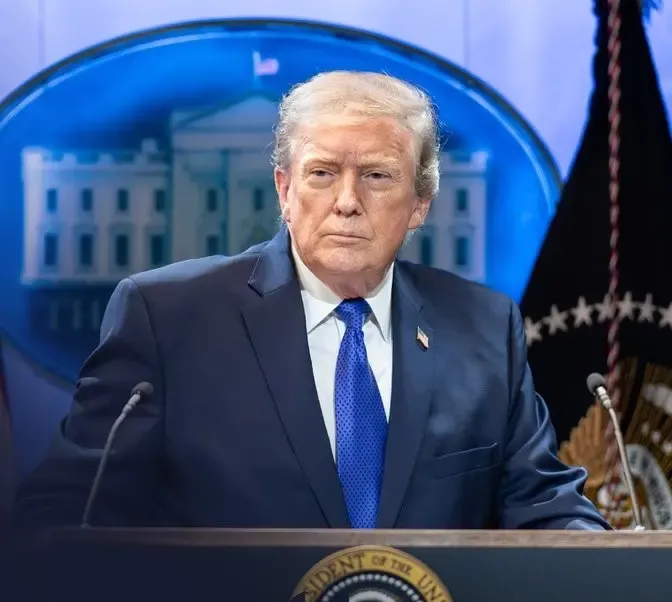
Washington, April 10 (NationPress) US President Donald Trump has accused Iran of breaching a ceasefire agreement by limiting oil transportation through the Strait of Hormuz, while also cautioning Tehran against levying fees on passing tankers.
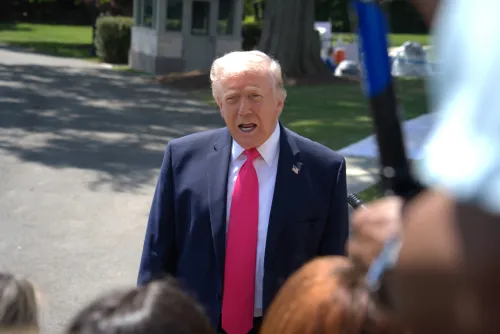
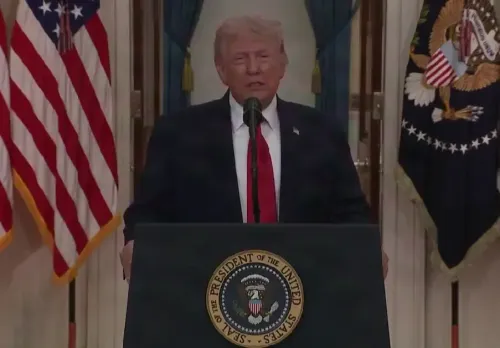
“Iran has been handling the situation poorly—some may say dishonorably—by restricting oil passage through the Strait of Hormuz,” Trump stated via a social media post. “That is not part of our agreement!”
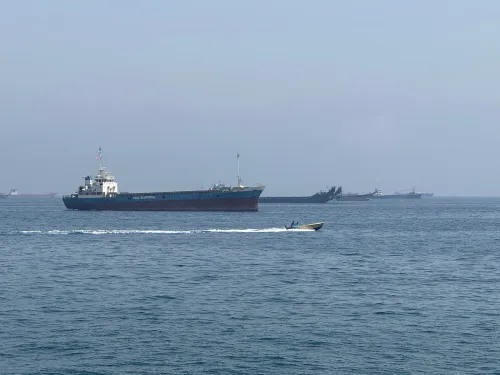
These comments arise amid reports indicating that only a limited number of vessels have traversed this crucial waterway since the truce was established, raising alarms about energy supplies through one of the globe's most vital chokepoints.
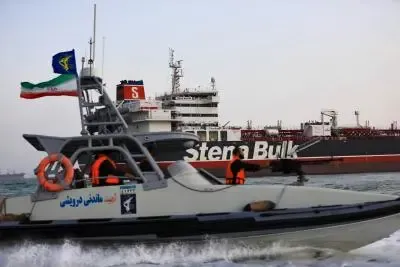
Trump reacted strongly to allegations that Iran could be imposing transit fees. “There are claims that Iran is charging tankers to navigate the Hormuz Strait,” he noted. “They had better not be, and if they are, they must cease immediately!”
The president's remarks indicate increasing tensions despite the ceasefire, although it remains uncertain whether the US will take any concrete measures.
Previously, Trump suggested the possibility of implementing US tolls on shipping activities in the same region, but in his recent statements, he claimed he was just becoming aware of Iran’s purported fee structure.
On Iran's side, officials assert that safe passage can still be assured under specific conditions. The foreign minister declared that transit through the strait would be permissible if coordinated with Iran’s military and considering “technical limitations.” Analysts observe that this viewpoint aligns with Tehran’s prior stance before the ceasefire.
In a separate matter, Trump dismissed criticism from The Wall Street Journal, which claimed he had “declared premature victory in Iran.”
“In fact, it is a victory, and there’s nothing ‘premature’ about it!” Trump asserted. “Thanks to my efforts, IRAN WILL NEVER POSSESS A NUCLEAR WEAPON, and soon, you’ll witness oil flowing, irrespective of Iran's involvement, which is inconsequential to me.”
He further stated that the newspaper would “eat their words,” accusing it of being “one of the least reliable and most inaccurate editorial boards worldwide.”
This exchange highlights ongoing uncertainty regarding the ceasefire's execution, especially concerning maritime access. One of Iran's proposals during peace negotiations included a request to maintain authority over the Strait of Hormuz, a matter that remains sensitive for global energy markets.
The Strait of Hormuz is a crucial maritime passage connecting the Persian Gulf to the Arabian Sea and serves as a vital route for global oil supplies. A considerable portion of the world’s seaborne crude traverses this strait, making any disruption a significant concern for energy-importing nations, including India.
India, heavily reliant on crude imports, has historically regarded stability in the Gulf region as vital for its energy security. Any extended disruption in traffic through the Hormuz could affect oil prices and supply chains, with potential repercussions on inflation and economic growth.
Point of View
It is evident that President Trump's remarks highlight the fragile state of the ceasefire with Iran and the potential consequences for international oil markets. The situation requires careful monitoring to understand the broader implications for energy security, particularly for nations reliant on oil imports.
NationPress
16 Sept 2026
Frequently Asked Questions
What did Trump accuse Iran of?
Trump accused Iran of violating a ceasefire agreement by restricting oil shipments through the Strait of Hormuz.
What are the consequences of Iran imposing transit fees?
If Iran imposes transit fees, it could escalate tensions and disrupt oil supply chains, affecting global energy markets.
How important is the Strait of Hormuz for global oil supply?
The Strait of Hormuz is a critical maritime corridor through which a significant portion of the world's seaborne crude oil passes.
What is Iran's stance on safe passage through the Strait?
Iran maintains that safe passage is possible under certain conditions, including military coordination.
How does this situation affect India's energy security?
India, heavily dependent on crude imports, views stability in the Gulf region as essential for its energy security.