Iran warns no ship can transit Hormuz without its approval
Synopsis
Iran's top military command has declared that no vessel can transit the Strait of Hormuz without Tehran's approval — a direct rebuttal to Donald Trump's claim of 'total control' over the waterway. With the Iranian foreign minister warning of US 'miscalculation' and Trump describing a 'wall of steel' naval blockade, the world's most critical oil chokepoint is at the centre of a high-stakes confrontation with no visible off-ramp.
Key Takeaways
Khatam al-Anbiya Central Headquarters declared on 13 August that no ship can safely transit the Strait of Hormuz without Iranian permission.
Iran's state broadcaster IRIB called US claims of normal shipping traffic 'lies and falsehoods'.
Foreign Minister Sayed Abbas Aragchi warned on X that the US was making 'an even bigger miscalculation on the Strait of Hormuz'.
US President Donald Trump had claimed on Wednesday that the US holds 'total control' over the strait, describing the naval presence as a 'wall of steel'.
Trump provided no operational details on the blockade's duration or end conditions.
The Strait of Hormuz handles roughly 20% of global petroleum liquids daily, making any disruption a global energy risk.
Iran's principal military command, Khatam al-Anbiya Central Headquarters, on Thursday, 13 August declared that no commercial vessel or tanker can safely navigate the Strait of Hormuz without explicit permission from the Islamic Republic of Iran, according to state media reports. The statement marks a direct escalation in the standoff with the United States over control of one of the world's most critical maritime chokepoints.
What Iran's Military Command Said
The headquarters' spokesman, speaking through Iran's state broadcaster Islamic Republic of Iran Broadcasting (IRIB), flatly rejected Washington's claims that shipping was moving through the strait unimpeded. 'The false American claims that ships are passing through the Strait of Hormuz normally are nothing more than lies and falsehoods,' the spokesman said.
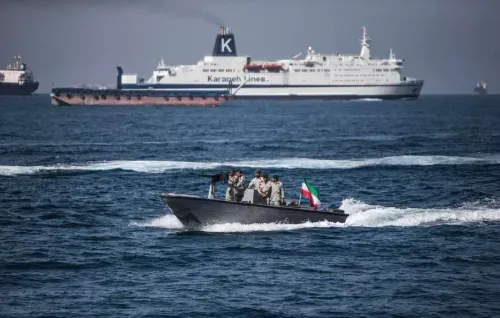
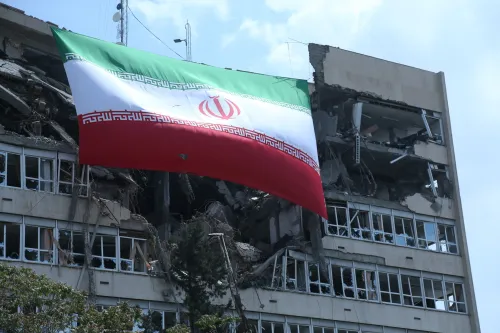
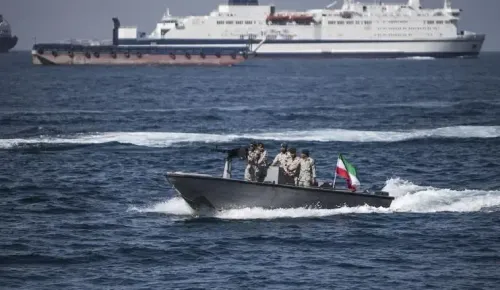
He added: 'It is announced that the Strait of Hormuz, as in the past, is under the complete management and control of the Islamic Republic of Iran, and no commercial ship or tanker will be able to safely transit through this strait without the permission and supervision of the powerful Iranian armed forces.'
Iran's Foreign Minister Weighs In
Earlier on Thursday, Iranian Foreign Minister Sayed Abbas Aragchi sharpened the rhetoric further with a post on X, accusing Washington of serial miscalculation. 'The US has long miscalculated due to intelligence failures. Case in point: The war on Iran. Now, an even bigger miscalculation on the Strait of Hormuz. Worse than fake news is fake intelligence. Be careful,' Aragchi wrote.
Trump's 'Wall of Steel' Claim
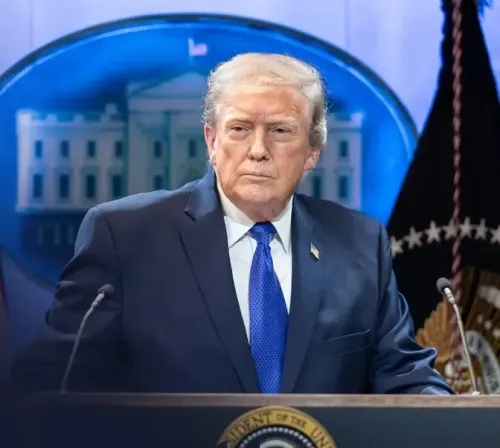
The Iranian declarations came a day after US President Donald Trump asserted on Wednesday that the United States holds 'total control' over the Strait of Hormuz. 'The USA has total control over the Strait of Hormuz. I think we will keep it!' Trump said in a post on Truth Social.
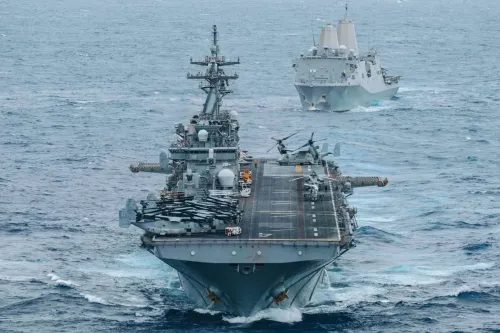
Trump described the American naval presence in sweeping terms, calling it a 'wall of steel' and insisting Iran was powerless to challenge it. 'Our Naval Blockade is being called, by everyone, "a wall of steel," and there is nothing Iran can do about it,' he said. Notably, the President did not provide operational details of the blockade, nor did he specify how long the US intended to maintain its position or what conditions could bring the standoff to a close.
Why the Strait of Hormuz Matters
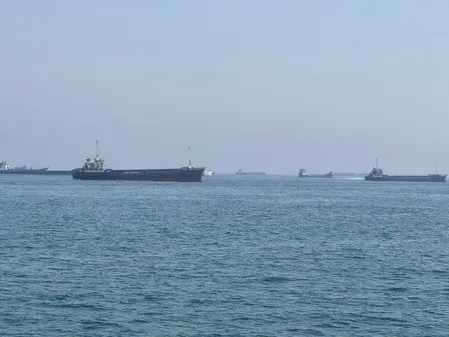
The Strait of Hormuz is the world's single most important oil transit chokepoint, with roughly 20% of global petroleum liquids — and a significant share of liquefied natural gas — passing through it daily, according to energy analysts. Any sustained disruption would ripple through global energy markets, affecting crude prices and supply chains from Asia to Europe.
This is not the first time Tehran has threatened to close or restrict the strait; Iran has periodically invoked the threat during periods of maximum pressure from the West. However, the directness and specificity of Thursday's military statement, combined with the foreign minister's public warning, suggest the current standoff has entered a more acute phase.
What Comes Next
Neither side has indicated a willingness to de-escalate. With no stated conditions for ending the US naval blockade and Iran publicly asserting sovereign authority over the waterway, the risk of a miscalculation — at sea or in diplomatic channels — remains elevated. Global energy markets and regional shipping operators are closely monitoring the situation for any operational disruption.
Point of View
But the specificity of Thursday's military statement goes further than past rhetoric: it frames permission as an active, ongoing requirement, not a hypothetical threat. Trump's 'wall of steel' framing, meanwhile, forecloses diplomatic retreat by tying presidential credibility to the blockade's success. What is missing from both sides is any articulation of end-state conditions — which is precisely how miscalculations at sea happen. Global energy markets have so far priced in limited disruption risk; that calculus could shift rapidly if a vessel is intercepted or boarded.
NationPress
28 Sept 2026
Frequently Asked Questions
What did Iran's military say about the Strait of Hormuz?
Iran's Khatam al-Anbiya Central Headquarters stated on 13 August that no commercial ship or tanker can safely transit the Strait of Hormuz without the permission and supervision of Iranian armed forces. The statement, carried by state broadcaster IRIB, directly contradicted US claims that shipping was passing through normally.
What did US President Trump say about the Strait of Hormuz?
President Donald Trump said on Wednesday that the United States has 'total control' over the Strait of Hormuz and described the US naval presence as a 'wall of steel.' He did not provide details on the blockade's duration or the conditions under which it could end.
Why is the Strait of Hormuz strategically important?
The Strait of Hormuz is the world's most critical oil transit chokepoint, with approximately 20% of global petroleum liquids passing through it daily. Any sustained disruption would affect crude oil prices and energy supply chains across Asia, Europe, and beyond.
What did Iran's Foreign Minister say about the US?
Foreign Minister Sayed Abbas Aragchi posted on X that the US has 'long miscalculated due to intelligence failures' and warned that Washington was making 'an even bigger miscalculation on the Strait of Hormuz.' He urged the US to 'be careful.'
Has Iran threatened to close the Strait of Hormuz before?
Yes. Iran has periodically threatened to restrict or close the Strait of Hormuz during past periods of heightened tension with the West, particularly during sanctions pressure. However, analysts note that Thursday's statement — issued directly by the military command — is notably more specific and assertive than previous warnings.