UN Security Council extends Haiti Gang Suppression Force mandate to March 2027
Synopsis
The UN Security Council has extended the Haiti Gang Suppression Force's mandate to March 2027 — but only just, with China, Russia, and Pakistan abstaining. With the GSF still in its 'critical early phase' by its own admission, the six-month clock is a test of whether an internationally-backed force can meaningfully curb gang control in one of the Western Hemisphere's most acute security crises.
Key Takeaways
The UN Security Council adopted Resolution 2829 on 29 September 2026 , extending the Haiti Gang Suppression Force (GSF) mandate by six months .
The new mandate runs through 31 March 2027 ; the resolution passed 12-0 with abstentions from China , Russia , and Pakistan .
A July 2026 agreement between the Haitian government and the GSF formally confirmed the force's legal personality and personnel protections.
The GSF was created in September 2025 to replace the Multinational Security Support (MSS) mission, authorised to assist the Haitian National Police .
Special Representative Jack Christofides described the GSF as still in a 'critical early phase' as of April 2026 .
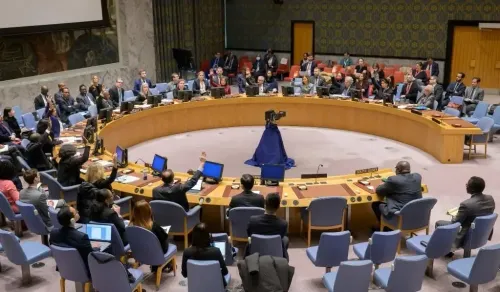
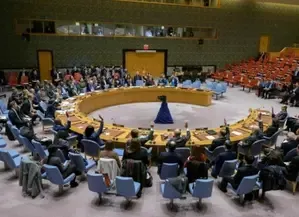
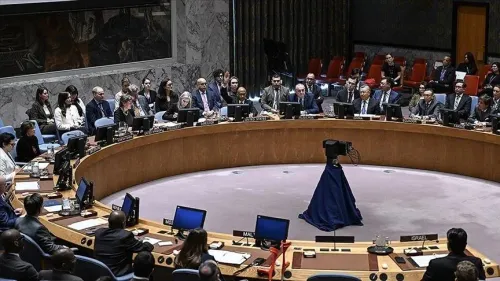
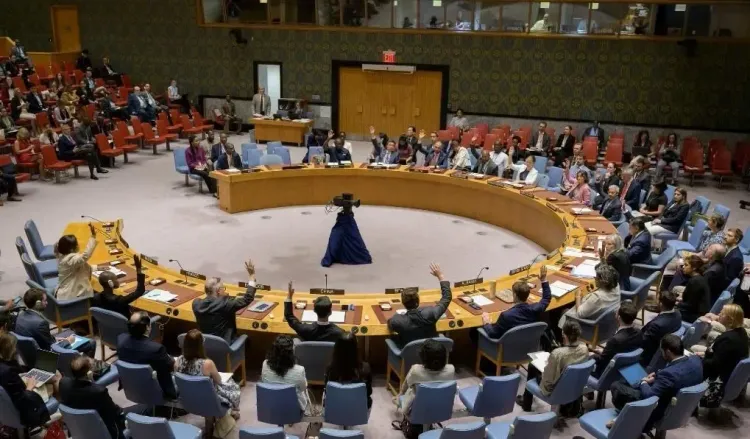
The United Nations Security Council on Tuesday, 29 September 2026, adopted Resolution 2829, extending the mandate of the Gang Suppression Force (GSF) in Haiti by six months through 31 March 2027. The resolution passed with 12 votes in favour and three abstentions from China, Russia, and Pakistan among the council's 15 members.
What Resolution 2829 Decides
The resolution directs the UN Secretary-General to continue providing logistical and operational support to the GSF through the UN Support Office in Haiti. It also formally recognises the agreement signed between the Haitian government and the GSF in July 2026, which confirmed the legal personality of the force and extended the necessary status and protections to its personnel for the continued independent exercise of their functions.
The council further encouraged member states to acknowledge the GSF's legal status and accord it and its personnel the privileges and immunities required to operate independently on Haitian soil.
Background: From Multinational Mission to GSF
The GSF did not emerge overnight. In September 2025, the Security Council adopted a separate resolution transitioning the then-operational Multinational Security Support (MSS) mission in Haiti into the GSF. Under that mandate, the GSF was authorised to assist the Haitian National Police (HNP) in maintaining basic law and order and public safety — including through arrest and detention — on an exceptional basis.
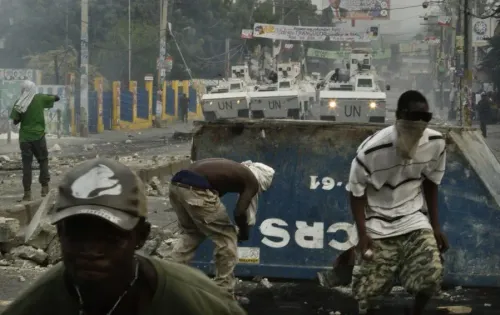
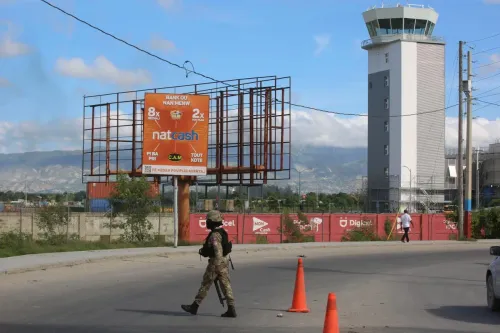
This comes amid a prolonged security crisis in Haiti, where armed gangs have seized control of significant portions of the capital Port-au-Prince and disrupted humanitarian operations, deepening an already severe governance vacuum following years of political instability.
GSF Still in Early Phase, Officials Caution
As recently as April 2026, Jack Christofides, the Special Representative for the GSF in Haiti, cautioned the Security Council that the force was still finding its footing. 'We are at a critical early phase of establishing the GSF,' Christofides told the council during a briefing. 'The GSF is being built as a disciplined, accountable, and partnership-driven mission, designed to deliver targeted security results while upholding the highest standards of conduct and full respect for Haitian sovereignty.'
Notably, the abstentions by China, Russia, and Pakistan signal continued unease among a bloc of council members over the scope and legal architecture of internationally-led security interventions — a pattern that has recurred in Security Council deliberations on Haiti since the MSS mission was first authorised.
What Happens Next
With the mandate now running through 31 March 2027, the GSF faces a narrow window to demonstrate measurable progress in stabilising Haiti's security environment before the council revisits the question. The force's ability to operationalise its partnership with the Haitian National Police and build local institutional capacity will be closely watched by member states ahead of any future mandate renewal discussion.
Point of View
Russia, and Pakistan are the more telling signal here — they reflect a persistent fault line on the council over the legitimacy of internationally-mandated security interventions, one that could constrain the GSF's operational freedom if it needs expanded powers. The force's own leadership described it as still in an 'early phase' in April; six months is a tight runway to show results credible enough to secure a stronger mandate renewal. Haiti's gang crisis has outlasted multiple international responses, and the GSF's structural reliance on the Haitian National Police — itself chronically under-resourced — raises genuine questions about whether this iteration will fare differently from its predecessors.
NationPress
30 Sept 2026
Frequently Asked Questions
What is the Haiti Gang Suppression Force (GSF)?
The Gang Suppression Force (GSF) is an internationally-backed security mission in Haiti, created in September 2025 when the UN Security Council transitioned the earlier Multinational Security Support (MSS) mission into the GSF. It is authorised to assist the Haitian National Police in maintaining law and order, including through arrest and detention, on an exceptional basis.
What did Resolution 2829 decide?
Resolution 2829, adopted on 29 September 2026, extends the GSF's mandate in Haiti until 31 March 2027 — a six-month extension. It also directs the UN Secretary-General to continue logistical and operational support through the UN Support Office in Haiti.
Why did China, Russia, and Pakistan abstain?
The three countries abstained rather than voting against the resolution, reflecting their stated reservations about the legal framework and scope of internationally-led security interventions in sovereign states. Their abstentions are consistent with a pattern of opposition to such missions in past Security Council votes on Haiti.
Who is Jack Christofides and what has he said about the GSF?
Jack Christofides is the Special Representative for the Gang Suppression Force in Haiti. In an April 2026 briefing to the Security Council, he described the force as being in a 'critical early phase,' emphasising its mandate to be disciplined, accountable, and respectful of Haitian sovereignty.
When will the GSF's mandate come up for renewal again?
Under Resolution 2829, the GSF mandate expires on 31 March 2027. The Security Council will need to vote on any further extension before that date, with the force's operational progress and the evolving security situation in Haiti likely to shape the outcome.