UN releases $160 million emergency aid for 12 crisis-hit countries
Synopsis
The UN has unlocked $160 million in emergency relief for 12 of the world’s worst humanitarian crises, but the top UN relief coordinator says money is only half the battle — political will to open access is the missing piece, with 11 million prioritised people still unreachable due to conflict and obstruction.
Key Takeaways
The United Nations released $160 million in emergency funding on 3 October 2026 for 12 countries and regions in humanitarian crisis. $150 million goes to Afghanistan, Burkina Faso, Cameroon, Chad, Cuba, Mali, Niger, occupied Palestinian territory, Somalia, South Sudan, Sudan, and Yemen .
An additional $10 million is earmarked for people with disabilities across the same emergencies to ensure inclusive aid delivery.
The funding is part of an effort to reach 87 million people facing the most severe humanitarian needs this year.
UN relief coordinator Tom Fletcher warned that political access barriers leave 11 million of those prioritised still unreachable despite available funds.
The United Nations has released $160 million in emergency humanitarian funding to deliver life-saving assistance across 12 countries and regions facing acute crises, UN humanitarian officials announced on 3 October 2026. The allocation, channelled through the Central Emergency Response Fund (CERF), is part of a broader drive to reach 87 million people facing the most severe humanitarian needs this year.
Where the Money Is Going
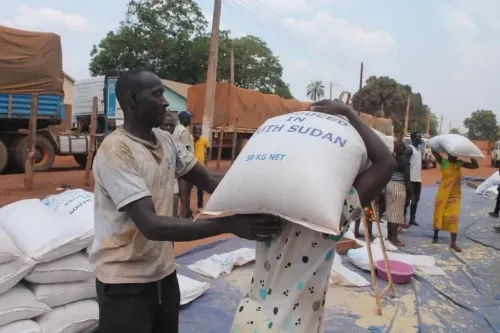
Of the total allocation, $150 million has been directed to Afghanistan, Burkina Faso, Cameroon, Chad, Cuba, Mali, Niger, the occupied Palestinian territory, Somalia, South Sudan, Sudan, and Yemen — a list that spans Sub-Saharan Africa, the Middle East, South Asia, and the Caribbean.
A separate $10 million tranche has been earmarked specifically to address the urgent needs of people with disabilities across the same 12 humanitarian emergencies, making aid delivery more accessible and inclusive, according to the UN Office for the Coordination of Humanitarian Affairs (OCHA).
What UN Officials Said
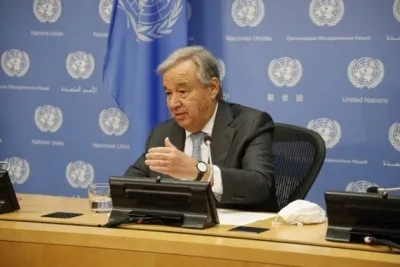
Tom Fletcher, UN Under-Secretary-General for Humanitarian Affairs and Emergency Relief Coordinator, stressed that financial resources alone cannot resolve the crises. “Today’s new funding will help us get aid to people who might otherwise be left behind,” he said. “But money alone won’t get us there: leaders must exercise political will to open access, remove obstacles and help us reach people whose lives are on the line.”
Access Remains the Critical Bottleneck
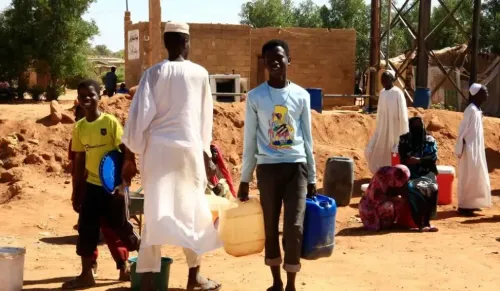
Fletcher has separately called for urgent diplomatic action in 10 of the 12 designated emergencies to secure humanitarian access. Among them, Afghanistan, the occupied Palestinian territory, South Sudan, Sudan, and Yemen are flagged as particularly obstructed, with an estimated 11 million people — out of the 87 million prioritised globally — still unreachable due to political and security barriers.
This comes amid a well-documented pattern of aid agencies warning that funding gaps and access restrictions, not just lack of resources, are the primary obstacle to effective relief. The CERF disbursement is designed to bridge shortfalls when donor pledges lag behind rapidly escalating needs on the ground.
Scale and Context
The CERF, established in 2006, is the UN’s primary pooled emergency fund, drawing on contributions from member states and private donors. The latest release represents one of its larger single-round allocations in recent years. Notably, several of the 12 designated countries — Sudan, Gaza, and Yemen — are simultaneously grappling with active conflict, compounding the challenge of last-mile delivery.
Aid organisations and member states will be watching closely to see whether political will materialises alongside the financial commitment, as Fletcher demanded.
Point of View
But Fletcher’s own words expose the core contradiction: the UN is adequately funded in this round yet openly admits it cannot reach millions of people because of political obstruction. That admission shifts accountability squarely onto member states, several of whom are parties to the very conflicts blocking access. The disability-specific $10 million tranche is a welcome structural step, but the harder question is why diplomatic pressure to open corridors in Sudan, Gaza, and Yemen remains insufficient even as the death toll mounts. Funding announcements without access breakthroughs risk becoming performative rather than transformative.
NationPress
3 Oct 2026
Frequently Asked Questions
How much has the UN allocated in emergency humanitarian aid and for which countries?
The UN has released $160 million in emergency funding for 12 countries and regions: Afghanistan, Burkina Faso, Cameroon, Chad, Cuba, Mali, Niger, the occupied Palestinian territory, Somalia, South Sudan, Sudan, and Yemen. Of this, $150 million covers general life-saving assistance and $10 million is dedicated to people with disabilities.
What is the Central Emergency Response Fund (CERF)?
The CERF is the UN’s primary pooled emergency fund, established in 2006, which draws contributions from member states and private donors to provide rapid funding when humanitarian crises outpace donor pledges. It allows OCHA to deploy resources quickly without waiting for individual country fundraising rounds.
Why did the UN flag access as a problem despite releasing funding?
UN Emergency Relief Coordinator Tom Fletcher stated that political obstacles, not just financial shortfalls, are preventing aid from reaching people in need. He said leaders must exercise political will to open access, particularly in conflict zones such as Sudan, Gaza, and Yemen, where an estimated 11 million prioritised people remain unreachable.
What is the significance of the $10 million disability allocation?
The $10 million is specifically earmarked to make humanitarian aid more accessible and inclusive for people with disabilities across all 12 designated emergencies. It reflects growing recognition that standard aid delivery often excludes disabled populations, who face disproportionate vulnerability in crisis settings.
How many people is the UN trying to reach with this year’s humanitarian response?
OCHA is targeting 87 million people facing the most severe humanitarian needs globally in 2026. Of these, at least 11 million are in areas where access is blocked by conflict or political barriers, requiring urgent diplomatic intervention alongside funding.