PoK crackdown: UN urged to act as Pakistani forces kill 40+ protesters
Synopsis
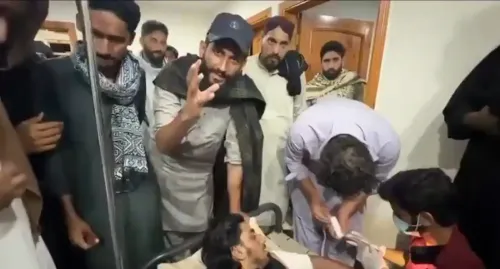
Over 40 civilians are allegedly dead and more than 80 wounded after Pakistani security forces reportedly opened fire on a 100,000-strong peaceful march in PoK on 27 July. With communications blacked out and media access blocked, a human rights body is now asking the UN a blunt question: will it act before the next death?
Key Takeaways
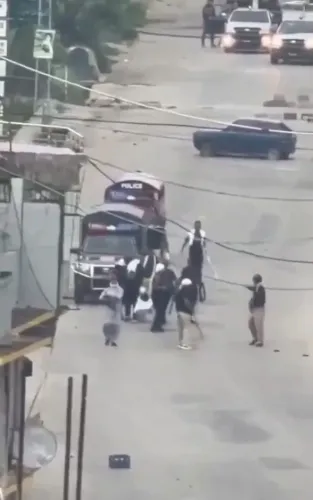
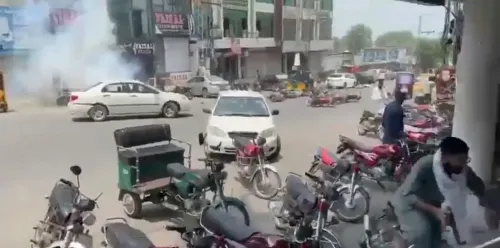
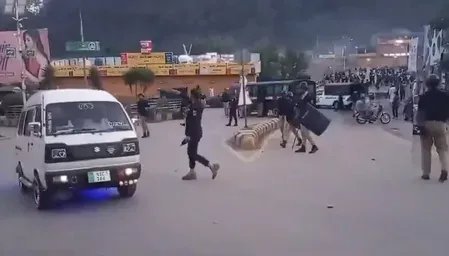
Pakistani security forces allegedly fired on peaceful JAAC Long March protesters in PoK on 27 July , reportedly killing more than 40 civilians .
The Jammu Kashmir Human Rights Observatory (JKHRO) has filed an urgent appeal with UN High Commissioner Volker Turk demanding immediate intervention.
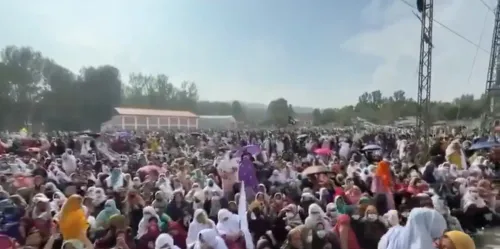
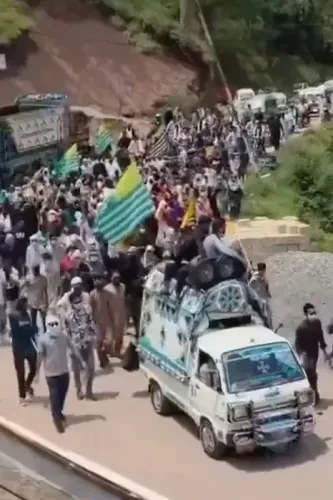
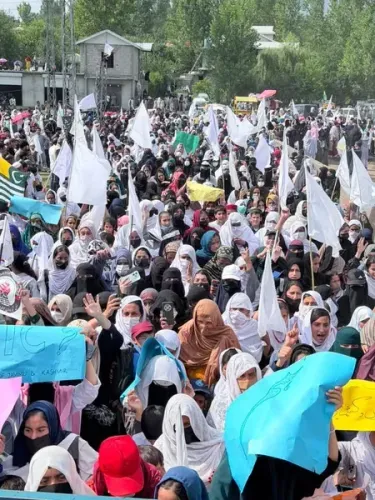
The march, moving from Rawalakot to Muzaffarabad , reportedly drew more than 100,000 civilians .
Initial accounts cite more than 80 wounded ; no verified final injury figure is available due to a reported communications blackout.
The OHCHR had already flagged rights violations in PoK on 17 July , but conditions worsened despite that warning.
The JKHRO has called for deployment of UN Special Rapporteurs and emergency humanitarian access to the region.
A human rights body based in Pakistan-occupied Kashmir (PoK) has urgently appealed to the Office of the United Nations High Commissioner for Human Rights (OHCHR) to intervene, following reports that Pakistani security forces opened fire on peaceful protesters in the occupied territory, allegedly killing more than 40 civilians and wounding dozens more. The appeal, filed on 29 July, comes as unrest in PoK reaches a critical threshold with no credible ceasefire in sight.
The Long March and What Triggered the Crackdown
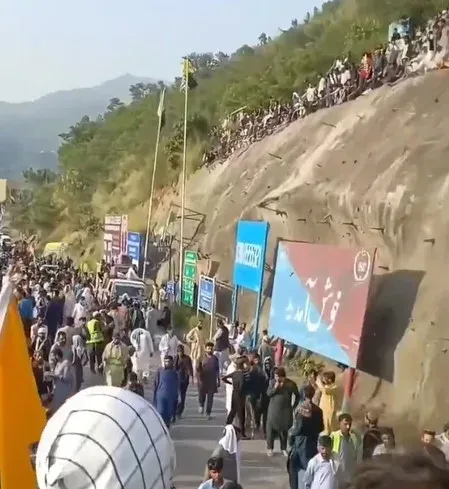
According to the Jammu Kashmir Human Rights Observatory (JKHRO), the violence erupted after the Long March organised by the Joint Awami Action Committee (JAAC) resumed on 27 July, moving from Rawalakot towards Muzaffarabad. Citing JAAC estimates, the JKHRO noted that the broader civilian mobilisation may have involved more than 100,000 people — one of the largest demonstrations in recent memory in the occupied territory.
Reports indicate that security forces were deployed along the march route. Witnesses have alleged indiscriminate firing on the crowd, with initial accounts referencing more than 80 wounded, though the JKHRO cautioned that no reliable final injury figure is yet available given restricted access to the area.
What the JKHRO Is Demanding
In its urgent appeal addressed to UN High Commissioner for Human Rights Volker Turk, the JKHRO called for an immediate public statement demanding an end to the use of lethal force against protesters. It also sought assurances that live ammunition would not be deployed against peaceful assemblies, and pressed for emergency medical and humanitarian access to be guaranteed inside PoK.
The body further urged the OHCHR to deploy relevant Special Rapporteurs or dispatch an assessment mission to the region, and called for facilitation of credible negotiations between Pakistani authorities and protest leaders to prevent further casualties.
'The combination of a mass civilian gathering, reported security-force deployment, alleged indiscriminate firing, restricted communications, limited media access and obstructed emergency coordination creates an immediate risk of further casualties. This is no longer a situation that can be addressed through statements of concern alone,' the JKHRO stated in its appeal.
The UN's Prior Warning and Inaction
This is not the first time international bodies have flagged the deteriorating situation. As early as 17 July, an OHCHR spokesperson raised serious concerns about restrictions on freedom of expression, peaceful assembly, and association in PoK. Jeremy Laurence, Spokesperson for the UN High Commissioner for Human Rights, said at the time that 'the criminalisation of a civil society organisation and imposition of strict limitations on gatherings raise serious concerns about infringements on the rights to freedom of expression, peaceful assembly and association. Detained JAAC leaders must have access to legal representation and their families. Their rights to due process and fair trial must be fully guaranteed.'
Despite that statement, conditions on the ground reportedly worsened, culminating in the alleged mass shooting of 27 July. Critics argue that the UN's earlier response — limited to a verbal statement — proved insufficient to deter the use of lethal force.
Humanitarian Conditions and Information Blackout
The JKHRO highlighted what it described as a deliberate information blackout in PoK, with communications reportedly restricted and media access severely limited. Emergency medical coordination has also allegedly been obstructed, compounding the humanitarian toll. 'The essential question is no longer whether there is a risk of escalation. The essential question is whether the United Nations system will act quickly enough to help prevent the next death,' the group said.
With Pakistani authorities yet to issue an official accounting of casualties, independent verification of the death and injury toll remains difficult. The situation is expected to remain volatile as JAAC has not called off its protest movement.
Point of View
Which is itself a calculated move: without confirmed casualty figures, international pressure remains diffuse. The UN now faces a credibility test — whether its human rights architecture can move from statements to accountability, or whether PoK becomes another instance where warnings were issued and ignored with impunity.
NationPress
28 Oct 2026
Frequently Asked Questions
What happened during the JAAC Long March in PoK on 27 July?
Pakistani security forces allegedly opened fire on peaceful protesters participating in the JAAC-organised Long March as it resumed from Rawalakot towards Muzaffarabad on 27 July. According to the JKHRO, more than 40 civilians were killed and over 80 wounded, though a verified final casualty figure is not yet available due to restricted communications.
Who is the JKHRO and what have they demanded?
The Jammu Kashmir Human Rights Observatory (JKHRO) is a PoK-based human rights documentation and monitoring body. It has urgently appealed to UN High Commissioner Volker Turk to publicly demand an end to lethal force against protesters, ensure humanitarian and medical access in PoK, and deploy UN Special Rapporteurs or an OHCHR assessment mission to the region.
What did the UN say about PoK before the 27 July crackdown?
On 17 July, OHCHR Spokesperson Jeremy Laurence raised serious concerns about restrictions on freedom of expression, peaceful assembly, and association in PoK. He also called for detained JAAC leaders to receive legal representation and due process. Despite that statement, the situation reportedly escalated into lethal violence ten days later.
How large was the JAAC Long March?
Citing JAAC's own estimates, the JKHRO stated that the broader civilian mobilisation involved more than 100,000 people, making it one of the largest demonstrations in recent memory in Pakistan-occupied Kashmir.
Why is independent verification of casualties difficult?
Communications in PoK are reportedly restricted and media access severely limited by Pakistani authorities, creating what the JKHRO describes as an effective information blackout. Emergency medical coordination has also allegedly been obstructed, making it impossible to establish a reliable final death or injury count.