India at UNGA: UNSC reform, GA revitalisation core to comprehensive UN overhaul
Synopsis
India used the UNGA plenary on 9 October to demand that GA revitalisation be embedded in a sweeping UN overhaul — including long-overdue UNSC expansion in both permanent and elected categories. With the next Secretary-General selection looming and geopolitical fractures deepening, BJP MP CP Joshi's statement is a pointed signal that New Delhi will not accept piecemeal reforms that leave the Security Council's Cold War-era power structure intact.
Key Takeaways
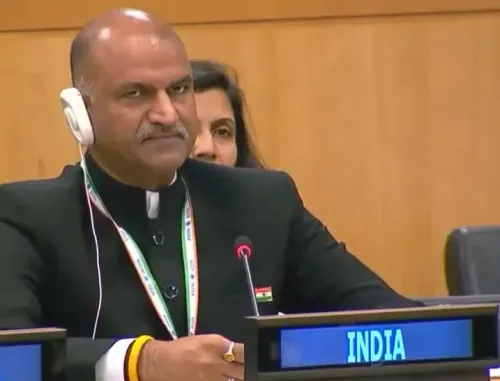
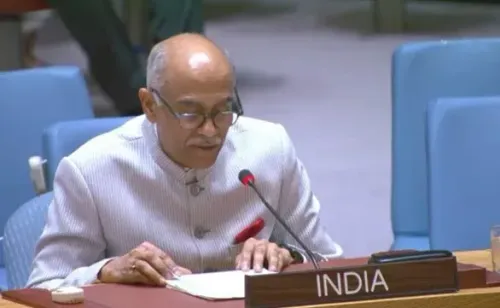
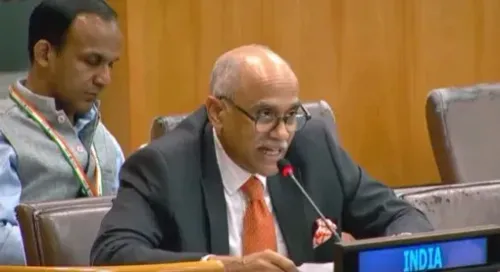
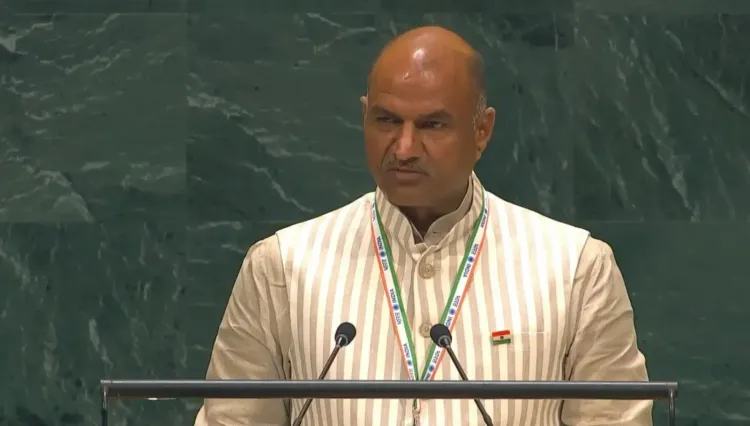
BJP MP CP Joshi delivered India's statement at the UNGA plenary on 9 October 2026 in New York .
India called for UNSC expansion in both permanent and elected categories , saying reform 'can no longer be delayed.' India proposed three UNGA working-method reforms: a leaner agenda, better inter-committee coherence, and eliminating duplication with the Human Rights Council .
India backed geographical balance as a guiding principle for selecting the next UN Secretary-General and called for a stronger UNGA role in the process.
India welcomed adoption of Resolution 79/327 and its use of UN 80 as a reform milestone.
Bharatiya Janata Party (BJP) MP CP Joshi on 9 October 2026 delivered India's statement at the United Nations General Assembly (UNGA) plenary on revitalisation of the Assembly's work in New York, reiterating New Delhi's call for sweeping UN reforms — including an expanded UN Security Council (UNSC) — and stressing that the General Assembly's revitalisation cannot be treated in isolation.
India's Core Position on UN Reform
Joshi made clear that revitalising the UNGA is inseparable from a broader UN overhaul. 'The revitalisation of the General Assembly must be pursued as part of broader, comprehensive UN reforms to make the organisation more representative, effective, and capable of fulfilling its objectives,' he said, adding that 'the revitalisation of key UN organs cannot be limited to the General Assembly alone.'
This framing positions India's push for UNSC permanent membership — long a strategic priority for New Delhi — within the wider multilateral reform agenda, lending it additional legitimacy at a moment of acute geopolitical strain on global institutions.
UNSC Expansion: India Pushes for Immediate Action
Joshi was unequivocal on Security Council reform, warning that the body's current composition undermines the entire UN architecture. 'The Security Council's inability to effectively discharge its mandate of maintaining international peace and security casts doubt on the functioning of the United Nations as a whole,' he said.
He called for expansion of UNSC membership in both permanent and elected categories, stating: 'Effective reform of the Security Council, including an expansion of membership in both permanent and elected categories, can no longer be delayed. It is essential that the Security Council reflects today's global realities and enables the United Nations to address current challenges.'
India has consistently championed UNSC reform through groupings such as the G4 (alongside Brazil, Germany, and Japan), and this address reinforces that position on the Assembly floor.
Three Areas for Improving UNGA Working Methods
Beyond structural reform, Joshi outlined three specific improvements India seeks in the Assembly's working methods. First, the UNGA agenda should be made 'more practical and manageable,' with overlapping topics consolidated and some deliberations shifted to a two- or three-year cycle. Second, greater 'coordination, coherence, and complementarity' should be ensured among the Assembly's Main Committees and between those committees and plenary sessions. Third, he called for streamlining the relationship between the UNGA and the Human Rights Council (HRC), noting that the HRC was established two decades ago as a subsidiary intergovernmental body with a specific mandate and that 'duplicating its work in New York is unnecessary.'
Next UN Secretary-General: Geographical Balance Must Guide Selection
Joshi also addressed the upcoming selection of the next UN Secretary-General, describing it as occurring 'at a critical juncture' given geopolitical fragmentation and mounting pressures on the UN system. He stressed that geographical balance must be a guiding principle, and that India supports a more prominent role for the General Assembly in the selection process.
'It is essential that the best candidate be appointed to this position,' he said, calling on member states to work collectively to achieve this objective.
Resolution 79/327 and Institutional Accountability
Joshi welcomed the adoption of Resolution 79/327, which recognises the UN's 80th anniversary (UN 80) as an opportunity to build a more efficient, effective, agile, and responsive organisation. He underscored the need for stronger institutional memory and accountability within the Office of the UNGA President, and reaffirmed India's commitment to working 'constructively and in good faith with all member states' to strengthen the Assembly.
As the global order faces rising fragmentation, India's statement signals that New Delhi intends to remain an assertive voice on UN governance — linking the internal functioning of multilateral bodies directly to their ability to deliver on peace, security, and development.
Point of View
New Delhi elevates its permanent-seat ambition from a bilateral ask to a systemic necessity. The pointed criticism of the Security Council's 'inability to discharge its mandate' is a direct indictment of the veto-wielding P5, especially relevant as Russia-Ukraine and Middle East crises have paralysed the Council. The call for geographical balance in the Secretary-General selection is equally pointed — no Asian nation has held the top UN post since U Thant left in 1971. What mainstream coverage often misses is that these positions are coordinated across the G4 and IBSA groupings; India is not speaking alone, and the cumulative pressure is building toward a reform inflection point that the P5 can increasingly less afford to ignore.
NationPress
9 Oct 2026
Frequently Asked Questions
What did India say at the UNGA plenary on 9 October 2026?
India called for comprehensive UN reforms, including UNSC expansion in both permanent and elected categories, and argued that revitalising the General Assembly cannot be treated separately from broader institutional overhaul. BJP MP CP Joshi delivered the statement in New York.
Why is India pushing for UNSC expansion?
India argues that the Security Council's current composition no longer reflects global realities and that its inability to maintain international peace and security undermines the entire UN system. India has long sought a permanent seat on an expanded UNSC, a position it advocates through groupings such as the G4.
What changes to UNGA working methods did India propose?
India proposed three reforms: consolidating overlapping agenda items and holding some deliberations on a two- or three-year cycle; improving coordination among Main Committees and plenary sessions; and streamlining the interface with the Human Rights Council to eliminate duplication of work between Geneva and New York.
What is India's position on the next UN Secretary-General selection?
India said the selection is occurring at a critical juncture and called for geographical balance to be a guiding principle. It also backed a stronger role for the General Assembly in the selection process, rather than leaving the decision solely to the Security Council.
What is Resolution 79/327 and why did India welcome it?
Resolution 79/327 recognises the UN's 80th anniversary as an opportunity to build a more efficient, effective, agile, and responsive organisation, including the UNGA. India welcomed it as a useful framework for the reform agenda it has been advancing on working methods and institutional accountability.