US aid cuts hit Tibetan exile programmes; $6.8 mn restored: Sikyong Tsering
Synopsis
The Trump administration's foreign aid cuts have slashed US support for Tibetan exile programmes, but Sikyong Penpa Tsering says his administration clawed back $6.8 million after direct talks in Washington. With USAID shuttered, $5 million still rescinded, and a $10 million Tibet-focused fund in implementation limbo, the CTA's financial footing is shakier than it has been in years — even as India is named its single biggest backer.
Key Takeaways
Sikyong Penpa Tsering confirmed that $6.8 million of previously allocated US funds has been restored to the Central Tibetan Administration after negotiations with Washington officials.
Prior to cuts, the CTA and Tibetan exile communities were allocated approximately $12 million , plus a separate $2 million for refugee health needs — the latter was cut entirely.
A further $5 million from the principal allocation remains subject to a rescission; its fate depends on the next US budget cycle.
A separate $10 million designated for Tibetans inside Tibet faces implementation uncertainty following the closure of USAID .
Proposals for a new funding round are due by 18 November ; extensions under the 2026 budget have been indicated.
Tsering described the Indian government as the CTA's 'biggest support', citing decades of assistance in education, rehabilitation, and humanitarian services.
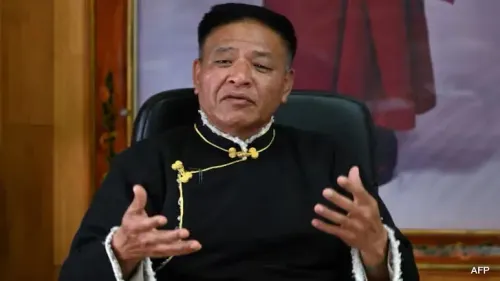
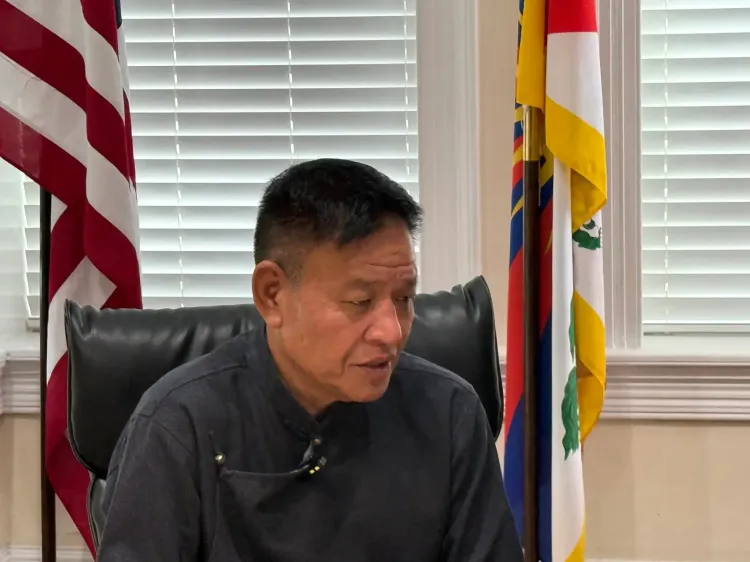
US funding for Tibetan exile programmes has fallen sharply under the Trump administration's sweeping foreign aid cuts, though a portion has since been reinstated following direct discussions with American officials, Sikyong Penpa Tsering, the elected leader of the Central Tibetan Administration (CTA), said in an exclusive interview in Washington on 13 November 2026. Tsering confirmed his administration had recovered $6.8 million of previously allocated support, even as broader fiscal uncertainty continues to cloud Tibetan exile programmes.
What Was Cut and What Was Recovered
Prior to the aid reductions, approximately $12 million had been allocated for the Central Tibetan Administration and Tibetan communities in exile, Tsering said. A separate $2 million flowed through a refugee and migration programme covering health-related needs.
Both streams were affected: the refugee and migration allocation was cut entirely, and broader foreign assistance was suspended as part of Washington's restructuring. However, Tsering said his administration had managed to secure the return of $6.8 million from last year's allocation. 'We managed to get back 6.8 million from last year,' he said. The remaining $5 million from the principal allocation had been subject to a rescission, with any further decision depending on the next budget cycle.
Funding Timeline and Upcoming Deadlines
Tsering said proposals for a fresh funding round were due by 18 November. Assistance previously linked to the 2024 and 2025 fiscal years had been redistributed over a longer period, he explained, with officials indicating that extensions would also be available under the 2026 budget. The compressed and overlapping timelines reflect the administrative turbulence that has followed Washington's aid overhaul.
A further $10 million had been separately designated for programmes benefiting Tibetans inside Tibet — funds not managed directly by the CTA but channelled through other implementing organisations. Tsering acknowledged that operationalising those programmes had become increasingly difficult since 2018, and their implementation was now further complicated by the closure of the US Agency for International Development (USAID), which had previously administered several of these international assistance streams.
USAID Closure Adds Institutional Uncertainty
The financial uncertainty has been compounded by structural changes inside the State Department and the shuttering of USAID. Tsering said he had held an extended meeting with State Department leadership and programme officials to understand which offices would now oversee Tibetan initiatives, how funds would be distributed, and what would happen to existing commitments. 'There is another separate 10 million for Tibetans inside Tibet,' he noted, flagging the implementation challenge as a core unresolved issue.
India Cited as 'Biggest Support'
Tsering was careful to place Washington's role within a broader support structure. He said India had provided essential assistance in education, rehabilitation, and humanitarian services to Tibetan exile communities over decades, describing New Delhi's backing as going 'far beyond what could be measured by a single budget line.' 'Indian government is our biggest support,' he said directly.
His appeal in Washington was also explicitly political. Tibetan leaders, he argued, had long maintained that supporting a nonviolent movement was comparatively inexpensive. 'It costs only a few millions to support nonviolence,' he said, referencing his administration's preference for a negotiated settlement with Beijing over confrontation. While Tsering expressed cautious hope that Washington would sustain assistance, he acknowledged that recovering every dollar of earlier allocations would be difficult given the administration's stated focus on cost reduction.
The Central Tibetan Administration, headquartered in Dharamsala, India, represents Tibetan exile communities worldwide and maintains contact with foreign governments and legislators on humanitarian and cultural matters. With a critical funding deadline approaching and the institutional architecture of US foreign assistance still in flux, the coming weeks will be consequential for the CTA's programme continuity.
Point of View
The stakes are uniquely high given its limited revenue base and near-total dependence on external goodwill. Tsering's disclosure that only $6.8 million of $12 million has been recovered, with $5 million still rescinded and the $10 million Tibet-focused fund operationally stranded, points to a funding crisis rather than a temporary hiccup. His pivot to emphasising India as the 'biggest support' is both a diplomatic signal to New Delhi and a tacit acknowledgement that Washington's reliability is no longer assumed. The CTA's nonviolence argument — 'it costs only a few millions' — is politically deft but unlikely to move a US administration whose foreign policy logic is defined by transactional calculus, not moral cost-benefit.
NationPress
14 Nov 2026
Frequently Asked Questions
How much US funding have Tibetan exile programmes lost under Trump's aid cuts?
Before the cuts, Tibetan exile programmes received approximately $12 million for the Central Tibetan Administration and communities in exile, plus $2 million through a refugee and migration health programme. The refugee allocation was cut entirely, and of the $12 million, only $6.8 million has so far been restored; a further $5 million remains rescinded pending the next budget cycle.
Who is Sikyong Penpa Tsering?
Penpa Tsering is the Sikyong, or elected political leader, of the Central Tibetan Administration — the Tibetan government-in-exile headquartered in Dharamsala, India. He is the principal representative of Tibetan exile communities in dealings with foreign governments and international institutions.
What is the $10 million fund for Tibetans inside Tibet?
A separate $10 million was designated by the US for programmes benefiting Tibetans living inside Tibet. These funds are not managed directly by the CTA but through other implementing organisations. Their delivery is now complicated by both the closure of USAID and the increasing difficulty of operating inside Tibet since 2018.
What impact has the USAID closure had on Tibetan programmes?
USAID previously administered several international assistance programmes, including those supporting Tibetan communities. Its closure has left institutional uncertainty about which State Department offices will now oversee these initiatives, how funds will flow, and what happens to existing commitments — adding a bureaucratic layer of risk on top of the financial cuts.
What is the upcoming funding deadline for the CTA?
Tsering said proposals for a new round of US funding were due by 18 November. Assistance previously tied to the 2024 and 2025 fiscal years has been spread over a longer period, with officials indicating extensions may be available under the 2026 budget.