China seeks control over next Dalai Lama: Sikyong Penpa Tsering
Synopsis
The elected leader of the Central Tibetan Administration has warned from Washington that Beijing is not just making a political claim — it is engineering a religious takeover. By issuing reincarnation rules, pushing political education in monasteries, and positioning its state-approved Panchen Lama, China is building the architecture to install a compliant 15th Dalai Lama, potentially splitting Tibetan Buddhism along state-sanctioned lines.
Key Takeaways
Sikyong Penpa Tsering of the Central Tibetan Administration warned on 13 November 2026 that China is preparing to control the selection of the next Dalai Lama .
Beijing has issued rules granting itself final authority over recognition of reincarnated religious figures, including the 15th Dalai Lama .
The current Dalai Lama , who turned 90 in July 2025 , has reportedly stated he will be reborn in 'a free world', not under Chinese supervision.
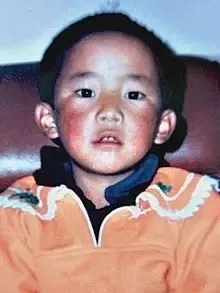
The whereabouts of the Panchen Lama recognised by the Dalai Lama remain unknown; Tsering fears Beijing will use its own Panchen Lama to legitimise a future succession.
US legislation updated in 2020 provides for sanctions against Chinese officials who interfere in the Dalai Lama's succession process.
India was cited as a key partner in defending Tibetan religious freedom and the community's right to determine its own spiritual succession.
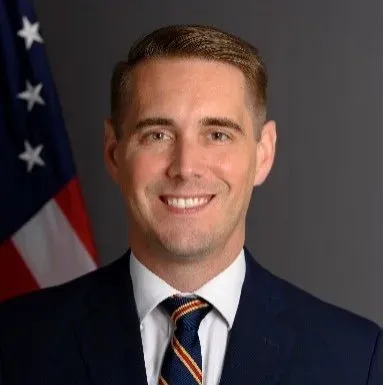
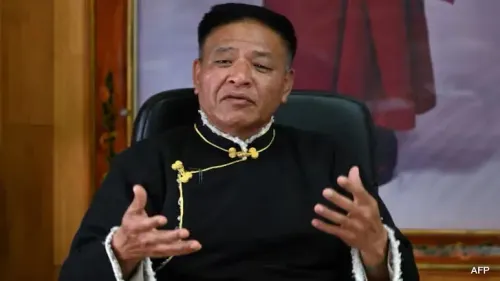
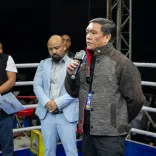
Sikyong Penpa Tsering, the elected political leader of the Central Tibetan Administration (CTA), has warned that China is actively preparing to assert authority over the selection of the next Dalai Lama — a move he described as a calculated bid to extend state control over Tibetan Buddhism itself. Speaking in Washington on 13 November 2026, Tsering said the reincarnation dispute had become a defining issue for Tibetans globally and for governments that champion religious freedom.
Beijing's Strategy: Reincarnation as Political Control
'They believe that if they can control the next Dalai Lama's reincarnation, they can control the whole of Tibet,' Tsering said, characterising Beijing's approach as fundamentally political rather than religious. He accused Chinese authorities of issuing formal rules to govern the recognition of reincarnated religious figures — rules specifically designed to give the state final authority over the identity of the 15th Dalai Lama.
Tsering further alleged that monasteries inside Tibet were being redirected away from religious scholarship and toward political education, including compulsory study of Chinese President Xi Jinping's ideology. He argued that such requirements were structurally incompatible with Buddhist practice and amounted to the ideological capture of a sacred tradition.
The Dalai Lama's Own Position
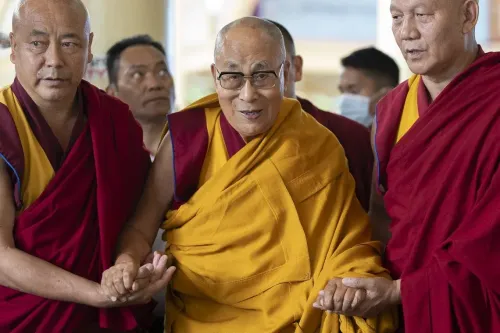
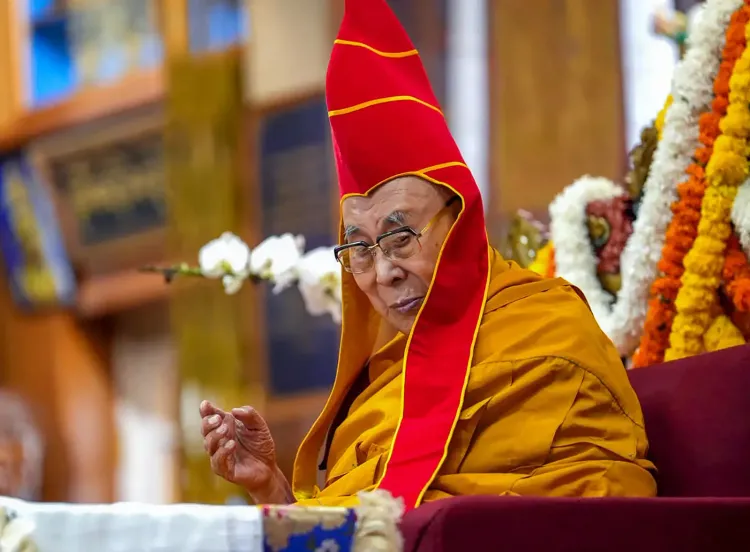
According to Tsering, the current Dalai Lama — who turned 90 in July 2025 — had already made his wishes known before that milestone birthday. The spiritual leader had indicated, Tsering said, that he would be reborn in 'a free world', explicitly ruling out reincarnation under the supervision of the Chinese government. Tsering argued that the right to determine religious succession rested with the spiritual tradition itself, not with what he described as 'an atheist ruling party.'
'So a government that does not believe in any religion, how can they be responsible for a sacred religious tradition that we have been following over the years, centuries, which is very unique to Tibetan Buddhism,' he said.
The Panchen Lama Precedent
Tsering invoked the unresolved case of the Panchen Lama recognised by the Dalai Lama, whose whereabouts have remained unknown to the Tibetan leadership since his disappearance. 'We still don't know whether he's alive or not,' he said. He alleged that Beijing promoted its own state-approved Panchen Lama and suggested that China might deploy that figure to influence or legitimise the future identification of a Dalai Lama successor — an outcome he described as wholly unacceptable to Tibetan Buddhists who follow the present spiritual leader.
US Legislation and India's Role
Tsering noted that the question of Tibetan religious succession had drawn bipartisan concern in the United States. He pointed to US legislation on Tibet, updated in 2020, which he said included provisions for sanctions against Chinese officials found to have interfered with the Dalai Lama's succession process. 'So here we have a very strong position from the US government,' he said.
He also drew a parallel with India, saying its tradition of religious pluralism and commitment to freedom of belief made it a vital partner for the Tibetan cause. Tsering said Tibetans were preparing for the eventual transition while relying on the Dalai Lama's own public guidance, and that the central question was not simply who would be recognised — but whether Tibetans would be free to practise their faith without state interference.
Point of View
But it is accelerating. With the Dalai Lama now in his 90s, the succession window is narrowing — and China is building its institutional apparatus accordingly, from monastic political education to state-approved religious figures. What mainstream coverage often misses is the structural parallel with the Panchen Lama case: Beijing has already demonstrated it will simply disappear an inconvenient religious choice and install its own. Tsering's warning is that the same playbook is ready for the Dalai Lama succession. The US sanctions law provides a legal lever, but enforcement remains untested. India — which hosts the Tibetan government-in-exile — faces the sharpest diplomatic dilemma: any public position on the succession will be read in Beijing as a provocation, yet silence risks ceding the legitimacy question entirely.
NationPress
14 Nov 2026
Frequently Asked Questions
Why does China want to control the next Dalai Lama's reincarnation?
According to Sikyong Penpa Tsering, Beijing believes that controlling the reincarnation of the next Dalai Lama would give it effective authority over all of Tibet and Tibetan Buddhism. China has issued formal rules asserting state oversight over the recognition of reincarnated religious figures, framing it as a matter of national sovereignty.
What has the current Dalai Lama said about his reincarnation?
According to Tsering, the Dalai Lama indicated before his 90th birthday in July 2025 that he would be reborn in 'a free world' — explicitly excluding reincarnation under Chinese government supervision. The Tibetan spiritual leader has long argued that the choice of his successor is a matter for the religious tradition, not the state.
Who is the missing Panchen Lama and why does it matter?
The Panchen Lama recognised by the Dalai Lama disappeared after being identified, and his whereabouts remain unknown to the Tibetan leadership. Tsering said this case demonstrates Beijing's willingness to remove inconvenient religious figures and install its own, raising fears the same approach will be applied to the future Dalai Lama succession.
What does US law say about interference in the Dalai Lama succession?
US legislation on Tibet, updated in 2020, includes provisions for sanctions against Chinese officials who interfere in the Dalai Lama's reincarnation or succession process. Tsering described this as 'a very strong position from the US government,' though the sanctions mechanism has not yet been invoked.
What is the Central Tibetan Administration and who is Sikyong Penpa Tsering?
The Central Tibetan Administration (CTA) is the Tibetan government-in-exile, based in Dharamshala, India. Sikyong Penpa Tsering is its elected political leader — the equivalent of a head of government — and serves as the primary political spokesperson for the Tibetan diaspora on international matters including the succession dispute.