Did the New US Assistant Secretary Discuss Key Issues with Indian Ambassador in Washington?
Synopsis
In a significant diplomatic meeting, India's Ambassador to the U.S., Vinay Kwatra, hosted Assistant Secretary Paul Kapur. This encounter highlighted vital discussions on enhancing bilateral relations, addressing shared interests, and navigating regional challenges.
Key Takeaways
Diplomatic Engagement: Importance of high-level discussions to strengthen bilateral ties.
Shared Interests: Focus on common goals between the U.S. and India.
Regional Security: Emphasis on security cooperation in the Indo-Pacific.
Economic Relations: Need for a balanced and profitable economic relationship.
Cultural Connections: Personal background of Paul Kapur enhances diplomatic ties.
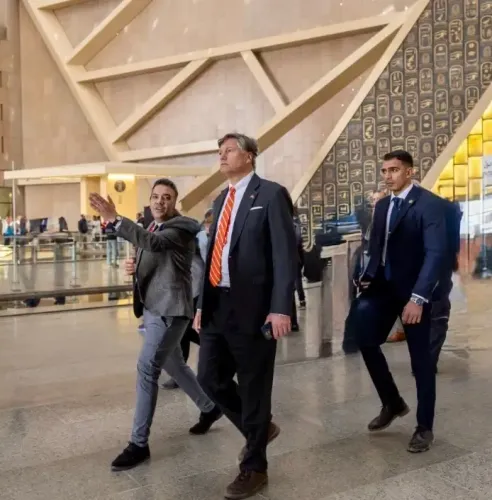
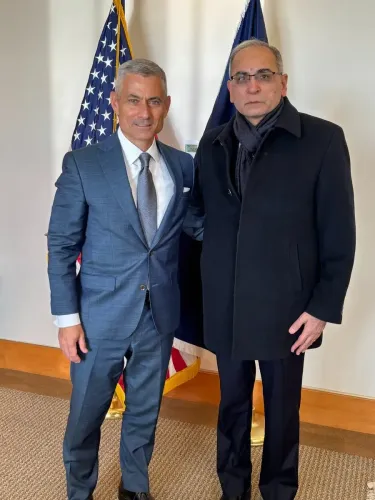
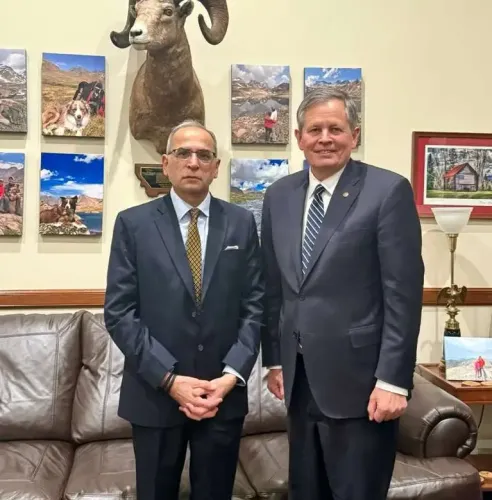
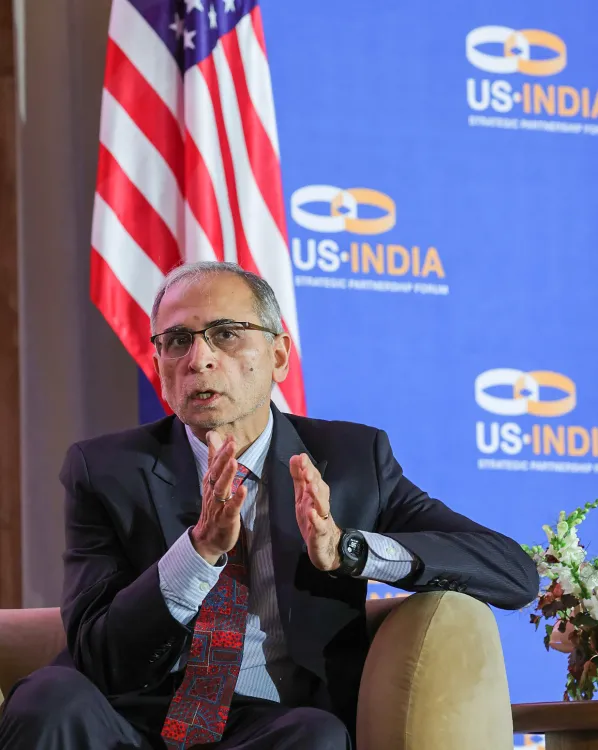
Washington, Nov 5 (NationPress) Vinay Kwatra, India’s Ambassador to the United States, warmly welcomed Paul Kapur, the Assistant Secretary of State for the Bureau of South and Central Asian Affairs, to his residence in Washington.
The State Department’s Bureau of South and Central Asian Affairs shared on X, “Grateful to @AmbVMKwatra for the warm hospitality at India House last night. It was a privilege to discuss our mutual bilateral and regional priorities, focusing on enhancing the U.S.-India relationship. - A/S Paul Kapur.”
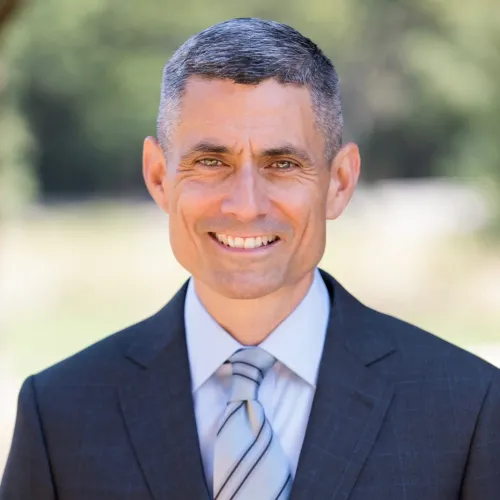
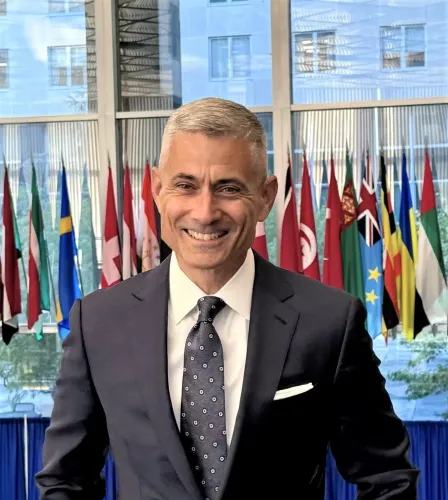
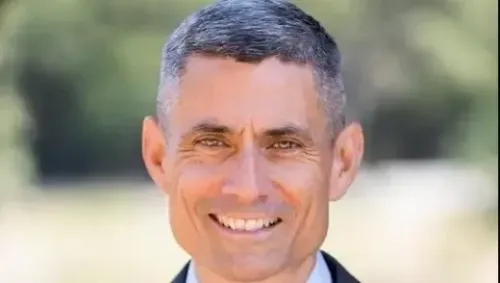
On October 22, Kapur, an Indian American security specialist, was officially sworn in as the new Assistant Secretary, representing a significant appointment by the Trump administration for the region.
Kapur took over from Donald Lu, who held the position from September 2021 until January 2025.
His previous experience includes serving on the State Department’s Policy Planning Staff from 2020 to 2021, where he concentrated on matters regarding South and Central Asia, the Indo-Pacific strategy, and India-U.S. relations.
Additionally, he has led the India-U.S. Track 1.5 dialogue and other strategic defense partnerships between the two nations.
Kapur is a visiting fellow at the Hoover Institution and teaches at the U.S. Naval Postgraduate School in Monterey, California.
In early October, he was confirmed by the Senate alongside the new U.S. Ambassador to India, Sergio Gor.
During his Senate confirmation hearing in June, Kapur reflected on his career journey, stating, “It feels like a full circle. I studied the region academically and now find myself in a pivotal diplomatic role.”
“I can’t shake the feeling of having come full circle. Born in New Delhi to an Indian father and an American mother, while I grew up as a typical American kid, I never envisioned my career leading me back to my birthplace,” he expressed.
Regarding U.S. relations with India, Kapur emphasized the two nations’ shared interests.
“The United States and India align on many fronts: ensuring a free and open Indo-Pacific not dominated by China, boosting bilateral trade, creating a balanced economic relationship, facilitating technology sharing, and securing access to essential energy sources for our economies,” he remarked.
On Pakistan, he mentioned his intention to “pursue security cooperation where it aligns with U.S. interests.”
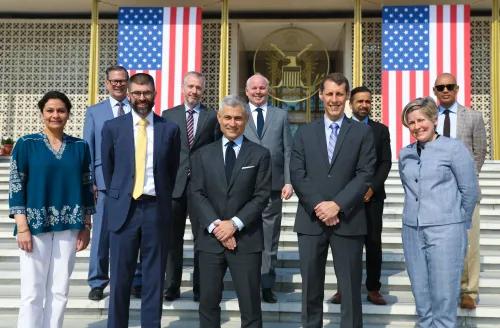
The bureau plays a vital role in shaping U.S. policy on security, economic engagement, counterterrorism, and infrastructure development across the broader South and Central Asia region.
Point of View
Especially in security and economic engagement, indicates a promising future for this partnership.
NationPress
16 Oct 2026
Frequently Asked Questions
What was the purpose of the meeting between Ambassador Kwatra and Assistant Secretary Kapur?
The meeting aimed to discuss shared bilateral and regional priorities, with a focus on strengthening the U.S.-India relationship.
What are some key interests shared by the U.S. and India?
The U.S. and India share interests in ensuring a free and open Indo-Pacific, expanding bilateral trade, and enhancing security cooperation.
What role does the Bureau of South and Central Asian Affairs play?
The Bureau shapes U.S. policy on security, economic engagement, counterterrorism, and infrastructure development in South and Central Asia.
How did Paul Kapur describe his career journey?
Kapur described his career as having come full circle, reflecting on his academic background and his current diplomatic role.