US pledges Saudi defence commitment as Houthi conflict escalates near key strait
Synopsis
Secretary of State Marco Rubio publicly reaffirmed the US-Saudi defence pact as Saudi-backed Yemeni forces push back against a Houthi offensive near a strategically critical strait — without confirming whether Washington is providing air support. The ambiguity is deliberate, but the stakes are not: Houthi control of territory near the strait poses a direct threat to global shipping, and the US alliance commitment signals that Washington is unlikely to stay on the sidelines.
Key Takeaways
Secretary of State Marco Rubio reaffirmed on 6 October 2026 that the US will honour its defence and security commitments to Saudi Arabia .
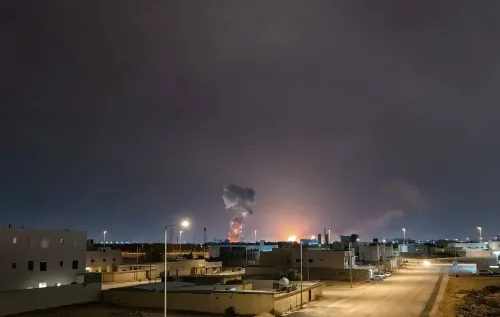
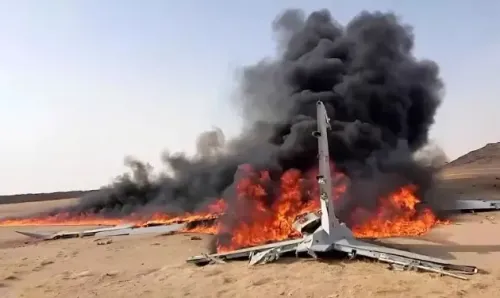
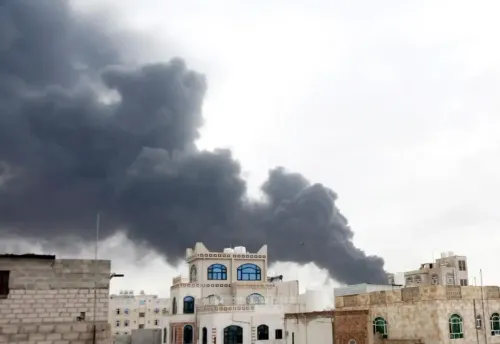
Saudi -backed Yemeni government forces are conducting a counteroffensive to retake territory seized by Houthi fighters near a strategically important strait.
Rubio declined to confirm whether Washington is providing or considering direct air support to the operations.
The Houthis seized the Yemeni capital Sanaa in 2014 , triggering a Saudi -led intervention; the conflict has continued for over a decade.
Washington has accused Iran of arming the Houthis ; Tehran denies direct military involvement.
Secretary of State Marco Rubio on 6 October 2026 reaffirmed that the United States intends to honour its defence and security commitments to Saudi Arabia, as Saudi-backed Yemeni government forces press a counteroffensive against Houthi fighters over territory near a strategically vital strait. Rubio stopped short of confirming whether Washington would provide direct air support to the operations.
What Rubio Said
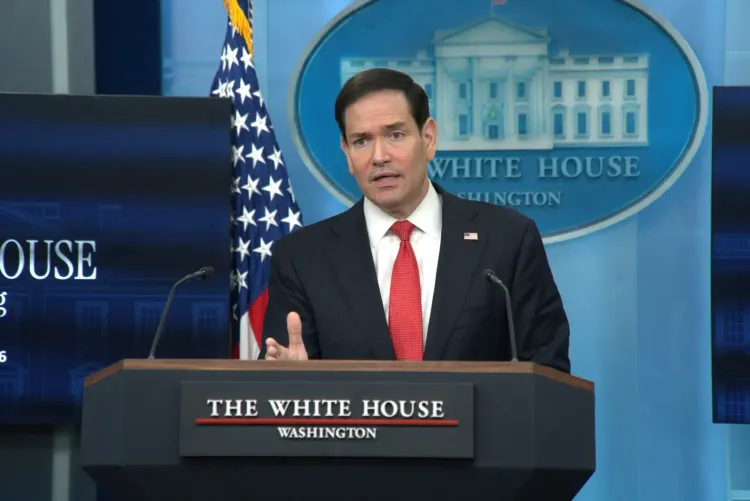
Speaking to reporters at Joint Base Andrews before departing for Europe, Rubio was direct about the broader alliance commitment but guarded on operational specifics. 'The United States has a defence and security agreement with Saudi Arabia, and we intend to live by it,' he said, adding: 'I won't discuss details further than that.'
When pressed on whether Washington had coordinated the recent operations or was considering air support, Rubio declined to answer directly. He framed the current fighting as a counteroffensive — a Saudi and Yemeni response to territory that had been seized by the Houthis in an earlier offensive.
The Strategic Stakes Near the Strait
The contested territory sits close to a strait of significant international importance. The Houthis have previously demonstrated a capacity to threaten both commercial and military vessels operating in waters around Yemen, making territorial control in the area an acute global security concern. Rubio acknowledged this context, noting that Saudi Arabia had come under direct Houthi attack and, by his assessment, had a legitimate right to self-defence.
'So obviously the Saudis have come under Houthi attack and see the threat that that poses, and they have a right to defend themselves,' Rubio said. 'And obviously the Yemeni forces are going to try to retake territory that they were ousted from.'
Background: A Decade of Conflict
The Yemen conflict dates back to 2014, when Houthi forces seized the capital Sanaa, prompting a Saudi-led military intervention the following year. The war has since drawn in regional powers and become entangled with broader tensions involving Iran. Washington has long accused Tehran of supplying arms and military support to the Houthis; Iran has maintained its relationship with the group is political in nature and has rejected US characterisations of its role.
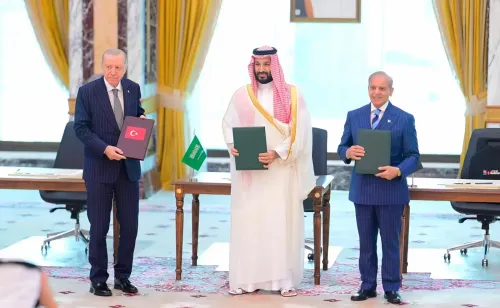
The US-Saudi security relationship spans decades and encompasses arms sales, military training, intelligence sharing, and coordination on regional threats — a partnership that Rubio's remarks implicitly underscored remains intact.
What Comes Next
Rubio's careful language — affirming the alliance without specifying operational involvement — leaves open the question of direct US military participation. Analysts note that any escalation involving air support from Washington would mark a significant shift in US posture and invite renewed scrutiny of American engagement in the Yemen conflict. The situation near the strait will likely remain a flashpoint, given its implications for global shipping lanes and regional balance of power.
Point of View
A posture that protects Washington from immediate accountability but also blurs the line between alliance support and co-belligerence. The Houthi threat to strait access is not new; what is new is the open acknowledgement that a counteroffensive was anticipated and implicitly sanctioned. If direct US air support materialises, it would mark a meaningful escalation that mainstream coverage is so far underplaying. The Iran dimension — consistently deflected by Tehran — also remains the unresolved variable that makes this conflict structurally impossible to contain through bilateral Saudi-US signalling alone.
NationPress
6 Oct 2026
Frequently Asked Questions
What did US Secretary of State Marco Rubio say about Saudi Arabia and the Houthis?
Rubio reaffirmed that the United States intends to honour its defence and security commitments to Saudi Arabia as Saudi-backed Yemeni forces conduct a counteroffensive against Houthi fighters. He declined to specify whether Washington is providing or considering direct air support to the operations.
Why are Houthi forces and the strait important to global security?
The Houthis have previously threatened commercial and military vessels in waters around Yemen, making control of territory near the strait a significant concern for global shipping lanes. Any Houthi hold on that territory could disrupt international maritime traffic and regional stability.
How long has the Yemen conflict been going on?
The conflict traces back to 2014, when Houthi forces seized the Yemeni capital Sanaa, prompting a Saudi-led military intervention in 2015. It has since evolved into one of the region's most prolonged and complex wars, drawing in Iran and multiple regional powers.
What is the US-Saudi defence relationship?
The United States and Saudi Arabia have maintained a decades-long security partnership covering arms sales, military training, intelligence sharing, and coordination on regional threats. Rubio's remarks underscored that this relationship remains in force amid the current Houthi counteroffensive.
Is Iran involved in the Yemen conflict?
Washington has accused Iran of providing military support — including weapons — to the Houthis. Iran has rejected this characterisation, describing its relationship with the group as political rather than military in nature.