US bans Canadian alcohol, dairy and motorcycles from Sept 29
Synopsis
The US-Canada trade war just crossed a new threshold. Starting 29 September, Washington's ban on Canadian alcohol, dairy and large-engine motorcycles kicks in — a direct retaliation for Ottawa's own counter-tariffs on $20 billion in US goods. With $1.36 billion in Canadian alcohol exports and $700 million in dairy at stake, and no deal in sight, the standoff is entering its most disruptive phase yet.
Key Takeaways
The United States bans select Canadian alcohol, dairy and motorcycles effective 12.01 a.m., 29 September 2026 .
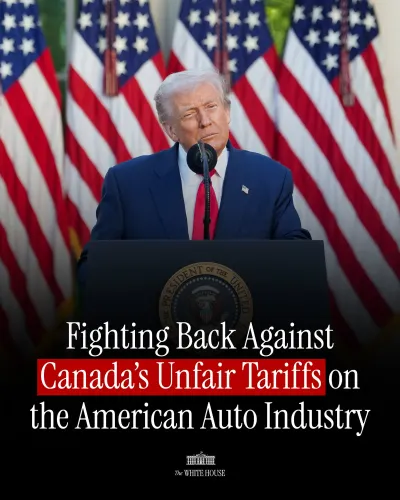
President Donald Trump signed the order on 8 September in response to Canadian retaliatory tariffs on $20 billion of US exports.
The alcohol ban covers dozens of products including rye, whisky, wine, beer, tequila and vodka ; dairy restrictions focus on whey and whey protein ; motorcycle curbs apply to engines exceeding 800 cc .
Canada exported $1.36 billion in alcoholic beverages in 2023 , with roughly 90 per cent going to the US market.
Statistics Canada recorded over $700 million in dairy exports to the US in 2024 .
As of 28 September , no agreement between Washington and Ottawa appeared imminent.
The United States will impose a sweeping ban on select Canadian alcoholic beverages, dairy products, and large-engine motorcycles starting 12.01 a.m. on 29 September 2026, the latest and sharpest escalation in a deepening trade confrontation between the two neighbours. The restrictions were ordered under Section 338 of the US Tariff Act of 1930, a provision that grants the President authority to restrict imports from countries deemed to discriminate against American commerce.
What Is Being Banned
The alcohol ban is the broadest element of the new measures, covering dozens of product categories including rye, whisky, wine, beer, vermouth, tequila, vodka and rum, in both packaged and unpackaged form. Dairy restrictions focus heavily on whey and whey protein derived from the cheese-making process, as well as cheese and other dairy products. The motorcycle curbs apply to vehicles fitted with reciprocating internal-combustion engines exceeding 800 cc in cylinder capacity, along with mopeds in that class. Cane and invert molasses are also included on the restricted-goods list.
The Tit-for-Tat Timeline
President Donald Trump signed the order on 8 September, framing it as a direct response to Canadian retaliatory tariffs on roughly $20 billion worth of US exports — a counter-strike that Ottawa had launched after Washington placed 50 per cent tariffs on hundreds of Canadian products. The White House stated that Canada had continued what it called 'discriminatory practices' affecting American alcoholic beverages, dairy goods, and motor vehicles, and that the bans were 'consistent with the interests of the United States and the public interest.'
The Stakes for Canadian Exporters
The numbers illustrate how heavily Canada's producers depend on the US market. According to Canada's Trade Commissioner Service, Canada exported $1.36 billion in alcoholic beverages in 2023, of which roughly 90 per cent was destined for the United States, with spirits accounting for two-thirds of that flow. Wine Growers Canada reported that approximately $8.3 million in Canadian wine — 57 per cent of it ice wine — was shipped to the US in 2025. Beer Canada noted exports of $28 million last year, with the US as the single largest foreign market.
On dairy, Statistics Canada recorded more than $700 million in dairy exports to the US in 2024, though the share directly affected by Tuesday's whey-focused restrictions remained unclear. Dairy Farmers of Canada has described the escalating trade measures as 'deeply concerning.' Dairy trade between the two countries has long been a flashpoint, with American officials repeatedly objecting to Canada's supply-management system and the access barriers it creates for US producers.
What Washington and Ottawa Are Saying
US Trade Representative Jamieson Greer said President Trump was 'comfortable' with the current state of trade relations with Canada. Greer noted that the US continued to have 'a lot of other trade' with its northern neighbour and was 'getting what we need' in oil, natural gas, and potash. He acknowledged that Canada 'periodically' approaches Washington seeking a negotiated agreement.
Canadian Minister responsible for Canada-US Trade Dominic LeBlanc said Ottawa 'maintains ongoing communications with our American counterparts,' according to reports. As of Sunday, 28 September, there was little indication that the two sides would reach an agreement before the restrictions took effect.
What Comes Next
With no talks reportedly scheduled and the US signalling satisfaction with the status quo, Canadian exporters and industry bodies face an abrupt market disruption. The escalation raises questions about whether Ottawa will respond with a further round of counter-tariffs, and how long the standoff can continue before sectors beyond those directly targeted — including agriculture and manufacturing — feel secondary effects. All eyes are now on whether diplomatic back-channels can produce a framework before the damage compounds.
Point of View
Dairy, motorcycles, molasses — signals that the Trump administration is using trade restrictions as a sustained pressure instrument rather than a negotiating opening. What is striking is Washington's stated comfort with the current state of affairs: Greer's remark that the US is 'getting what we need' in oil, gas and potash suggests the administration views the non-banned commodities as the real prize, making concessions on consumer goods a low-cost move politically. For Canada, whose alcohol exports are 90 per cent US-dependent, the calculus is far more painful — and Ottawa's 'ongoing communications' language suggests it has not yet found a lever strong enough to bring the US back to the table.
NationPress
28 Sept 2026
Frequently Asked Questions
What goods has the US banned from Canada starting 29 September 2026?
The US has banned select Canadian alcoholic beverages (including rye, whisky, wine, beer, tequila, vodka and rum), dairy products (with a focus on whey and whey protein), motorcycles with engines exceeding 800 cc, and cane and invert molasses, effective 12.01 a.m. on 29 September. Both packaged and unpackaged alcohol products are covered under the order.
Why did the US impose these bans on Canadian goods?
President Trump ordered the bans on 8 September in retaliation for Canadian counter-tariffs on roughly $20 billion in US exports, which Canada had imposed after Washington placed 50 per cent tariffs on hundreds of Canadian products. The White House cited what it called Canada's 'discriminatory practices' against American alcoholic beverages, dairy goods and motor vehicles.
How much is at stake for Canadian exporters?
Canada exported $1.36 billion in alcoholic beverages in 2023, with about 90 per cent going to the US market. Dairy exports to the US exceeded $700 million in 2024, according to Statistics Canada. Beer Canada reported $28 million in beer exports last year, with the US as the largest foreign market.
Is there a deal between the US and Canada to avoid the ban?
As of 28 September, there was no indication that Washington and Ottawa would reach an agreement before the restrictions took effect. US Trade Representative Jamieson Greer said President Trump was 'comfortable' with the current state of US-Canada trade relations.
Under what legal authority is the US imposing these import bans?
The restrictions are being imposed under Section 338 of the US Tariff Act of 1930, which grants the President authority to restrict imports from countries found to discriminate against American commerce. The White House determined the bans were 'consistent with the interests of the United States and the public interest.'