Rubio meets Lebanon PM, Saudi FM after UNGA in Iran-focused Gulf push
Synopsis
Hours after world leaders clashed over Iran at the UN General Assembly, US Secretary of State Marco Rubio sat down with the leaders of Lebanon and Saudi Arabia in Washington — a pointed signal that the Trump administration views the post-UNGA moment as a critical window to lock in Gulf consensus on Iran's nuclear programme, Houthi attacks, and Strait of Hormuz security.
Key Takeaways
US Secretary of State Marco Rubio met Lebanese PM Nawaf Salam at 10 a.m. and Saudi FM Prince Faisal bin Farhan Al Saud at 11:15 a.m. on 28 September 2026 at the State Department .
Rubio cited broad regional consensus that Iran must not obtain a nuclear weapon , the Strait of Hormuz must remain open, and Houthi activity in Yemen is 'deeply problematic'.
Saudi Arabia called at UNGA for the entire Middle East to be free of weapons of mass destruction.
Under Secretary Allison Hooker will also meet Maldivian Foreign Minister Iruthisham Adam — a meeting with direct relevance to India's Indian Ocean security calculus.
Under Secretary Thomas DiNanno will hold separate closed-door arms control talks with Dutch Political Director Joost Flamand .
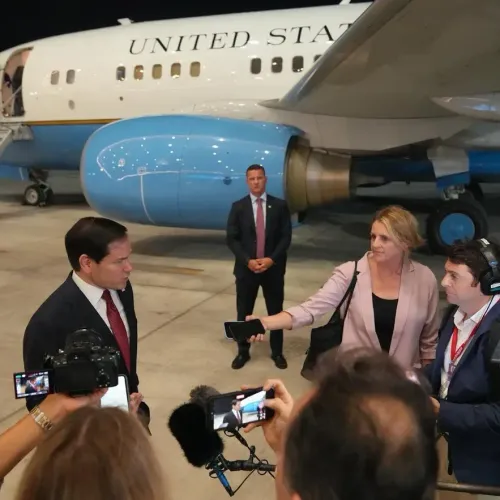
US Secretary of State Marco Rubio held separate talks with Lebanese Prime Minister Nawaf Salam and Saudi Foreign Minister Prince Faisal bin Farhan Al Saud at the State Department in Washington on Monday, 28 September 2026, as the Trump administration intensifies diplomatic engagement over Iran, maritime security, and broader instability across the Middle East. The back-to-back meetings follow the high-level debate week at the UN General Assembly (UNGA) in New York, where world leaders staked out sharply divergent positions on Iran's nuclear ambitions, the Israel conflict, and the region's future security architecture.
Key Meetings and What Is on the Table
Rubio met Prime Minister Salam at 10 a.m. and subsequently held talks with Prince Faisal at 11:15 a.m., according to the State Department's public schedule. Under Secretary for Political Affairs Allison Hooker joined the Rubio-Salam session. The Lebanon talks are expected to cover the country's security, sovereignty, and its continuing struggle with the consequences of conflict, political strain, and regional competition. The State Department has not released a formal agenda for either meeting.
Rubio's Three-Point Consensus on Iran and the Gulf
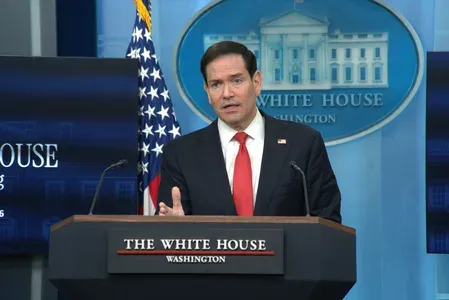
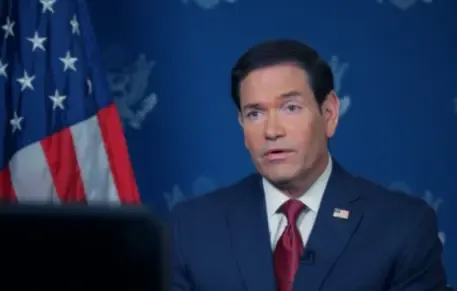
Speaking ahead of the meetings, Rubio outlined what he described as broad agreement between Washington and regional governments on three core concerns. 'I think there's consensus that the straits need to be open and free without attack,' Rubio said, referring to the Strait of Hormuz. He added: 'I think there's consensus that what's happening with the Houthis and in Yemen is deeply problematic. And I think there's a consensus that Iran can never have a nuclear weapon.' The remarks signal a coordinated Washington-Gulf position heading into what officials describe as a critical diplomatic window after UNGA.
Saudi Arabia's UNGA Position and What Riyadh Wants
Saudi Arabia used its address at the General Assembly to call for 'the entire region to be free of weapons of mass destruction.' Prince Faisal said regional security could not be restored through 'domination, exploitation or attempts to use crises to expand influence' — remarks widely read as a pointed reference to Iran's regional conduct. His meeting with Rubio is expected to allow both sides to review Iran policy, the security of international waterways, and the diplomatic landscape shaped by UNGA's high-level week.
Broader Diplomatic Schedule and India's Stake
Separately, Under Secretary Hooker is scheduled to meet Dutch Political Director Joost Flamand and Maldivian Foreign Minister Iruthisham Adam. Under Secretary for Arms Control and International Security Thomas DiNanno will also hold a closed-door meeting with Flamand covering arms control issues. The Maldives engagement carries particular significance for India, given the island nation's position along critical Indian Ocean shipping lanes and its centrality to New Delhi's maritime neighbourhood strategy. This comes amid heightened Indian attention to great-power competition in the Indian Ocean, where both the US and China have been deepening bilateral ties with Colombo, Malé, and other regional capitals.
What Happens Next
Monday's diplomatic schedule places Gulf security, nuclear non-proliferation, and maritime stability at the centre of Washington's first post-UNGA engagements. The outcome of the Rubio-Prince Faisal talks in particular is expected to shape the next phase of US-Gulf coordination on Iran, especially as nuclear negotiations between Washington and Tehran remain in a delicate, unresolved state.
Point of View
Houthi containment, no Iranian bomb — is a coalition-building frame, not a negotiating position, and Saudi Arabia's UNGA call for a WMD-free region suggests Riyadh is still hedging between Washington's hardline and a broader regional settlement. What is missing from the public messaging is any indication of what the US is willing to offer Iran in return, and without that, the 'consensus' risks being a photo-op rather than a strategic architecture. For India, the Maldives meeting is a quiet but telling data point: Washington is actively working the Indian Ocean chessboard at the same time it courts Gulf partners, and New Delhi will need to decide how openly it aligns.
NationPress
28 Sept 2026
Frequently Asked Questions
Why did Marco Rubio meet Saudi and Lebanese officials after UNGA?
Rubio held the meetings on 28 September 2026 to intensify US diplomatic engagement on Iran's nuclear programme, maritime security in the Strait of Hormuz, and regional instability — issues that dominated sharp exchanges at the UN General Assembly the previous week. The talks allowed Washington and Gulf partners to align positions after world leaders aired divergent views at UNGA.
What is the US position on Iran after the UNGA debate?
Rubio stated that there is broad consensus among the US and regional governments that Iran must never obtain a nuclear weapon, that the Strait of Hormuz must remain open and free from attack, and that Houthi activity in Yemen is deeply problematic. These three points form the core of the Trump administration's publicly stated Gulf security framework.
What did Saudi Arabia say at UNGA about regional security?
Saudi Foreign Minister Prince Faisal bin Farhan Al Saud called at UNGA for the entire Middle East region to be free of weapons of mass destruction. He also said regional security could not be restored through domination, exploitation, or attempts to exploit crises for geopolitical gain.
Why does the US meeting with the Maldives matter for India?
The meeting between Under Secretary Allison Hooker and Maldivian Foreign Minister Iruthisham Adam is significant for India because the Maldives sits along critical Indian Ocean shipping routes central to New Delhi's maritime security strategy. Washington deepening ties with Malé is part of a broader US effort to shape the Indian Ocean strategic environment, directly intersecting with Indian interests.
What other diplomatic meetings took place alongside the Rubio talks?
Under Secretary for Political Affairs Allison Hooker met Dutch Political Director Joost Flamand and Maldivian Foreign Minister Iruthisham Adam. Under Secretary for Arms Control Thomas DiNanno separately held a closed-door meeting with Flamand on arms control issues. Other senior State Department officials also held meetings with European and South Asian representatives on the same day.