US launches offensive cyber ops on foreign scam centres; seniors lost $7.7 bn in 2025
Synopsis
For the first time in US history, the Trump administration has turned offensive cyber weapons on foreign scam centres — a significant escalation framed explicitly as 'cyber warfare.' With American seniors losing $7.7 billion in a single year and scam networks allegedly tied to hostile foreign militaries, this is less a law enforcement story and more a new front in geopolitical conflict — one whose targets, scope, and diplomatic consequences remain undisclosed.
Key Takeaways
The Trump administration has, for the first time, deployed offensive cyber capabilities to disrupt foreign scam centres, confirmed at a White House roundtable on 22 October 2026 .
Americans aged over 60 lost $7.7 billion to cybercrime in 2025 , according to Homeland Security Secretary Markwayne Mullin .
CyberCom and the NSA are feeding intelligence on overseas cyber networks to the National Coordination Center , said Secretary Pete Hegseth .
Officials cited links between transnational cyber syndicates and 'enemy militaries,' though no specific country was named.
The Secret Service has recovered 14,600 child abuse videos and over 35,600 images under a parallel crackdown on online child exploitation.
First Lady Melania Trump is credited with leading the bipartisan passage of the Take It Down Act , targeting sextortion.
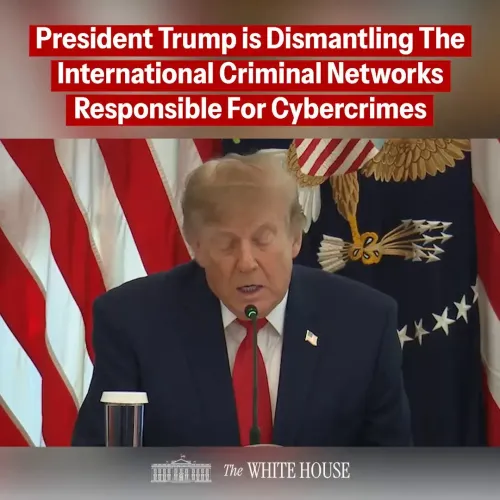
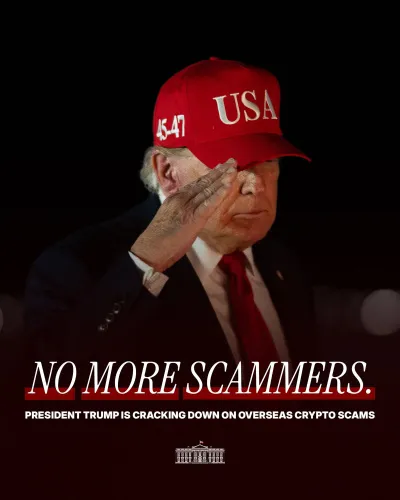
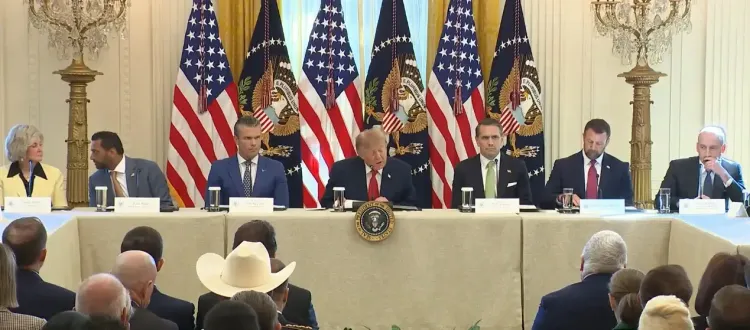
The Trump administration has, for the first time, deployed offensive cyber capabilities against foreign scam centres, senior officials confirmed at a White House roundtable on cybercrime on Wednesday, 22 October 2026. The announcement came as Homeland Security disclosed that Americans aged over 60 lost $7.7 billion to cybercrime in 2025 alone — wiping out retirement savings across the country.
The Offensive Cyber Mandate
White House Deputy Chief of Staff Stephen Miller told President Donald Trump at the roundtable: 'With the executive order that you signed, for the first time ever, we are using offensive cyber capabilities to dismantle, disrupt, and disable these foreign scam centres. That has never been done before.' Miller went further, telling Trump: 'So you have effectively declared cyber warfare against the cyber criminals, and that is saving the pensions, the life savings, the retirement accounts, the earnings of countless American citizens.'
Trump indicated his August national security memorandum had unlocked private sector 'tools and resources' to 'undertake offensive and defensive actions to stop the hackers'. Officials declined to specify which scam centres had been targeted or in which countries.
Military and Intelligence Resources Deployed
Secretary Pete Hegseth said his department had brought 'CyberCom and NSA, and the exquisite capabilities' to the effort. 'We're feeding our deep intelligence and tracking data on overseas cyber networks directly to the National Coordination Center and Homeland Security Task Force,' he said. Hegseth also noted 'a very clear connection between transnational cyber syndicates and enemy militaries and how they fund themselves,' though he did not name any specific country.
Miller linked the cybercrime campaign to President Trump's broader trade agenda, warning of 'entire foreign economies that are propped up on stealing from American seniors.' 'America is not a pile of treasure for other countries and other people and other scammers all around the world to loot for themselves,' he said.
The Scale of Elder Financial Fraud
Homeland Security Secretary Markwayne Mullin put a stark figure to the human toll. 'When you get into what is going on, the elderly population, over 60, as just in 2025 through cybercrimes, lost 7.7 billion in their income. That's retirements that are completely wiped away,' he said. Officials highlighted the so-called 'grandparent scam' as one of the most prevalent tactics — fraudsters call elderly victims claiming a family member has been arrested and demand immediate wire transfers, with funds routed to overseas scam centres.
Trump said the administration was focused on protecting seniors, calling them 'almost more than anybody' the primary victims of such schemes. He advised those targeted to 'seek out help from trusted family members.'
Child Exploitation Crackdown
The roundtable also addressed online child exploitation. Mullin said that under the Secret Service alone, authorities had recovered 14,600 child abuse videos and over 35,600 images. He highlighted the Homeland Security Investigations campaign 'Know to Protect', which he described as educating families on guarding against digital extortion.
President Trump said the administration was 'aggressively confronting the sexual extortion rackets that have wrecked the lives of too many young people, and in some cases even tragically led victims to take their own lives.' He credited First Lady Melania Trump, who, he said, 'led a successful bipartisan effort to pass the Take It Down Act.' Attorney General Todd Blanche added: 'We're also meeting the serious threat of sextortion head-on.'
What Comes Next
Officials offered no timeline for the offensive cyber campaign or specifics on its targets, leaving its full scope unclear. The administration's framing — tying scam networks to hostile foreign militaries — signals a potential escalation beyond law enforcement into national security doctrine. As Hegseth put it: 'By taking on these cyber criminals on offence and defence, we watch out for our warriors, we watch out for American citizens, and we secure the homeland.' The question of international attribution and diplomatic fallout remains unanswered.
Point of View
And one with significant unacknowledged risks. Offensive cyber operations against foreign infrastructure, even criminal networks, carry escalation potential that officials glossed over entirely at the roundtable. The linkage Hegseth drew between scam syndicates and 'enemy militaries' — without naming a country — is an assertion that deserves scrutiny: if true, it implies state-sponsored financial predation on American seniors at industrial scale; if overstated, it risks militarising what is fundamentally a consumer protection failure. The $7.7 billion figure is damning, but the harder question is why US financial and telecommunications systems remained so permeable to these scams for so long before an executive order was required.
NationPress
22 Oct 2026
Frequently Asked Questions
What offensive cyber actions has the US taken against foreign scam centres?
The Trump administration has, for the first time, used offensive cyber capabilities to dismantle, disrupt, and disable foreign scam centres, authorised under a presidential executive order and an August national security memorandum. CyberCom and the NSA are actively feeding intelligence on overseas cyber networks to the National Coordination Center and a Homeland Security task force.
How much money did American seniors lose to cybercrime in 2025?
Americans aged over 60 lost $7.7 billion to cybercrime in 2025, according to Homeland Security Secretary Markwayne Mullin. Officials described this as retirement savings being 'completely wiped away,' with the 'grandparent scam' — fake distress calls demanding wire transfers — identified as one of the most prevalent tactics.
Which US agencies are involved in the cyber offensive?
The operation involves US Cyber Command (CyberCom), the National Security Agency (NSA), the National Coordination Center, and a Homeland Security task force. The Secret Service is separately handling online child exploitation cases as part of the broader crackdown.
What is the Take It Down Act mentioned at the White House roundtable?
The Take It Down Act is a bipartisan legislation credited to First Lady Melania Trump, aimed at combating sextortion and non-consensual intimate imagery online. President Trump said the administration was 'aggressively confronting sexual extortion rackets' that had, in some cases, led victims to take their own lives.
Were specific countries or scam centres named as targets?
No. Officials declined to name which scam centres had been hit or in which countries they are located. Secretary Hegseth referenced 'a very clear connection between transnational cyber syndicates and enemy militaries' but did not identify any nation by name.