US Fed hikes rates to 3.75–4% as inflation stays above target for 5 years
Synopsis
The US Federal Reserve unanimously raised rates to 3.75–4% on 17 September, with Chair Kevin Warsh declaring inflation 'too high for too long' after five straight years above target. With PCE inflation at 3.6% and core at 3.2%, the Fed signalled it needs more convincing proof of disinflation before pausing — a stance with direct consequences for emerging-market currencies, capital flows, and central banks worldwide.
Key Takeaways
The US Federal Reserve raised its benchmark rate by 25 basis points to 3.75–4% on 17 September 2026 in a unanimous FOMC vote.
Chair Kevin Warsh cited persistently high inflation, a stronger economy, and geopolitical shifts as reasons for the move.
PCE inflation was estimated at 3.6% in August; core PCE at 3.2% — both well above the Fed's 2% target.
Inflation has exceeded the Fed's target for more than five years .
The FOMC's median projection puts the federal funds rate at 4.1% at end-2026 and end-2027.
Warsh declined to signal future rate moves, saying decisions will be data-dependent.
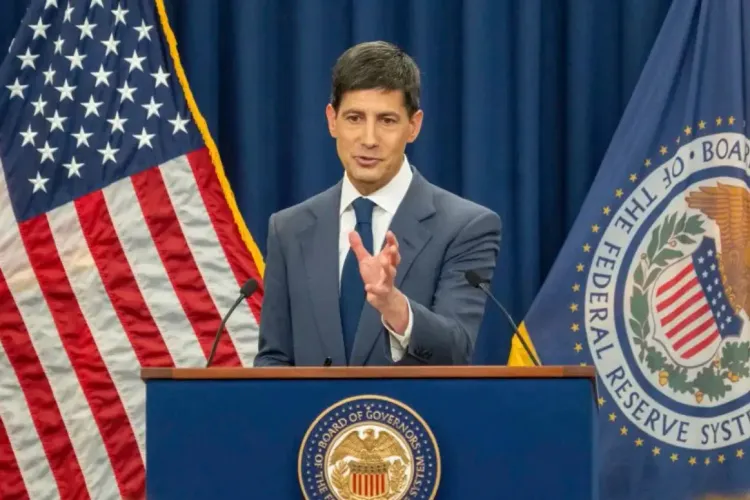
The US Federal Reserve raised its benchmark interest rate by 25 basis points to a target range of 3.75–4 per cent on 17 September 2026, with Chair Kevin Warsh citing persistently high inflation and a resilient economy as justification for tightening policy further. The Federal Open Market Committee (FOMC) voted unanimously in favour of the increase.
Why the Fed Acted Now
Warsh said the rate decision was driven by three converging factors: stronger-than-expected economic activity, insufficient progress in reducing inflation, and shifts in the geopolitical landscape since the committee's previous meeting. At the July meeting, most FOMC members had favoured waiting for additional data. Warsh said subsequent evidence showed the economy had strengthened without a meaningful improvement in underlying inflation.
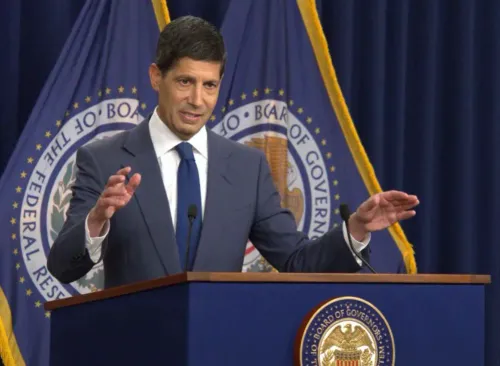
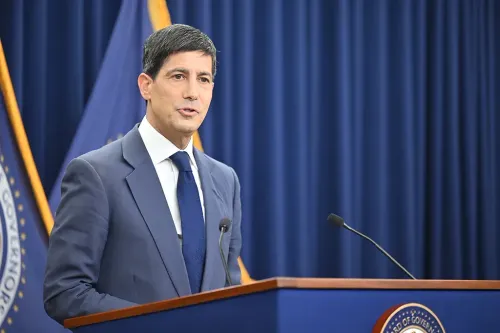
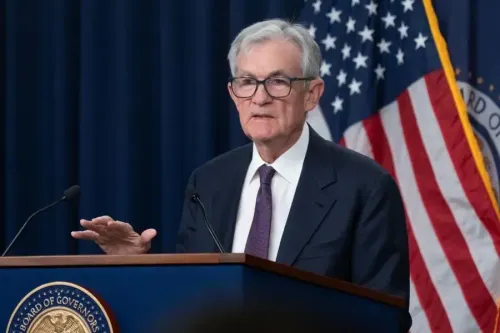
'The plain fact is that inflation is too high and has been for too long,' Warsh told a news conference following the meeting. He added that the committee had concluded the standard for confidence in disinflation 'has not been satisfied.'
Where Inflation Stands
Based on the latest consumer and producer price data, Warsh estimated that annual inflation measured by the personal consumption expenditures (PCE) index stood at approximately 3.6 per cent in August. Core PCE inflation — which strips out food and energy — was running at around 3.2 per cent, well above the Fed's longer-run target of 2 per cent. Inflation had remained above target for more than five years, Warsh noted, and too many price categories were still recording increases above 3 per cent over both six-month and 12-month periods.
Labour Market and Economic Outlook
The domestic economic backdrop remained broadly supportive. Unemployment held near 4.1 per cent, while job openings and weekly working hours had risen. Warsh described the labour market as 'broadly consistent with full employment.' Hiring, private sector earnings, and capital investment had all improved in recent months, he said. Domestic spending remained resilient, productivity growth was strong, and business investment continued to expand.
The committee's median projections placed GDP growth at 2.3 per cent for this year and 2.4 per cent for next year. Total PCE inflation was projected at 3.7 per cent in 2026, declining to 2.3 per cent in 2027. The median projection for the federal funds rate was 4.1 per cent at year-end 2026 and 2027, though Warsh noted he had not submitted a personal forecast.
On Future Rate Moves and Global Spillovers
Warsh declined to signal whether further rate increases were imminent, saying future decisions would depend on incoming economic data. 'I'm not going to prejudge any future decisions we make,' he said.
He acknowledged that the Fed cannot directly control supply-driven price pressures — such as energy or food costs — but said its role was to prevent those increases from spreading more broadly through the economy. He also pushed back on the notion that bringing inflation down inevitably means harming employment: 'I don't believe that we need to do harm to the labour markets to achieve our objective.'
Warsh pointed to the global reach of US monetary policy, noting that recent meetings with central bank counterparts in Jackson Hole, Asheville, and Basel confirmed that most advanced economies were facing similar inflationary pressures. 'When the Federal Reserve makes a policy choice, it matters not just to the US economy, but it spills over to the rest of the world,' he said.
With the Fed's mandate centred on maximum employment and stable prices, and inflation above its 2 per cent goal for over five years, markets will now watch closely for any signal — in speeches or data — that the tightening cycle is nearing its end.
Point of View
Not a routine adjustment — it tells markets the Fed sees no credible disinflation path yet, despite five years of above-target inflation. Warsh's refusal to project future cuts while simultaneously releasing a median dot at 4.1% for year-end is a studied ambiguity that keeps optionality but also keeps uncertainty elevated. For India and other emerging markets, a higher-for-longer Fed means sustained pressure on the rupee, tighter FII flows, and a harder RBI calculus on its own rate path. The real question mainstream coverage underplays: at what point does the Fed's credibility on the 2% target itself become the problem, having missed it for over five years?
NationPress
17 Sept 2026
Frequently Asked Questions
Why did the US Federal Reserve raise interest rates on 17 September 2026?
The Fed raised rates by 25 basis points to 3.75–4% because inflation remains well above its 2% target — PCE inflation was around 3.6% in August — and the economy showed continued resilience, giving policymakers room to tighten further without endangering growth or employment.
Who is Kevin Warsh and what did he say about inflation?
Kevin Warsh is the Chair of the US Federal Reserve. He stated at a post-meeting news conference that 'inflation is too high and has been for too long,' adding that the FOMC concluded the standard for sufficient progress on disinflation 'has not been satisfied.'
Will the Fed raise interest rates again after this hike?
Warsh declined to signal whether further increases are coming, saying all future decisions will depend on incoming economic data. 'I'm not going to prejudge any future decisions we make,' he told reporters. The median FOMC projection places the federal funds rate at 4.1% at year-end 2026.
What is the current US inflation rate and what is the Fed's target?
As of August 2026, annual PCE inflation was estimated at approximately 3.6%, with core PCE — excluding food and energy — at around 3.2%. Both figures are above the Fed's longer-run target of 2%, which inflation has exceeded for more than five years.
How does the US Fed rate hike affect India and other economies?
Warsh explicitly acknowledged that Fed policy 'spills over to the rest of the world,' a reference to how US rate hikes typically strengthen the dollar, pressure emerging-market currencies like the rupee, and tighten global capital flows. Most advanced economies are also grappling with similar inflationary pressures, as Warsh noted after meetings with counterparts in Jackson Hole, Asheville, and Basel.