US strikes Qeshm Island in Iran; Strait of Hormuz closed to shipping
Synopsis
US forces struck Iran's Qeshm Island overnight while Iran's navy mined the Strait of Hormuz, triggering fires on at least three oil tankers and issuing a full closure warning. CENTCOM separately confirmed disabling the St. Kitts-flagged M/V Huda in the Gulf of Oman. With the world's most critical oil chokepoint now shut, the confrontation has crossed a threshold that could shock global energy markets.
Key Takeaways
US military struck multiple locations on Qeshm Island, Iran on Sunday night, 9 November 2026 ; no damage to civilian or critical infrastructure reported.
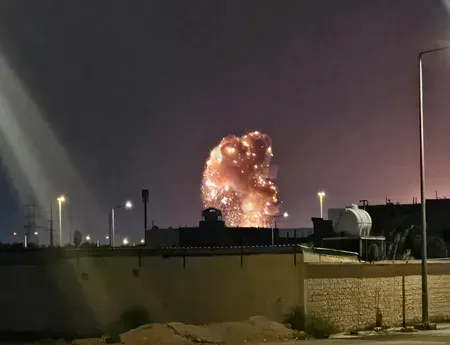
Four explosions were heard on the island, confirmed by Iran's state agency IRNA .
Iran's navy deployed mines east of the Strait of Hormuz ; at least three oil tankers caught fire after striking them on Sunday.
Iran has warned the Strait of Hormuz will remain closed until 'all threats are lifted.' CENTCOM confirmed disabling the St.
Kitts-flagged M/V Huda in the Gulf of Oman after it allegedly attempted to breach a naval blockade against Iran.
All relief and executive agencies in Hormozgan province placed on high alert by Deputy Governor Ahmad Nafisi .
Iran's southern Qeshm Island came under US military strikes on Sunday night, 9 November 2026, with several locations targeted, though state media reported no damage to residential areas, commercial zones, or critical infrastructure. The strikes were confirmed by Iran's state-run IRIB news agency on Monday.
What Happened on Qeshm Island
Hormozgan province's Deputy Governor Ahmad Nafisi was quoted as saying that the targets struck were located outside residential and commercial zones. He added that the situation on the island remained under control, with all relief, service, and executive agencies placed on high alert. Iran's official news agency IRNA had earlier reported on Sunday night that four explosions were heard on the island, with certain locations 'apparently bombed.'
Tankers Hit by Naval Mines Near Strait of Hormuz
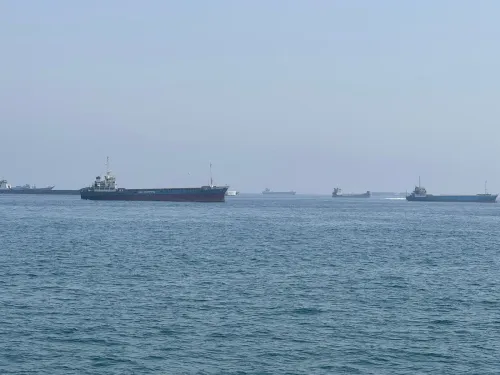
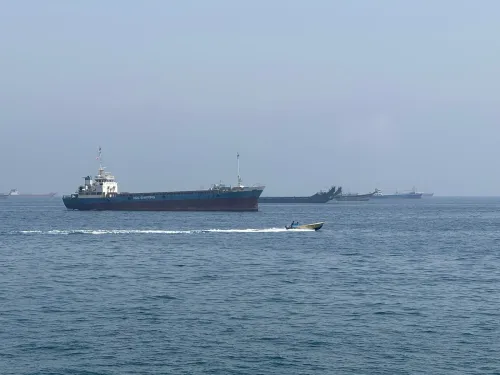
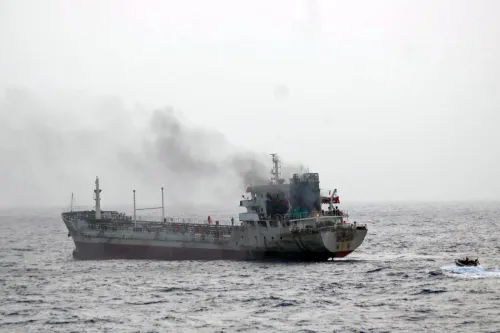
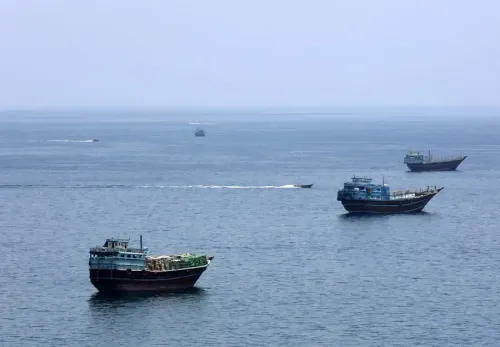
Separately, Iran's Army navy announced that an oil tanker caught fire after striking naval mines east of the Strait of Hormuz. In a statement, the navy said the tanker had switched off its identification systems and entered a 'forbidden' region when it hit the mines. Iran's navy warned that the Strait of Hormuz will remain closed to vessels until 'all threats are lifted,' according to reports.
The navy of Iran's Islamic Revolutionary Guard Corps (IRGC) said, in a separate statement on its official outlet Sepah News, that the explosion triggered a 'massive fire' on the vessel — describing it as the third oil tanker to strike naval mines in the strait's 'unauthorised' route since the beginning of that day alone.
CENTCOM Confirms Disabling of Cargo Vessel
US Central Command (CENTCOM) confirmed on social media platform X that its forces had disabled a commercial vessel in the Gulf of Oman after its civilian crew 'ignored repeated warnings and attempted to violate the naval blockade against Iran multiple times.' CENTCOM stated that a US military aircraft fired precision munitions at the stern of the St. Kitts-flagged M/V Huda, disabling the ship after directing the crew to abandon targeted spaces. 'The cargo vessel tried to depart regional waters after visiting an Iranian port,' CENTCOM added.
Geopolitical Stakes and What Comes Next
The closure of the Strait of Hormuz — through which roughly 20% of global oil trade passes — carries significant consequences for energy markets worldwide. This is not the first time Iran has threatened to block the strait; it has long been a pressure lever in standoffs with the West. However, the combination of active US strikes on Iranian territory, naval mine deployment, and an explicit closure warning marks a sharp escalation in what had been a tense but largely contained confrontation. India, which sources a substantial portion of its crude from the Gulf region, could face supply-chain disruptions if the closure is sustained.
Point of View
Which imports over 85% of its crude and sources heavily from the Gulf, has no immediate alternative supply buffer that absorbs a prolonged Hormuz shutdown. What mainstream coverage is underweighting is the IRGC-Army coordination visible here: simultaneous mine operations and an explicit closure warning suggest a pre-planned escalatory posture, not a reactive one. The key question is whether Washington treats the Qeshm strike as a contained operation or the opening of a wider campaign — because Tehran has already answered that question with mines in the water.
NationPress
9 Nov 2026
Frequently Asked Questions
What happened at Qeshm Island, Iran?
US military forces struck multiple locations on Iran's southern Qeshm Island on Sunday night, 9 November 2026. Iran's state media reported four explosions but said no damage was caused to residential areas, commercial zones, or critical infrastructure.
Why has Iran closed the Strait of Hormuz?
Iran's navy warned that the Strait of Hormuz will remain closed to vessels until 'all threats are lifted,' following its deployment of naval mines in the strait's eastern route. At least three oil tankers caught fire after hitting those mines on Sunday alone.
What is the M/V Huda and why did the US disable it?
The M/V Huda is a St. Kitts-flagged cargo vessel that US Central Command says was disabled in the Gulf of Oman after its crew repeatedly ignored warnings and attempted to breach a US naval blockade against Iran. CENTCOM said the vessel had visited an Iranian port before attempting to leave regional waters.
How does the Strait of Hormuz closure affect India?
The Strait of Hormuz is the transit point for roughly 20% of global oil trade, and India sources a large share of its crude from Gulf producers. A sustained closure could disrupt supply chains and push crude prices higher, with direct implications for fuel prices and inflation in India.
What is the IRGC's role in this confrontation?
The Islamic Revolutionary Guard Corps navy said in a statement that an oil tanker explosion caused a massive fire and was the third such incident since the start of Sunday, suggesting coordinated mine deployment. The IRGC operates separately from Iran's regular Army navy, both of which issued statements on the incidents.