US Congress delegation warns Iran to halt threats in UAE, Indo-Pacific tour
Synopsis
A senior US congressional delegation toured the UAE, Thailand, and the Philippines with a pointed message: Iran must stop threatening its neighbours. Congressman Josh Gottheimer's meetings in Abu Dhabi — covering Iran, AI, energy, and the Abraham Accords — signal that Washington is using direct legislative diplomacy to reinforce alliances across two strategic theatres at once.
Key Takeaways
Congressman Josh Gottheimer led a US congressional delegation to the UAE , Thailand , and the Philippines , confirmed on 2 June .
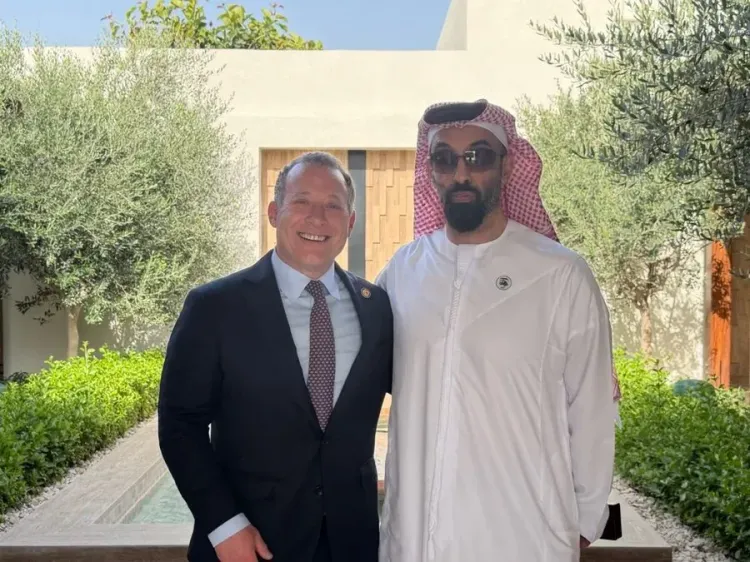
In Abu Dhabi , he met Sheikh Tahnoun bin Zayed Al Nahyan and Sheikh Abdullah bin Zayed Al Nahyan to discuss Iran, AI, and energy security.
Gottheimer praised the UAE for standing firm against Iran's missile and drone attacks and deepening ties with Israel under the Abraham Accords .
The delegation also visited Thailand and the Philippines to strengthen Indo-Pacific security cooperation.
Gottheimer identified China , North Korea , and Iran as destabilising actors the US and its partners must collectively counter.
A senior US congressional delegation led by Congressman Josh Gottheimer visited the United Arab Emirates, Thailand, and the Philippines to reinforce security alliances and deliver a unified message: Iran must cease threatening its neighbours. Gottheimer, a member of the House Permanent Select Committee on Intelligence (HPSCI) and Ranking Member of its National Security Agency and Cyber Subcommittee, confirmed the visits in a statement on 2 June.
Key Meetings in Abu Dhabi
In Abu Dhabi, Gottheimer held talks with two senior Emirati officials: Deputy Ruler and National Security Adviser Sheikh Tahnoun bin Zayed Al Nahyan and Deputy Prime Minister and Foreign Minister Sheikh Abdullah bin Zayed Al Nahyan. Discussions centred on the ongoing confrontation with Iran, regional security architecture, artificial intelligence cooperation, and energy security.
'The United States and the UAE are close partners, and I am grateful for the warmth our hosts extended throughout this trip,' Gottheimer said following the meetings.
Iran, Abraham Accords, and Shared Alignment
Gottheimer praised the UAE's resilience in the face of what he described as Iran's missile and drone attacks on Emirati cities, and highlighted the deepening of UAE-Israel ties under the Abraham Accords. 'The UAE has stood firm throughout Iran's relentless missile and drone attacks on Emirati cities and demonstrated the enduring strength of the Abraham Accords by engaging in a deeper partnership with Israel than ever before,' he said. He added: 'We are completely aligned that Iran cannot continue threatening its neighbours.'
The two sides also addressed rising antisemitism and extremism, reaffirming a shared commitment to combating hate and extremist ideologies. Gottheimer noted expanding cooperation in emerging technologies: 'Together, we are forging a partnership that will define the future of AI and energy innovation.'
Indo-Pacific Leg: Thailand and the Philippines
The delegation subsequently travelled to Thailand and the Philippines, meeting senior officials to discuss security cooperation across the Indo-Pacific. Gottheimer framed the regional agenda around countering what he called the destabilising influence of 'bad actors around the world, including China, North Korea, and Iran.' The Indo-Pacific stops underscored Washington's effort to manage security challenges across two theatres simultaneously.
Strategic Context
The United States and the UAE share a strategic partnership spanning defence, trade, energy, and counterterrorism. The UAE was a central participant in the Abraham Accords — the US-brokered normalisation agreements between Israel and several Arab states. This trip reflects a broader pattern of high-level congressional engagement designed to shore up alliances as Washington navigates simultaneous pressure points in the Middle East and the Indo-Pacific. Notably, this is not an isolated visit — senior US lawmakers have increasingly used direct travel to partner capitals to signal commitment that goes beyond formal diplomatic channels.
How these consultations translate into concrete policy steps — particularly on Iran — will be closely watched in the weeks ahead.
Point of View
Such as new Iran sanctions or expanded security assistance frameworks. Gottheimer's dual-theatre itinerary, covering both the Gulf and the Indo-Pacific in a single trip, reflects Washington's growing anxiety about managing Iran and China simultaneously rather than sequentially. The Abraham Accords framing is also notable: invoking it in the context of Iranian drone and missile attacks repositions the normalisation deal as a security architecture, not merely a diplomatic achievement. Whether Gulf partners read it the same way — especially as Iran's regional posture remains unresolved — is the more consequential question mainstream coverage tends to skip.
NationPress
21 Oct 2026
Frequently Asked Questions
Why did the US congressional delegation visit the UAE, Thailand, and the Philippines?
The delegation, led by Congressman Josh Gottheimer, travelled to the three countries to reinforce security alliances and deliver a shared message that Iran must stop threatening its neighbours. Talks also covered artificial intelligence, energy cooperation, and Indo-Pacific security.
Who did Congressman Gottheimer meet in Abu Dhabi?
Gottheimer met UAE Deputy Ruler and National Security Adviser Sheikh Tahnoun bin Zayed Al Nahyan and Deputy Prime Minister and Foreign Minister Sheikh Abdullah bin Zayed Al Nahyan. Discussions focused on Iran, regional security, AI, and energy cooperation.
What did Gottheimer say about Iran and the UAE?
Gottheimer praised the UAE for standing firm against what he described as Iran's missile and drone attacks on Emirati cities, and highlighted the deepening of UAE-Israel ties under the Abraham Accords. He stated that the US and UAE are 'completely aligned that Iran cannot continue threatening its neighbours.'
What is the significance of the Abraham Accords in this context?
The Abraham Accords, brokered by the United States, normalised relations between Israel and several Arab states including the UAE. Gottheimer's remarks framed the Accords as an active security partnership, pointing to growing UAE-Israel cooperation as evidence of its durability amid Iranian pressure.
What was the focus of the Indo-Pacific leg of the trip?
In Thailand and the Philippines, the delegation met senior officials to discuss strengthening regional security and countering what Gottheimer called destabilising influences from China, North Korea, and Iran. The visits reflected broader US efforts to deepen partnerships across the Indo-Pacific.