US military joins Nepal flood relief as death toll crosses 1,300
Synopsis
A glacial collapse in the Himalayas has killed more than 1,300 people in Nepal and left thousands missing, including dozens of Americans — prompting a rare US military humanitarian deployment and a bipartisan Congressional push for DART teams, drones, and satellite imagery. With $4.1 million committed and India, China, the UN, and the World Bank all mobilising, this is shaping up as one of the most internationally coordinated disaster responses Nepal has seen.
Key Takeaways
Flash floods triggered by a glacial collapse in the Himalayas on 26 August have killed more than 1,300 people in Nepal .
At least 65,000 people across multiple districts along Nepal's border with China have been affected.
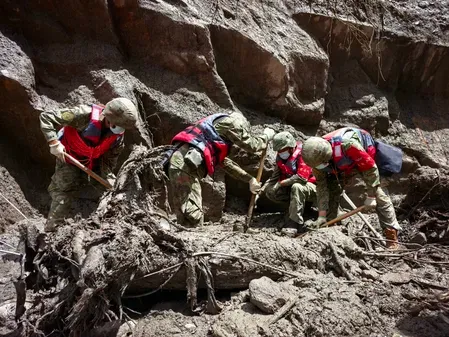
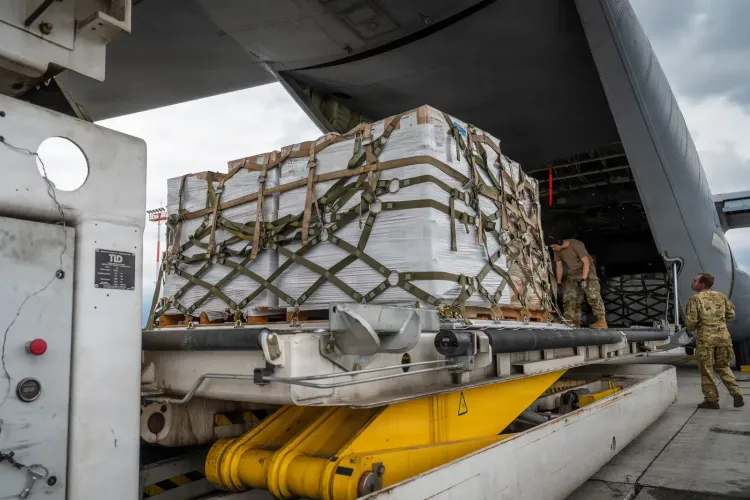
The US military has deployed to deliver lifesaving supplies and equipment to flood-affected areas.
30 US lawmakers wrote to Secretary of State Marco Rubio on 4 September urging DART deployment and use of drones and satellite imagery.
The US has committed $500,000 via Catholic Relief Services and $3.6 million in additional humanitarian assistance.
India , Britain , South Korea , China , the World Bank , and the UN have also mobilised aid.
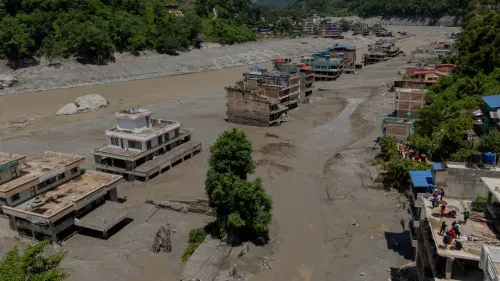
The US military has deployed to Nepal to assist humanitarian operations following catastrophic flash floods that have killed more than 1,300 people, left thousands missing — including dozens of American citizens — and destroyed critical infrastructure across several districts. The floods struck on 26 August, affecting at least 65,000 people in areas along Nepal's border with China.
Scale of the Disaster
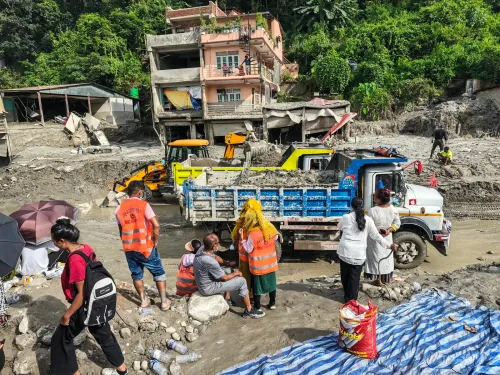
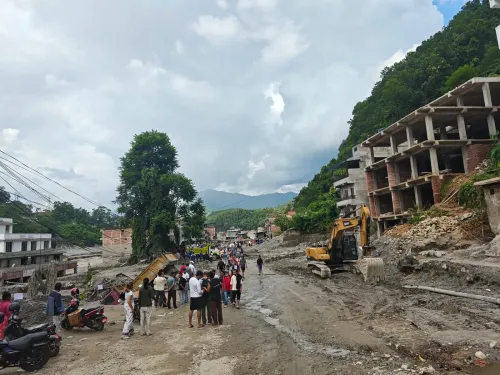
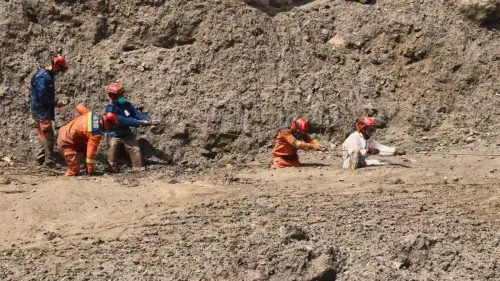
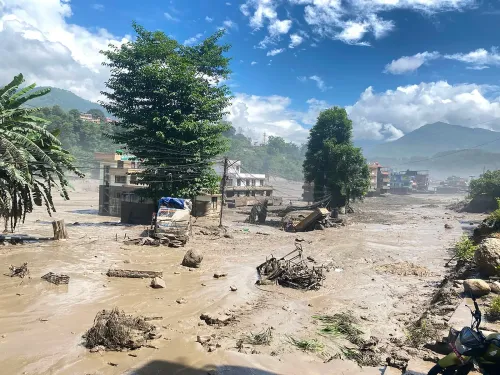
The catastrophe was triggered by a glacial collapse and landslide in the Himalayas, which sent torrents of water, mud, and debris surging through the Trishuli and Bhote Koshi river corridors. Roads, bridges, homes, and other vital infrastructure were obliterated in the path of the deluge. Multiple districts bore the brunt of the destruction, with rescue operations severely hampered by difficult high-altitude terrain.
US Military and Congressional Response
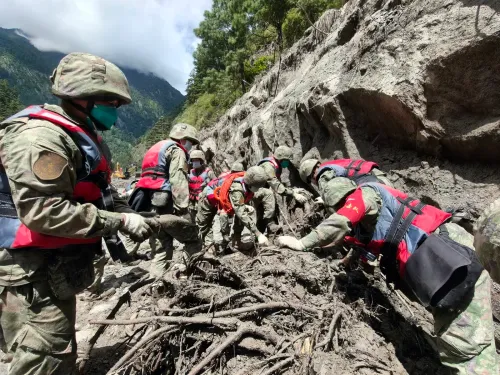
US forces are actively delivering lifesaving supplies and equipment to flood-affected areas. The rapid deployment has been described as an affirmation of Washington's commitment to Nepal and the bilateral partnership between the two nations.
Separately, 30 members of the US Congress wrote to Secretary of State Marco Rubio on 4 September, urging the State Department to deploy every available resource in support of search-and-rescue efforts. 'We write to urge the State Department to use every available resource to support ongoing search-and-rescue efforts following the catastrophic flash floods in Nepal and to ensure the safety and recovery of American citizens and others affected by this disaster,' the lawmakers said.
The signatories included Indian American Representatives Ro Khanna, Raja Krishnamoorthi, Suhas Subramanyam, Pramila Jayapal, and Shri Thanedar. The letter called for the immediate deployment of a Disaster Assistance Response Team (DART) to assist with search, rescue, logistics, and medical services. 'The scale of the catastrophe requires DART deployment as soon as possible,' the letter stated.
Technology and Consular Support Demanded
Lawmakers also pressed for high-altitude equipment, thermal and infrared drones, phone location data, and satellite imagery to help locate survivors in remote terrain. They urged the State Department to coordinate with the National Geospatial-Intelligence Agency, other Defence Department agencies, and commercial satellite companies. The letter further demanded daily updates to affected families and Congress, adequate staffing of consular hotlines, and support for repatriation services.
International Aid Mobilised
The US has committed $500,000 through a global award with Catholic Relief Services and an additional $3.6 million in humanitarian assistance. India has dispatched temporary shelters, blankets, and medicines to the affected region. Britain, South Korea, China, the World Bank, the United Nations, and multiple humanitarian organisations have also stepped forward with aid. The coordinated international response reflects the severity of a disaster that has drawn comparison to some of Nepal's worst recorded flood events.
With search-and-rescue operations ongoing and the full extent of the damage still being assessed, the coming days will be critical for the thousands still unaccounted for.
Point of View
And the move signals a geopolitical dimension beyond pure humanitarianism, particularly given China's border proximity to the worst-hit districts. The Congressional letter's demand for satellite imagery coordination with the National Geospatial-Intelligence Agency blurs the line between disaster response and intelligence infrastructure. Meanwhile, the $4.1 million US aid commitment, while meaningful, pales against the scale of destruction; the real pressure point is whether DART deployment follows rhetoric. With India also sending supplies, Nepal's disaster zone has quietly become a theatre of soft-power competition.
NationPress
5 Sept 2026
Frequently Asked Questions
How many people have died in the Nepal flash floods?
More than 1,300 people have been killed in the Nepal flash floods that struck on 26 August, with thousands more reported missing. At least 65,000 people across multiple districts have been affected by the disaster.
What caused the Nepal floods in August 2024?
The floods were triggered by a glacial collapse and landslide in the Himalayas, which sent water, mud, and debris through the Trishuli and Bhote Koshi river corridors, destroying roads, bridges, and homes across several districts near Nepal's border with China.
What aid has the United States committed to Nepal?
The US has committed $500,000 through a global award with Catholic Relief Services and an additional $3.6 million in humanitarian assistance. The US military has also deployed to deliver lifesaving supplies and equipment to affected areas.
What did US lawmakers demand in their letter to Secretary Rubio?
Thirty US Congress members wrote to Secretary of State Marco Rubio on 4 September urging the immediate deployment of a Disaster Assistance Response Team (DART), daily updates to families and Congress, staffed consular hotlines, repatriation support, and use of drones, satellite imagery, and phone location data to find survivors.
Which other countries have sent aid to Nepal?
India has sent temporary shelters, blankets, and medicines. Britain, South Korea, China, the World Bank, the United Nations, and several humanitarian organisations have also offered assistance, making this one of the most internationally coordinated responses to a Nepal disaster.