US, Canada, 8 nations jointly accuse Iran of terrorist activity in Western Hemisphere
Synopsis
Ten nations — led by the US and Canada — have issued a rare joint declaration accusing Iran and its proxies of terrorist plots, illicit fundraising, and political interference across the Western Hemisphere. The move signals Washington's push to internationalise its counter-Iran strategy beyond the Middle East, building a coalition that now stretches from the Caribbean to South America.
Key Takeaways
Ten nations — the US , Canada , Argentina , Colombia , Costa Rica , Dominican Republic , Guyana , Paraguay , Peru , and Trinidad and Tobago — signed the joint declaration on 6 October 2025 .
The signatories accused Iran and its proxies of lethal plotting , illicit fundraising , political interference , and foreign influence operations in the Western Hemisphere.
The declaration followed the Countering Transnational Terrorism Forum co-hosted by the US and Paraguay last month.
The joint statement did not name specific incidents, organisations, or alleged plots.
Iran has repeatedly denied US accusations, calling Washington's actions pressure tactics to advance geopolitical goals.
The signatories pledged enhanced coordination but announced no specific sanctions or enforcement timelines.
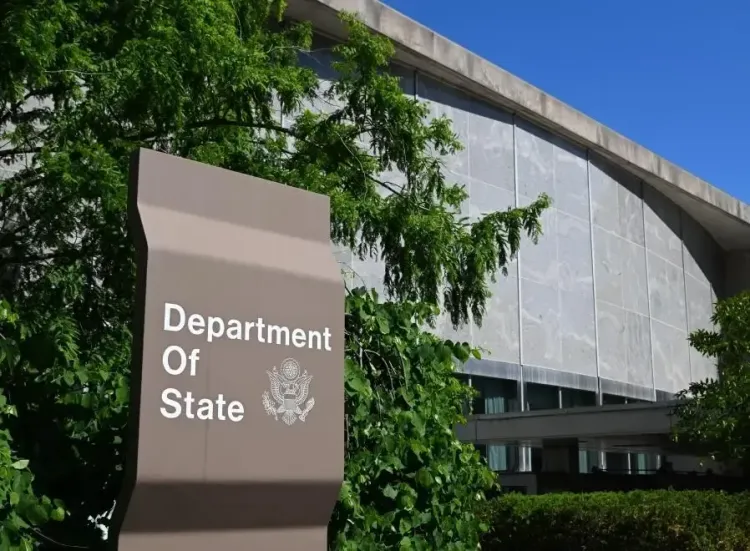
The United States, Canada, and eight Latin American and Caribbean nations on Monday, 6 October 2025, jointly accused Iran and its proxies of conducting terrorist activities, illicit fundraising, political interference, and foreign influence operations across the Western Hemisphere, pledging coordinated action to counter them. The joint declaration, released by the US State Department, marks a significant effort by Washington to build a broader regional coalition against suspected Iranian operations beyond the Middle East.
The Joint Declaration
The statement was signed by the governments of the United States, Argentina, Canada, Colombia, Costa Rica, the Dominican Republic, Guyana, Paraguay, Peru, and Trinidad and Tobago. Together, the signatories represent a broad hemispheric coalition spanning North America, South America, and the Caribbean.
'We stand united in our determination to protect our countries and our people against such threats,' the countries said in the joint statement. They added: 'The Islamic Republic of Iran and its proxies must halt these actions now.'
Allegations Against Iran and Its Proxies
The participating countries alleged that Iranian and proxy-sponsored activities in the Western Hemisphere included operations intended to strengthen terrorist networks, coerce perceived enemies, compromise legal or administrative processes, and damage regional security. The declaration specifically cited lethal plotting, illicit fundraising, and political interference as key areas of concern.
Notably, the joint statement did not identify individual incidents, organisations, or specific alleged plots — leaving the accusations at a broad, declaratory level without naming targets or providing supporting evidence publicly.
Background: The US-Paraguay Forum
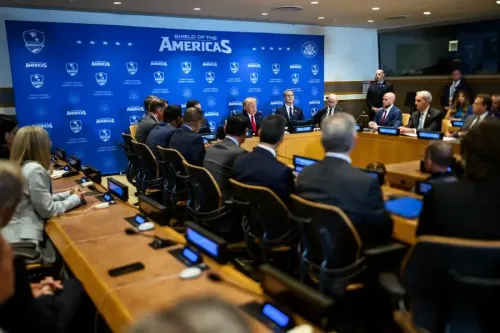
The declaration followed the Countering Transnational Terrorism Forum, co-hosted last month by the United States and Paraguay. According to the State Department, the forum was designed to enhance law enforcement cooperation among governments in the Western Hemisphere in disrupting what Washington describes as Iranian terrorist activity. The State Department characterised the initiative as part of the Trump administration's broader strategy to strengthen hemispheric security cooperation.
Iran's Longstanding Denials
Iran has repeatedly rejected US accusations regarding its regional and international activities. Tehran has consistently accused Washington of using sanctions and military pressure to advance its geopolitical objectives. This pattern of mutual accusation and denial has defined US-Iran relations for decades, and Monday's declaration is unlikely to alter that dynamic in the short term.
This comes amid heightened US scrutiny of Iranian influence networks globally, with the Trump administration having intensified diplomatic pressure on countries it views as facilitating Iranian operations. The inclusion of Canada alongside Latin American and Caribbean states gives the declaration a notably broader North-South dimension than previous regional efforts.
What Comes Next
The signatories pledged to 'undertake further measures to halt' Iranian activities and to 'enhance coordination and cooperation to address this threat.' However, the declaration stops short of announcing specific sanctions, law enforcement actions, or timelines, suggesting the immediate impact will be diplomatic rather than operational. Analysts will watch whether the coalition expands to include other hemispheric nations or translates into concrete joint enforcement actions in the coming months.
Point of View
Organisation, or enforcement measure. Washington has been accusing Tehran of hemispheric meddling for years; the real question is whether this coalition holds together long enough to produce concrete action, or whether it dissolves into communiqué diplomacy. The absence of Brazil — the region's largest economy and a key voice in Latin American security — is a conspicuous gap that limits the coalition's weight. For the Trump administration, the declaration is a useful framing tool, positioning Iran as a pan-hemispheric threat rather than solely a Middle Eastern one. Whether allies follow rhetoric with resources will determine if this is a turning point or another statement that Tehran can safely ignore.
NationPress
6 Oct 2026
Frequently Asked Questions
Which countries signed the joint declaration against Iran?
The declaration was signed by ten countries : the United States, Argentina, Canada, Colombia, Costa Rica, the Dominican Republic, Guyana, Paraguay, Peru, and Trinidad and Tobago. It was released by the US State Department on 6 October 2025.
What specific actions did the countries accuse Iran of in the Western Hemisphere?
The signatories accused Iran and its proxies of lethal plotting, illicit fundraising, political interference, and foreign influence operations intended to strengthen terrorist networks, coerce enemies, and compromise legal processes. However, the joint statement did not name specific incidents or organisations.
What was the Countering Transnational Terrorism Forum?
It was a forum co-hosted by the United States and Paraguay last month, aimed at enhancing law enforcement cooperation among Western Hemisphere governments to disrupt what Washington describes as Iranian terrorist activity. The State Department said it forms part of the Trump administration's hemispheric security strategy.
How has Iran responded to these accusations?
Iran has repeatedly rejected US accusations about its regional and international activities, accusing Washington of using sanctions and military pressure to advance its objectives against Tehran. No fresh response to this specific declaration has been reported.
What concrete measures did the ten nations pledge?
The signatories pledged to 'undertake further measures' and 'enhance coordination and cooperation' to counter Iranian activities, but the declaration stopped short of announcing specific sanctions, named targets, or enforcement timelines. The immediate impact is expected to be diplomatic rather than operational.