CM Sai approves ₹70.99 cr anicut for Jashpur irrigation
Synopsis
Chhattisgarh CM Vishnu Deo Sai has sanctioned ₹70.99 crore for the Maini Anicut in Jashpur district, a weir-based irrigation structure that will bring water to 1,500 hectares and boost both Kharif and Rabi crop production in the tribal-majority region.
Key Takeaways
₹70.99 crore sanctioned for construction of the Maini Anicut in Jashpur district , Chhattisgarh.
The project will provide irrigation cover to 1,500 hectares of agricultural land.
Both Kharif (monsoon) and Rabi (winter) crop cycles will benefit, enabling year-round farming.
Jashpur is a predominantly tribal, rain-dependent district in north-eastern Chhattisgarh — historically underserved by irrigation infrastructure.
The announcement was made by CM Vishnu Deo Sai on 6 October 2026 under his government's 'Sushasan Sarkar' (Good Governance Government) initiative.
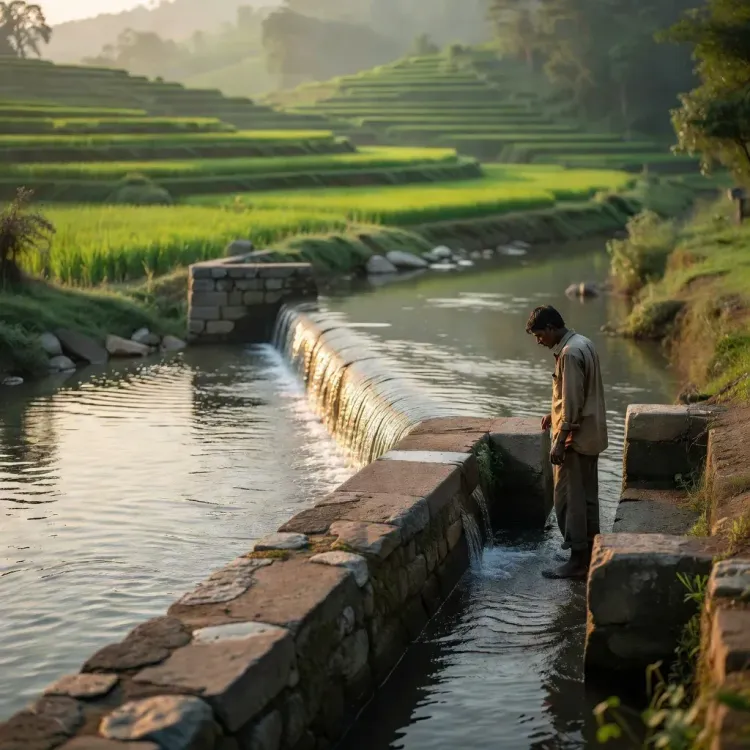
An anicut is a low-head weir structure that uses gravity flow — cost-effective for hilly, remote terrain like Jashpur.
A ₹70.99 crore investment is set to bring water to 1,500 hectares of farmland in one of Chhattisgarh's most underserved districts — and Chhattisgarh Chief Minister Vishnu Deo Sai announced the approval on Tuesday, 6 October 2026, framing it as the cornerstone of his government's agrarian promise.
The Maini Anicut: what ₹70.99 crore will build in Jashpur
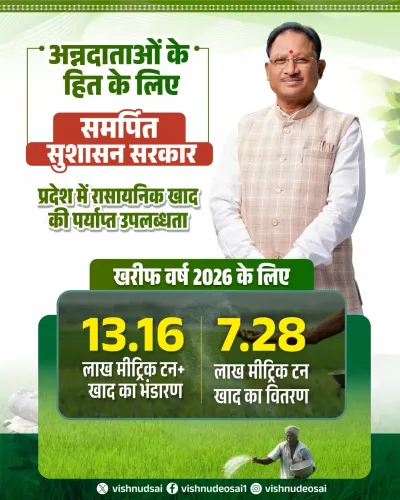
The sanction covers construction of the Maini Anicut in Jashpur district, a weir-style irrigation structure designed to divert river water to agricultural land. CM Sai posted on X, 'सिंचाई का विस्तार, अन्नदाताओं की समृद्धि का आधार' — 'Expansion of irrigation is the foundation of farmers' prosperity' — signalling that the project sits squarely within the BJP-led state government's broader 'Sushasan Sarkar' (Good Governance Government) brand.
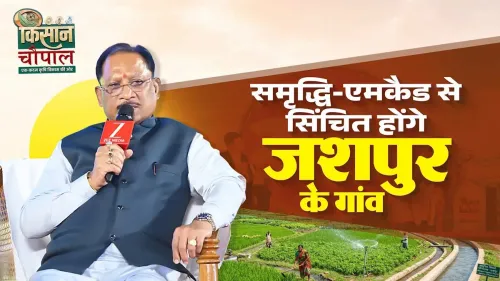
Once complete, the anicut will deliver irrigation cover to 1,500 hectares of cultivable area, benefiting farmers across both the Kharif (monsoon, June–October) and Rabi (winter, November–April) crop cycles. That dual-season coverage is significant: it means farmers can potentially double their annual harvest output on the same land, replacing single-crop dependence with year-round productivity.
Why Jashpur — and why anicuts matter
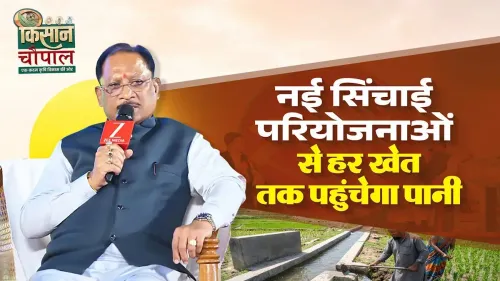
Jashpur, tucked in the north-eastern corner of Chhattisgarh and bordering Jharkhand and Odisha, is a predominantly tribal district with historically low irrigation penetration. Much of its farmland has relied on rain-fed cultivation, making harvests hostage to monsoon variability. An anicut — a low-head check dam across a river — is a cost-effective solution for such terrain: it raises the upstream water level just enough to feed gravity-flow canals without requiring a full reservoir.
Chhattisgarh has a long tradition of anicut construction across its central and northern river basins, but Jashpur's remoteness has meant slower infrastructure roll-out. The ₹70.99 crore Maini project, if executed on schedule, would represent one of the larger single-site irrigation sanctions for the district in recent years.
Kharif and Rabi gains: the arithmetic of assured water
The difference between rain-fed and irrigated farming is not marginal — it is transformational. Assured irrigation typically lifts paddy yields by 30–50 per cent and opens the Rabi window for wheat, pulses, and oilseeds that rain-fed farmers simply cannot attempt. For 1,500 hectares, even a conservative productivity gain translates to significantly higher household incomes across the project command area.
Chief Minister Sai's government has repeatedly cited irrigation expansion as a non-negotiable pillar of its farm-income strategy, and Tuesday's announcement adds a concrete, costed project to that rhetoric. The Maini Anicut now joins a queue of infrastructure commitments the administration will need to deliver before the next state assembly election cycle.
Point of View
Geographic, and auditable. For CM Sai's BJP administration, irrigation infrastructure in a tribal district like Jashpur carries dual value: developmental optics and electoral consolidation in a region where the party has historically competed hard with the Congress. The dual Kharif-Rabi framing also signals an ambition to shift Chhattisgarh's farming model from subsistence to surplus — a transition that demands reliable water, not just seasonal rain. Whether the project's execution timeline matches its approval momentum will be the real test.
NationPress
6 Oct 2026
Frequently Asked Questions
What is the Maini Anicut project in Jashpur?
The Maini Anicut is a weir-style irrigation structure sanctioned for construction in Jashpur district, Chhattisgarh, at a cost of ₹70.99 crore. It will divert river water to irrigate 1,500 hectares of farmland.
How much has Chhattisgarh approved for the Jashpur irrigation project?
The Chhattisgarh government has approved ₹70.99 crore for the Maini Anicut construction in Jashpur district.
How many hectares will the Maini Anicut irrigate?
The Maini Anicut is designed to provide irrigation to 1,500 hectares of agricultural land in Jashpur district.
Will the Jashpur anicut help Rabi crops as well as Kharif?
Yes. The project is specifically designed to support both Kharif (monsoon season) and Rabi (winter season) crop production, giving farmers assured water access across the full agricultural year.
Who announced the Maini Anicut project approval?
Chhattisgarh Chief Minister Vishnu Deo Sai announced the ₹70.99 crore sanction on 6 October 2026 via a post on X, framing it as part of his government's ongoing irrigation expansion drive.