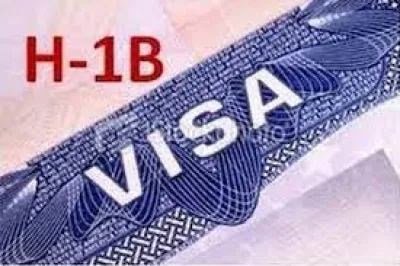
H-1B visa fee hike: Trump proposes $103,265 charge per petition
Synopsis
The Trump administration's proposed $103,265 fee per H-1B petition isn't just a cost hike — it's a structural shift that could price mid-size US employers out of global talent competition. With $8.8 billion in projected annual revenue and 76% of small filers flagged as significantly impacted, the proposal is already drawing legal challenges before a single comment has been filed.
Key Takeaways
The Trump administration has proposed an additional $103,265 fee per cap-subject H-1B petition, on top of all existing fees.
The proposal, put forward by DHS , is scheduled for Federal Register publication on 26 August , triggering a 30-day public comment period.
DHS projects the fee will generate $8.8 billion annually from an estimated 85,000 cap-subject petitions per year.
The rule would significantly impact 11,051 small entities — 76% of small organisations that filed cap-subject petitions in fiscal 2025 .
FWD.us President Todd Schulte called it a 'massive tax on American businesses' and questioned its legal basis.
Indian professionals in technology, engineering, finance, and research are among the most exposed to the proposed change.
The Trump administration has proposed imposing an additional fee of $103,265 on employers filing cap-subject H-1B visa petitions, a move that could dramatically increase the cost of hiring skilled foreign professionals — including a large share of workers from India. The proposal was put forward by the Department of Homeland Security (DHS) and is set to be published in the Federal Register on Tuesday, 26 August, opening a 30-day public comment window before any final decision.
What the Proposed Fee Covers
The $103,265 charge would apply to every cap-subject H-1B petition — including filings for workers eligible under the advanced degree exemption — and would be levied in addition to all existing applicable fees. DHS said the fee would be imposed uniformly, regardless of employer size or non-profit status.
Notably, the proposal exempts cap-exempt petitions filed by certain non-profit research organisations, government research bodies, and institutions of higher education. The annual H-1B cap stands at 65,000 visas, with an additional 20,000 slots reserved for foreign nationals holding a master's degree or higher from a US institution.
How the Revenue Would Be Used
DHS estimated the fee would generate approximately $8.8 billion annually, based on a projected 85,000 cap-subject petitions per year. According to the proposed regulation, the funds would be directed toward immigration benefit adjudications, fraud detection, national security screening, modernisation of government systems, immigration courts, consular visa processing, labour standards enforcement, and inter-agency coordination.
Agencies set to receive a share of the revenue include US Citizenship and Immigration Services (USCIS), Customs and Border Protection (CBP), Immigration and Customs Enforcement (ICE), the Justice Department's immigration courts, the State Department, and the Department of Labor.
USCIS spokesperson Zach Kahler said: 'The proposed H-1B fee is intended to recover the costs incurred across the federal government to adjudicate, vet, and support lawful immigration programs that otherwise must be funded by taxpayers.'
Impact on Small Businesses and Indian Professionals
DHS acknowledged in its own analysis that 14,541 of the 28,649 organisations filing cap-subject petitions in fiscal 2025 were small entities. The department estimated that the regulation would have a significant financial impact on 11,051 small entities, representing 76 per cent of the small organisations covered by its analysis.
Indian professionals are disproportionately represented among H-1B holders, particularly in technology, engineering, finance, medicine, and research — sectors that regularly depend on the programme to fill specialised roles requiring advanced knowledge.
Industry Pushback
FWD.us President Todd Schulte sharply criticised the proposal, calling it a 'massive tax on American businesses' and arguing it forms part of a broader effort to curtail legal immigration. 'Policies like the H-1B innovation tax and the rumored tax on Optional Practical Training will only hinder our ability to compete globally for top talent and economic leadership. Jobs and businesses will move overseas, and all workers will be worse off for it,' Schulte said.
Schulte also questioned the government's legal authority to set a fee that he argued far exceeds the actual cost of processing a single petition. 'This proposed tax clearly violates the law by charging far more than is allowed, which should be the cost to adjudicate an H-1B petition,' he said.
DHS, however, maintained that federal immigration law permits fees to be set at a level sufficient to recover the full cost of immigration adjudication and naturalisation services, adding that cap-subject H-1B employers are generally more able to bear such costs than individual immigration applicants.
What Happens Next
The proposal is not yet final. Stakeholders — including tech industry groups, immigration lawyers, and advocacy organisations — have 30 days from the Federal Register publication date to submit public comments. The final rule, if adopted, could reshape hiring strategies across US industries that rely heavily on high-skilled foreign talent, with significant downstream consequences for Indian professionals and their employers.
Point of View
265 fee per petition is not a processing charge — it is a de facto barrier to legal high-skilled immigration. The DHS framing of 'cost recovery' strains credibility when the projected $8.8 billion annual haul dwarfs any reasonable estimate of adjudication expenses for 85,000 petitions. The legal challenge flagged by FWD.us has merit: courts have previously scrutinised fee structures that go well beyond administrative cost. What is missing from mainstream coverage is the compounding effect — stack this on top of the Optional Practical Training tax rumours, and the US begins to look structurally less competitive for the Indian engineering talent that built much of Silicon Valley.
NationPress
25 Aug 2026
Frequently Asked Questions
What is the proposed $103,265 H-1B fee?
It is an additional fee proposed by the Trump administration's Department of Homeland Security, to be charged to employers filing cap-subject H-1B petitions on top of all existing applicable fees. The proposal is open for a 30-day public comment period after its Federal Register publication and is not yet final.
Who would be required to pay this fee?
All employers filing cap-subject H-1B petitions — including those filing under the advanced degree exemption — would be required to pay the fee. It applies uniformly regardless of employer size or non-profit status, though cap-exempt petitions from certain non-profit research bodies, government research organisations, and universities are excluded.
How much revenue would the proposed fee generate?
DHS estimated the fee would raise approximately $8.8 billion annually, based on a projected 85,000 cap-subject petitions per year. The funds would be distributed across USCIS, CBP, ICE, immigration courts, the State Department, and the Department of Labor.
How does this affect Indian professionals?
Indian nationals are among the largest beneficiaries of the H-1B programme, particularly in technology, engineering, finance, and research. A sharp increase in petition costs could lead US employers to reduce H-1B filings or shift hiring to other markets, directly affecting Indian professionals seeking US work visas.
What is the criticism against the proposed fee?
FWD.us President Todd Schulte has called it a 'massive tax on American businesses' and argued it violates federal law by charging far more than the actual cost of adjudicating a single H-1B petition. Critics also warn that the fee, combined with other proposed immigration restrictions, could push jobs and businesses overseas.