US proposes 17% tariff on Indian goods under Trump plan
Synopsis
Washington has set a 25% ceiling on Indian goods, dropping to 17% if India signs a trade deal, as part of a 14-economy overcapacity crackdown. Duties are not live yet: comments are open, and January is the earliest start after the Supreme Court struck down Trump's earlier global tariffs.
Key Takeaways
The United States has proposed a 17 per cent tariff on Indian goods, with a listed ceiling of 25 per cent if no trade deal is reached.
India is among 14 economies targeted over alleged excess manufacturing capacity, according to the USTR list.
Other economies named include China , the European Union , Japan , South Korea , Vietnam and Bangladesh .
The USTR investigation, launched in March , covers sectors including batteries, cement, chemicals and processed food.
Measures are open for public comment; a senior US official said January is the earliest possible implementation date.
The US Supreme Court earlier struck down Trump's global tariffs; auto and steel duties remain in place.
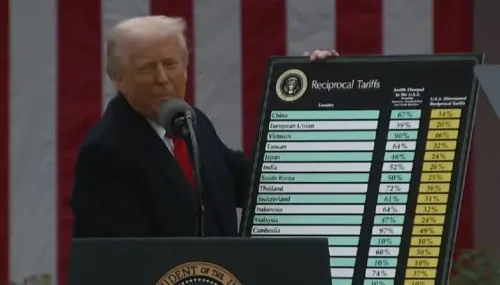
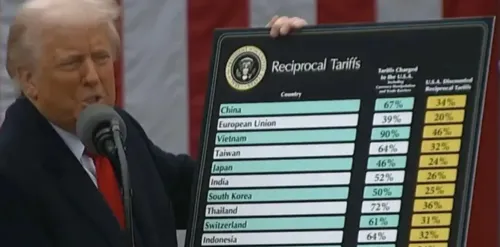
The United States on 25 November proposed a 17 per cent tariff on Indian goods under a new trade framework unveiled by President Donald Trump's administration, placing India among 14 economies targeted over what Washington describes as excess manufacturing capacity. According to the tariff list released by the Office of the US Trade Representative (USTR), duties on Indian exports could climb as high as 25 per cent, with the rate falling to 17 per cent if New Delhi reaches a trade agreement with the Trump administration.
What the proposed framework contains
The proposal is part of a broader package covering several economies, including China, the European Union, Japan, South Korea, Vietnam and Bangladesh. US officials argue that such practices depress prices and undermine domestic manufacturing industries in the United States, and that trading partners have encouraged production and industrial capacity beyond market requirements.
A senior US official said the investigation focused on whether trading partners were pursuing policies considered unreasonable or discriminatory and whether those actions were adversely affecting American commerce. Washington alleges that the countries under scrutiny have been expanding output in ways that distort global trade.
USTR probe launched in March
The move follows an investigation launched by the USTR in March to examine whether foreign governments were maintaining manufacturing capacity and production levels that exceed actual market demand, resulting in oversupply and distortions in global trade. US officials contend that excess production can flood global markets with goods, putting pressure on prices and making it more difficult for American manufacturers to compete.
The investigation spans a wide range of sectors, including batteries, cement, chemicals and processed food. Notably, India is not being singled out in isolation: the same overcapacity thesis is being applied across a group of 14 economies, of which India is one.
Consultation window and legal backdrop
The proposed measures are not expected to take effect immediately. The US administration has opened the tariffs for public consultation, allowing businesses and stakeholders to submit comments before any final decision is taken. A senior US official indicated that January would be the earliest possible timeline for implementation.
This comes months after the US Supreme Court struck down Trump's earlier global tariffs, ruling that the president lacked the legal authority under the statute invoked by the White House to impose those duties. However, sector-specific tariffs on products such as automobiles and steel remain in place.
The sequencing is significant. After a judicial setback to a previous, more sweeping tariff architecture, Washington is now advancing a framework that pairs listed rates with a trade-agreement off-ramp, cutting India's proposed duty from 25 per cent to 17 per cent if a deal is reached.
What happens next
For Indian exporters, the spread between 17 per cent and 25 per cent is the incentive structure Washington has put on the table to conclude a bilateral trade pact. Until an agreement is reached, the higher figure remains the ceiling on the USTR list. Final rates, product coverage and exemptions will be shaped by the public-comment process and by any subsequent political decision.
Industry stakeholders in both countries now have a window to make representations before any order is finalised. Diplomacy between New Delhi and Washington over a trade agreement will run in parallel with that consultation. Officials have not indicated an immediate start date; January remains the earliest timeline signalled so far, leaving a limited period for comments, legal review and talks.
Point of View
With 17 per cent available only if New Delhi signs a trade agreement. That is leverage dressed as a framework, and it arrives after the US Supreme Court struck down an earlier global tariff architecture, so durability will be as closely watched as the percentage. India is one of 14 targets, which means New Delhi cannot treat this as a bilateral snub alone — it is a template others will also face. The strategic question is whether a deal can be closed before January, and whether buying down the rate locks India into terms it would not have accepted on a clean negotiating table.
NationPress
25 Nov 2026
Frequently Asked Questions
What tariff has the US proposed on Indian goods?
The United States has proposed a 17 per cent tariff on Indian goods under a new trade framework, with duties listed as high as 25 per cent if India does not reach a trade agreement with the Trump administration. The lower 17 per cent rate would apply if New Delhi concludes such a deal. India is among 14 economies named in the USTR list.
Why is the US proposing tariffs on India and other countries?
Washington says the measures address excess manufacturing capacity and production among major trading partners that, in its view, exceed market demand and distort global trade. A USTR investigation launched in March examined whether foreign governments were pursuing policies considered unreasonable or discriminatory that adversely affect American commerce. US officials argue that oversupply depresses prices and undermines US manufacturers.
When could the proposed US tariffs on Indian goods take effect?
The tariffs are not expected to take effect immediately, and January is the earliest possible timeline indicated by a senior US official. The administration has opened the proposal for public consultation so businesses and stakeholders can submit comments before a final decision. Sector-specific tariffs on automobiles and steel already remain in place.
Which other economies are covered by the US tariff proposal?
India is one of 14 economies targeted under the new framework. The broader package also covers China, the European Union, Japan, South Korea, Vietnam and Bangladesh, among others.
How does this proposal relate to Trump's earlier global tariffs?
The latest proposal comes months after the US Supreme Court struck down Trump's earlier global tariffs, ruling that the president lacked legal authority under the statute the White House had invoked. Sector-specific tariffs on automobiles and steel remain in force. The new framework is being advanced through a consultation process rather than immediate imposition.