US targets Central Asia critical minerals in $25bn C5+1 push
Synopsis
At a C5+1 ministerial in Samarkand, Secretary Rubio committed the US to building full-cycle critical mineral supply chains, upgrading the trans-Caspian trade corridor and training thousands of tech professionals in Central Asia — explicitly to avoid dependence on 'adversaries.' With $25bn in prior deal announcements as a baseline and Uzbekistan pushing for end-to-end mineral processing partnerships, Washington is signalling a serious strategic pivot in a region where China and Russia have long dominated.
Key Takeaways
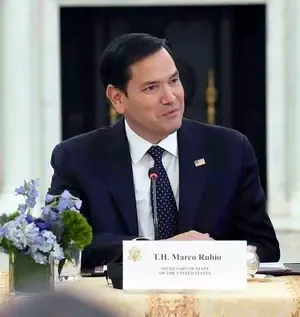
Secretary of State Marco Rubio announced a US critical minerals and transport corridor strategy at the C5+1 ministerial in Samarkand, Uzbekistan on Monday, 20 October 2026 .
The plan covers Kazakhstan, Kyrgyzstan, Tajikistan, Turkmenistan and Uzbekistan under the C5+1 framework, established in 2015 .
The trans-Caspian trade route is a centrepiece — Washington intends to upgrade infrastructure and expand market access for partners.
Uzbek Foreign Minister Bakhtiyor Saidov proposed a full-cycle mineral partnership, from geological exploration to local industrial clusters.
The previous C5+1 Washington summit generated commercial agreements valued at $25 billion across multiple sectors.
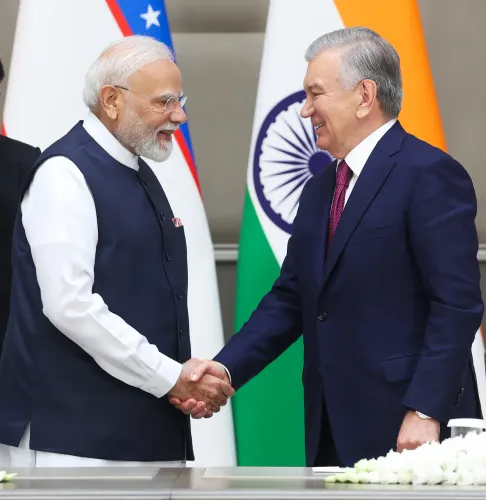
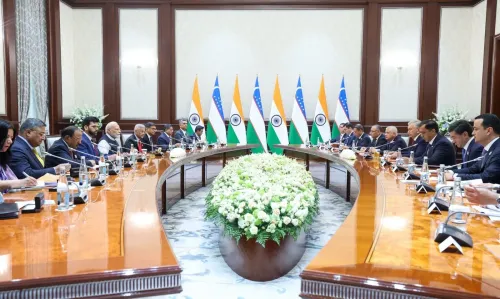
The initiative has direct relevance for India , which has its own Central Asia connectivity and critical minerals ambitions.
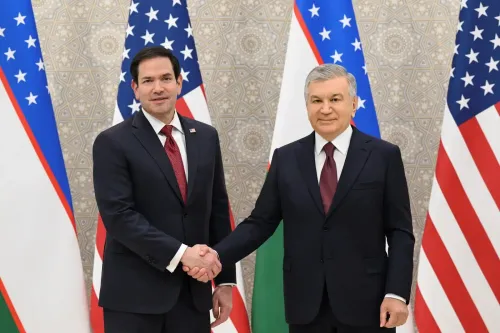
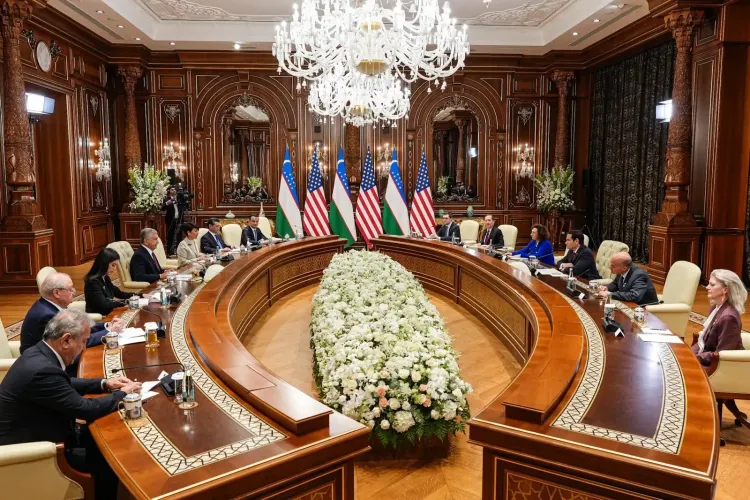
Secretary of State Marco Rubio on Monday outlined an ambitious United States strategy to secure critical mineral supply chains, upgrade transport corridors and train thousands of technology professionals across Central Asia, as Washington moves to reduce reliance on what it describes as 'risky foreign partners.' Rubio made the announcement at the C5+1 ministerial meeting in Samarkand, Uzbekistan, framing the region as a vital commercial bridge between Asian and European markets.
What the US Is Proposing
The initiative brings together the United States and five Central Asian republics — Kazakhstan, Kyrgyzstan, Tajikistan, Turkmenistan and Uzbekistan — under the C5+1 diplomatic framework, which was established in 2015 to deepen economic, energy and security ties. Rubio identified three core pillars: critical minerals supply chains, trans-Caspian transport infrastructure, and emerging technology training for regional professionals.
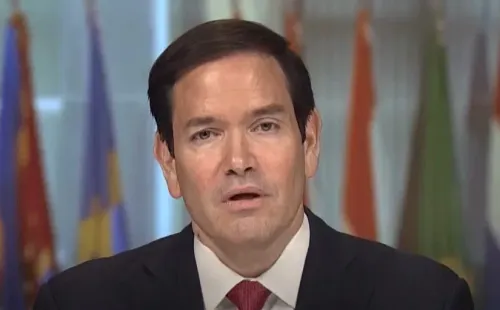
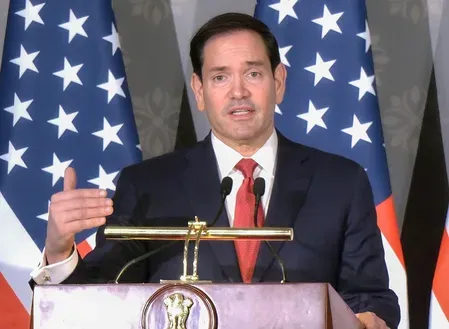
'We in the United States, we seek to secure our critical industries and the supply chains that support them so that we may be a sovereign, independent country and economy, and not ever have to rely on risky foreign partners or even adversaries,' Rubio said at the ministerial.
Trans-Caspian Trade Route in Focus
A central plank of the announcement is enhancing the trans-Caspian trade route — a corridor linking Central Asia to international markets via the Caspian Sea and onward networks. The route has attracted growing interest from governments and businesses seeking alternatives to traditional overland paths that pass through Russia or China. 'We're going to enhance the infrastructure of the trans-Caspian trade route and give our partners more ways to reach American and Central Asian markets,' Rubio said.
The proposed cooperation goes beyond raw material extraction. Rubio indicated that Washington intends to help build processing capabilities and industrial value chains within the region itself — a significant shift from earlier engagement models that focused primarily on trade access.
Central Asia's Ask: Full-Cycle Mineral Partnership
Uzbek Foreign Minister Bakhtiyor Saidov, whose country is assuming the C5+1 Secretariat co-chairmanship, called for a partnership spanning the entire minerals production cycle. 'As one of our key priorities, we propose advancing a strategic partnership in critical minerals from geological exploration and mineral processing to the establishment of local industrial clusters,' Saidov said.
His remarks reflect a broader Central Asian ambition: to capture more economic value from the region's mineral wealth rather than simply exporting raw materials to foreign processors. Saidov also said Uzbekistan would focus on translating diplomatic commitments into practical economic outcomes during its co-chairmanship.
$25 Billion Benchmark and the B5+1 Business Forum
Rubio recalled that the previous C5+1 summit in Washington had generated announced commercial agreements valued at $25 billion across transportation, energy, finance and other sectors — though the figure represents deal announcements rather than confirmed disbursements. He also flagged the B5+1 business forum as a mechanism to promote dialogue between governments and private companies, aiming to raise trade and investment flows further.
Thousands of young professionals in the region are expected to be prepared to work with American technology under the initiative, though specific programme timelines were not detailed at the meeting.
Why This Matters for India
Central Asia's geography — sandwiched between Russia, China, South Asia and Europe — gives its transport corridors and mineral deposits outsized strategic weight. India has itself pursued closer economic and connectivity ties with the region, including through the International North-South Transport Corridor and bilateral trade agreements. Any reconfiguration of trans-Caspian supply chains or US-led mineral processing frameworks could intersect with New Delhi's own connectivity ambitions and its domestic critical minerals strategy. This comes amid broader great-power competition over securing battery metals, rare earths and semiconductor inputs that underpin next-generation industries.
Point of View
' 'risky foreign partners' — leaves little ambiguity about the target audience. The more consequential question is execution: the previous summit's $25 billion figure covered deal announcements, not actual capital deployed. For India, the stakes are quietly significant — any US-anchored reconfiguration of trans-Caspian corridors and mineral supply chains will shape the competitive landscape for New Delhi's own connectivity and green-industry strategies, whether or not India has a seat at this particular table.
NationPress
20 Oct 2026
Frequently Asked Questions
What did the US announce at the C5+1 ministerial in Samarkand?
Secretary of State Marco Rubio announced plans to develop critical mineral supply chains, upgrade trans-Caspian transport infrastructure and train thousands of technology professionals across Central Asia. The initiative involves Kazakhstan, Kyrgyzstan, Tajikistan, Turkmenistan and Uzbekistan under the C5+1 diplomatic framework.
What is the C5+1 framework and when was it established?
The C5+1 framework brings together the United States and five Central Asian republics — Kazakhstan, Kyrgyzstan, Tajikistan, Turkmenistan and Uzbekistan — to deepen economic, energy and security cooperation. It was established in 2015 and covers areas including trade, environmental cooperation and regional security.
What is the trans-Caspian trade route and why does it matter?
The trans-Caspian trade route connects Central Asia to international markets via the Caspian Sea, providing an alternative corridor to routes that pass through Russia or China. Governments and businesses have shown growing interest in it as they seek to diversify supply and transport networks, and the US has now committed to upgrading its infrastructure.
How much investment has the C5+1 process generated so far?
Rubio cited $25 billion in commercial agreements announced at the previous C5+1 summit in Washington, spanning transportation, energy, finance and other sectors. That figure represents deal announcements rather than confirmed capital already deployed.
Why does the US-Central Asia critical minerals push matter for India?
India has its own connectivity and trade ambitions in Central Asia, including through the International North-South Transport Corridor, and has been building a domestic critical minerals strategy. A US-led restructuring of trans-Caspian supply chains and mineral processing networks could reshape the competitive landscape for Indian commerce and green-industry supply chains in the region.