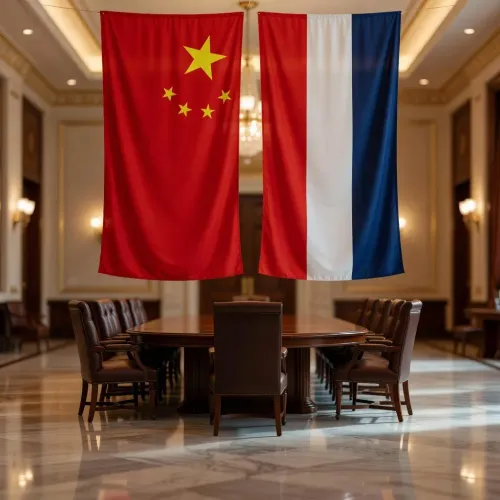
White House Announces US-Russia-China Peace Declaration
Synopsis
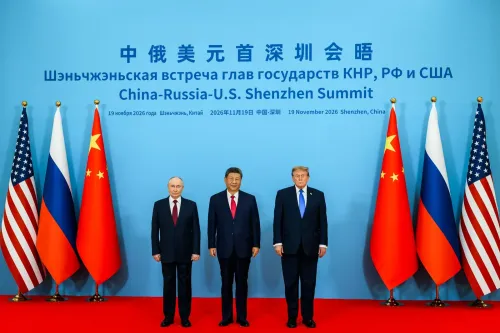
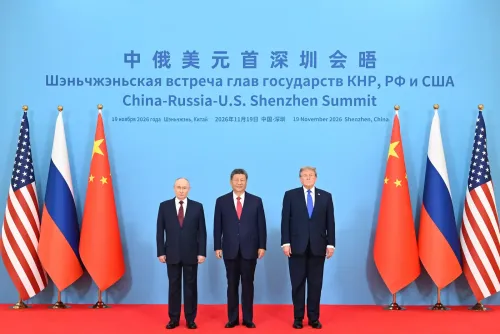
The White House released a joint Heads of State Declaration toward Peace involving the United States, Russia, and China on 19 November 2026 — a historically rare trilateral signal from the world's three foremost nuclear powers, with far-reaching implications for global security and India's strategic calculus.
Key Takeaways
The White House published a U.S.-Russia-China Heads of State Declaration toward Peace on 19 November 2026 .
The declaration is a trilateral heads-of-state-level communiqué — historically rare among all three major nuclear powers simultaneously.
The title frames the initiative as directional ( toward peace), suggesting an ongoing process rather than a concluded settlement.
The full text is hosted on the official WhiteHouse.gov briefings-and-statements portal, indicating formal executive-branch ownership.
India , with strategic ties to all three signatories, faces a potentially shifting diplomatic landscape depending on how the declaration is implemented.
Follow-up statements from Moscow and Beijing, and reaction from NATO allies and Indo-Pacific partners, will determine the declaration's real weight.
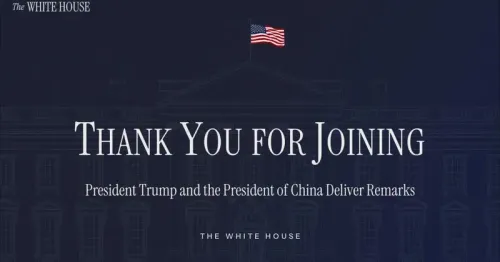
In a move that could redraw the contours of great-power diplomacy, The White House published a joint 'U.S.-Russia-China Heads of State Declaration toward Peace' on Thursday, 19 November 2026 — a trilateral communiqué at the highest level among the world's three foremost nuclear powers.
Three nuclear giants, one document
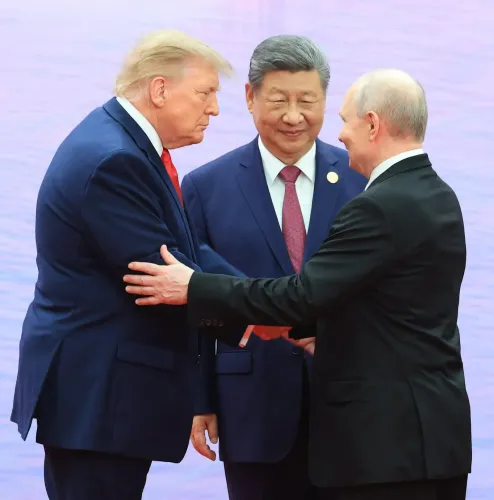
The declaration, formally shared by the White House via its official communications channel, marks a rare alignment of Washington, Moscow, and Beijing at the head-of-state level. For context: simultaneous, cooperative public signalling from all three governments has been historically uncommon, punctuated more often by sanctions battles, Taiwan Strait tensions, and NATO-Russia friction than by joint communiqués. A single document bearing the imprimatur of all three capitals is, by any measure, an extraordinary diplomatic event.
The title itself — 'toward Peace' — is deliberate. It frames the initiative not as a concluded settlement but as a directional commitment, leaving room for the implementation architecture that will determine whether the declaration has teeth.
Why this moment, why these three
The United States, Russia, and China collectively account for the overwhelming majority of the world's strategic nuclear warheads and hold permanent seats on the UN Security Council. Their bilateral and trilateral relationships have historically oscillated between arms-control cooperation and sharp rivalry — from Cold War détente to post-2022 rupture between Washington and Moscow, and from the Nixon-era opening with Beijing to the current era of intense US-China strategic competition.
Multilateral diplomacy involving all three simultaneously has been exceedingly rare outside UN frameworks. The last significant trilateral arms-control conversation — the push to bring China into New START successor talks — stalled repeatedly. A heads-of-state-level declaration, if substantiated by the full text, would represent a qualitative leap beyond those efforts.
What the declaration says — and what comes next
The full text of the declaration is hosted on the official WhiteHouse.gov briefings-and-statements page, signalling formal executive-branch ownership of the initiative. The critical questions now are what specific commitments, verification mechanisms, or follow-up forums the document establishes — and whether Moscow and Beijing have issued corresponding releases framing the declaration on their own terms.
The international community, from NATO allies to Indo-Pacific partners, will parse every line for signals about whether this is a durable strategic reset or a one-time symbolic gesture ahead of domestic political cycles in any of the three capitals.
India, which maintains independent strategic relationships with all three powers — a close defence partnership with Russia, an increasingly complex rivalry with China, and a deepening strategic partnership with the United States — will be watching the follow-through with particular attention. New Delhi's room to manoeuvre in its own diplomacy could expand or narrow depending on how this trilateral compact evolves.
Three signatures on a peace declaration are, at best, a prologue. The world now waits to read the chapters that follow.
Point of View
Moscow, and Beijing — if substantiated by the full text — would be the most significant convergence of the world's three nuclear superpowers in decades, potentially reshaping arms-control diplomacy and regional security architectures simultaneously. The framing as 'toward Peace' is strategically ambiguous: it allows all three governments to claim progress while deferring the hard commitments that would make it legally binding. For India, the development cuts multiple ways — a stabilised US-Russia-China triangle could reduce geopolitical pressure on New Delhi, but a Washington-Moscow rapprochement in particular could complicate India's carefully managed equidistance. The real test will come in the weeks ahead, when implementation details, or their absence, reveal whether this is architecture or optics.
NationPress
19 Nov 2026
Frequently Asked Questions
What is the U.S.-Russia-China Heads of State Declaration toward Peace?
It is a joint declaration published by the White House on 19 November 2026, signed at the heads-of-state level by the United States, Russia, and China, signalling a shared commitment toward peace — a historically rare trilateral communiqué among the world's three foremost nuclear powers.
Why is a US-Russia-China joint declaration significant?
Simultaneous, cooperative public signalling from Washington, Moscow, and Beijing at the head-of-state level is exceptionally rare. The three countries collectively hold the world's largest nuclear arsenals and permanent UN Security Council seats, making any joint declaration consequential for global security.
What does 'toward Peace' mean in the declaration's title?
The phrase 'toward Peace' frames the document as a directional commitment rather than a concluded settlement, leaving the specific obligations, verification mechanisms, and follow-up steps to be defined — which is why analysts will scrutinise the full text closely.
How does the US-Russia-China peace declaration affect India?
India maintains independent strategic relationships with all three signatories — a defence partnership with Russia, a deepening strategic partnership with the United States, and a complex rivalry with China. A trilateral compact could shift New Delhi's diplomatic room to manoeuvre in both directions depending on the implementation details.
Where can I read the full text of the declaration?
The White House published the full declaration on its official briefings-and-statements portal at whitehouse.gov, signalling formal executive-branch ownership of the document.