US sanctions Cambodia, Myanmar scam enablers over $18.2 bn fraud network
Synopsis
The US Treasury has expanded its crackdown on Southeast Asia's multibillion-dollar scam-centre industry, designating a Cambodian operator and two leaders of Myanmar's DKBA — an armed group accused of protecting compounds where trafficked workers are exploited. With $18.2 billion stolen from Americans in 2025 alone, Thursday's action is a pointed escalation, but critics note it barely scratches the surface of a sprawling criminal network shielded by unstable border politics.
Key Takeaways
The US on 20 November 2026 sanctioned Zhao Hui (Cambodia), two linked companies, and DKBA leaders General Saw Shwe Wah and Colonel Saw A One (Myanmar).
Southeast Asia-based scam centres stole an estimated $18.2 billion from Americans in 2025 , according to the US State Department .
Zhao Hui allegedly operated compounds including one tied to the already-sanctioned Prince Group , targeting Americans and Europeans via virtual-currency fraud.
DKBA personnel are accused of protecting scam compounds and committing violence against trafficked workers held inside them.
The designations block all US-jurisdiction assets of named targets; entities 50% or more owned by blocked persons are also blocked.
Treasury Secretary Scott Bessent vowed continued use of 'all available tools' to dismantle scam-enabling networks.
The United States on Thursday, 20 November 2026 sanctioned a Cambodian national, two companies linked to him, and two senior leaders of an armed group in Myanmar over their alleged involvement in cyber-scam networks that defraud victims and exploit trafficked workers. The action targets operators reportedly connected to a wider Southeast Asian scam-centre industry that, according to the US State Department, stole an estimated $18.2 billion from Americans in 2025.
Key Designations
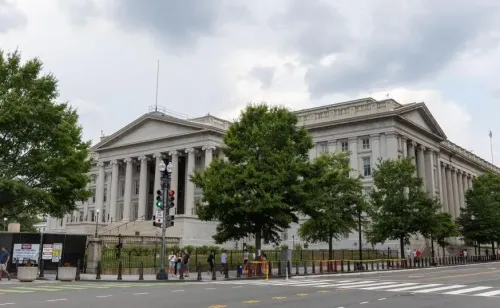
The US Treasury Department's Office of Foreign Assets Control (OFAC) designated Zhao Hui, a Cambodian national accused of operating scam compounds in Cambodia. Treasury alleged that Zhao leased a compound owned by the already-sanctioned Prince Group and paid protection fees to its designated leader, Chen Zhi. Zhao reportedly also owned a separate, independent compound where he participated directly in scam operations and managed leases — a site that, according to Treasury, primarily targeted Americans and Europeans through virtual-currency investment fraud. OFAC identified Zhao as chairman of both designated companies and listed them under provisions covering ownership, control, or acting on behalf of a blocked person.
Myanmar Armed Group in the Crosshairs
In Myanmar, OFAC designated General Saw Shwe Wah and Colonel Saw A One, described as senior figures in the Democratic Karen Benevolent Army (DKBA). Treasury said Saw Shwe Wah became the group's commander-in-chief in December 2025, replacing General Saw Steel, who was himself sanctioned in November 2025. Saw A One reportedly oversees security at Three Pagodas Pass in Karen State, near the Thai border, and is said to own a plantation where scam operations take place, having contracted for such activities. Treasury accused DKBA personnel of protecting scam compounds and participating in violence against trafficking victims held inside them. The armed group had previously been designated for supporting cyber-scam centres, making these new designations an escalation of an existing enforcement posture.
Scale of the Scam Industry
The State Department noted that Southeast Asia-based scam centres — most operated by Chinese organised crime groups, according to US officials — are responsible for the estimated $18.2 billion in losses to Americans in 2025. That figure pertains to the broader industry, not solely to the five individuals and entities designated on Thursday. This context underscores that Thursday's action, while targeted, addresses only a fraction of a sprawling criminal ecosystem operating across the region.
What the Sanctions Mean
The designations block all property and property interests of the named targets within US jurisdiction. Entities owned 50 per cent or more — directly or indirectly, individually or collectively — by blocked persons are also automatically blocked under OFAC rules. Treasury Secretary Scott Bessent stated: 'We will continue to use all available tools to disrupt and dismantle the networks that enable scam compounds to operate.' The State Department separately urged regional governments to shut down scam operations, prosecute those responsible, and assist victims of trafficking.
What Comes Next
This is the latest in a series of US designations targeting cyber-scam infrastructure in Southeast Asia, signalling sustained pressure on both criminal operators and the armed groups that protect them. Regional governments, particularly in Thailand, Cambodia, and Myanmar, now face renewed diplomatic pressure to act. How those governments respond — especially given the complex relationships some have with border armed groups — will determine whether Thursday's sanctions translate into meaningful disruption on the ground.
Point of View
With the DKBA itself already carrying prior sanctions. The revolving-door dynamic — a sanctioned commander replaced by a newly sanctioned one — raises the question of whether OFAC designations deter successors or merely reshuffle leadership. The $18.2 billion figure is striking, but it reflects the whole industry, not these five targets; without regional enforcement cooperation, US asset freezes applied to border warlords with limited US-jurisdiction exposure may be more symbolic than operationally crippling. The real leverage lies with Thailand, Cambodia and China, whose cooperation Washington is publicly urging but has yet to secure at scale.
NationPress
20 Nov 2026
Frequently Asked Questions
Who did the US sanction over Southeast Asia cyber scams on 20 November 2026?
The US sanctioned Cambodian national Zhao Hui and two companies he chairs, along with DKBA leaders General Saw Shwe Wah and Colonel Saw A One in Myanmar, over their alleged roles in cyber-scam networks that defraud victims and exploit trafficked workers.
How much did Southeast Asia scam centres steal from Americans in 2025?
According to the US State Department, Southeast Asia-based scam centres stole an estimated $18.2 billion from Americans in 2025. That figure covers the broader industry, not solely the individuals and entities sanctioned on Thursday.
What is the Democratic Karen Benevolent Army (DKBA) and why was it sanctioned?
The DKBA is an armed group operating in Myanmar's Karen State near the Thai border. It was designated because its personnel allegedly protect scam compounds and have committed violence against trafficking victims held inside them; the group had previously been sanctioned for supporting cyber-scam centres.
What do the US Treasury sanctions actually do?
The designations block all property and property interests of named targets within US jurisdiction. Any entity owned 50 per cent or more — directly or indirectly — by a blocked person is also automatically blocked under OFAC rules, cutting off access to the US financial system.
What is the US calling on regional governments to do?
The State Department urged governments across Southeast Asia to close scam operations, prosecute those responsible, and provide assistance to victims of trafficking. The appeal reflects Washington's acknowledgement that US sanctions alone cannot dismantle operations physically located beyond its borders.