US science overhaul sparks Congress clash over international researchers
Synopsis
A congressional hearing has laid bare a deepening fault line in US science policy: the Trump administration's 'Golden Age of Science' strategy coincides with a 17 per cent drop in international PhD admissions and warnings that researchers are leaving for China and Europe. For Indian students — among the largest STEM cohorts in the US — the policy turbulence is no longer abstract.
Key Takeaways
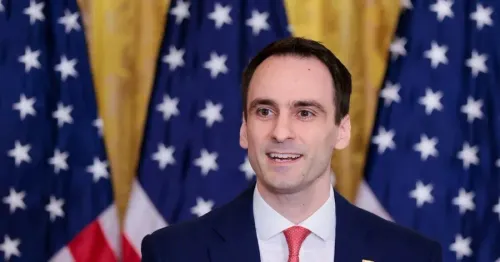
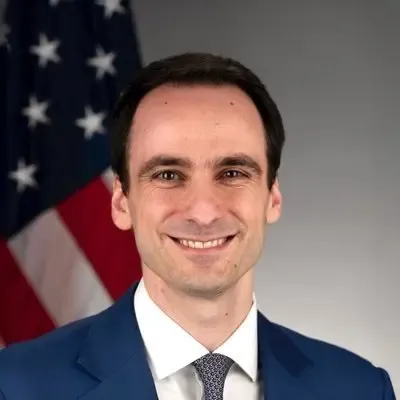
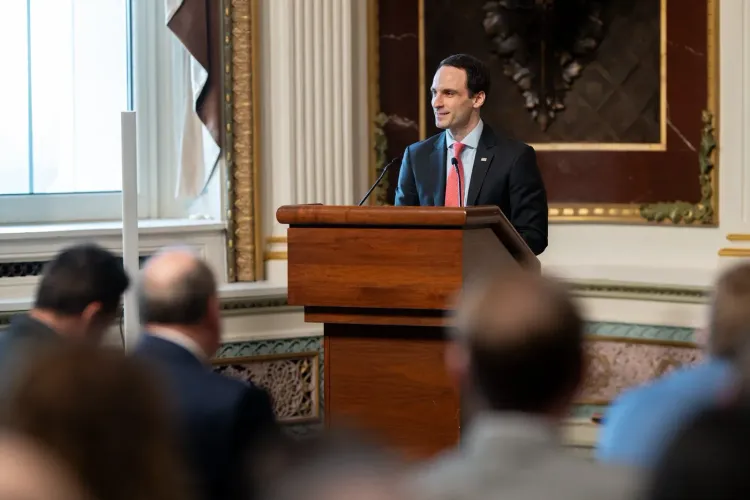
OSTP Director Michael Kratsios defended the Trump administration's science overhaul before the House Committee on Science, Space and Technology on 25 July .
Major US research universities accepted 15 per cent fewer PhD applicants for autumn 2026 compared with the previous year.
International student admissions fell by 17 per cent ; domestic admissions declined by 13 per cent .
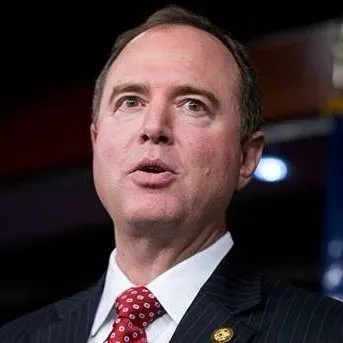
Ranking Member Zoe Lofgren warned that China is recruiting US-based researchers as American research investment contracts.
Representatives Deborah Ross and George Whitesides flagged brain drain to China and Europe, and disproportionate harm to early-career scientists.
Indian students , one of the largest international STEM communities in the US, face direct exposure to any shift in federal research and admissions policy.
The Trump administration's proposed overhaul of the US scientific research system triggered sharp congressional debate on 25 July, with Democratic lawmakers warning that funding cuts and policy uncertainty are eroding America's ability to attract global talent — a development closely monitored by thousands of Indian students and scientists enrolled in graduate programmes across the United States.
What the Administration Proposed
White House Office of Science and Technology Policy (OSTP) Director Michael Kratsios appeared before the House Committee on Science, Space and Technology to defend a new federal strategy framed around what the administration calls a 'Golden Age of Science'. Kratsios argued that the US can no longer assume its position as the world's foremost scientific power.
'Our economic leadership and technological dominance cannot be taken for granted in a rapidly changing world,' Kratsios said. 'The United States no longer stands alone as an industrial and scientific superpower. Unleashing a golden age of American science requires new focus and reforms.'
The OSTP report proposes prioritising individual scientists over institutions, introducing more flexible research grants, tightening links between scientific discovery and domestic manufacturing, and expanding the use of artificial intelligence to accelerate research timelines.
Democratic Pushback: Falling Admissions and Brain Drain
Ranking Member Zoe Lofgren presented figures showing that major US research universities accepted 15 per cent fewer PhD applicants for the autumn 2026 intake compared with the previous year. Admissions of international students fell by 17 per cent, while domestic student admissions declined by 13 per cent.
'International students have long been a lynchpin of US leadership in science and technology,' Lofgren said, warning that the declines were undermining the future scientific workforce. She also cautioned that China was ramping up scientific investment while actively recruiting researchers from the US, arguing the administration's actions were 'strengthen(ing) the hand of China while decimating the US research enterprise.'
Representative Deborah Ross said researchers were being lost 'to China, to Europe, to anybody who can fund their research.' Representative George Whitesides argued that slower grant approvals and fewer research awards were disproportionately affecting early-career scientists.
The Administration's Defence
Kratsios rejected characterisations that the administration was weakening scientific research, insisting the goal was to modernise a system he described as overly bureaucratic. 'Everything that we do as a science ecosystem driven by the government should focus on scientists themselves,' he said, adding that the administration wanted to 'back young American scientists.'
He also outlined new funding mechanisms — including fast-track grants, long-term research support, and pathways for unconventional scientific proposals — as evidence of a more scientist-centric approach rather than a retreat from research investment.
The China Rivalry Backdrop
Lawmakers on both sides of the aisle framed the debate within the broader US-China technological rivalry. Republicans emphasised the need to prioritise research security, quantum computing, artificial intelligence, and advanced manufacturing. Democrats countered that sustained university funding remained the country's most durable competitive advantage — and that the current trajectory was ceding ground to Beijing.
Notably, this is not the first time Congress has clashed over the balance between research security and openness; similar tensions surfaced during debates over the CHIPS and Science Act and earlier reviews of visa policies for STEM graduates.
What This Means for Indian Researchers
Indian students constitute one of the largest international student communities in the US, with a significant share enrolled in graduate STEM programmes. Any contraction in federal research funding, shifts in university admissions policies, or tightening of research security measures is expected to be closely tracked by Indian academic institutions and prospective researchers weighing study abroad decisions. The 17 per cent drop in international PhD admissions for autumn 2026 has already prompted concern among Indian higher education observers.
How the administration reconciles its ambitions for a 'Golden Age of Science' with declining graduate enrolments and growing researcher outflows will be a defining test of whether the strategy delivers on its promise.
Point of View
The stakes are concrete: a generation of researchers weighing the US against Europe or returning home will make decisions in the next admissions cycle, not the next policy cycle.
NationPress
25 Jul 2026
Frequently Asked Questions
What is the Trump administration's proposed US science overhaul?
The administration's strategy, outlined in a report by the White House Office of Science and Technology Policy, aims to prioritise individual scientists, introduce flexible research grants, link scientific discovery to domestic manufacturing, and expand the use of artificial intelligence in research. OSTP Director Michael Kratsios has framed it as ushering in a 'Golden Age of American Science.'
How much have US PhD admissions fallen for international students in 2026?
Major US research universities accepted 17 per cent fewer international PhD applicants for the autumn 2026 intake compared with the previous year, according to figures cited by Ranking Member Zoe Lofgren at the House hearing. Overall PhD admissions fell 15 per cent, with domestic admissions down 13 per cent.
Why are Democratic lawmakers concerned about the science policy changes?
Democrats argue that funding uncertainty, slower grant approvals, and reduced support for federal science agencies are pushing researchers — particularly early-career scientists — to seek opportunities in China, Europe, and elsewhere. They contend this weakens America's long-term scientific and technological competitiveness.
How does this affect Indian students and researchers in the US?
Indian students form one of the largest international STEM communities in the United States, with a significant proportion in graduate programmes. A contraction in PhD admissions, shifts in research funding, or tightened research security policies directly affects Indian applicants and researchers already working in US universities and national laboratories.
What is the connection between the US science debate and China?
Multiple lawmakers, including Ranking Member Zoe Lofgren, warned that China is increasing scientific investment and actively recruiting researchers departing from the US. Republicans and Democrats both framed the hearing within the broader US-China technology rivalry, though they disagreed sharply on how best to maintain America's competitive edge.