US senators warn China could dominate 6G rules at 2027 Shanghai conference
Synopsis
Two US senators — one Democrat, one Republican — are sounding the alarm: if the Trump administration doesn't appoint a delegation chief before 30 November, China could use its home-court advantage as WRC-27 host in Shanghai to tilt global 6G and satellite spectrum rules toward Huawei and CCP-aligned interests. The window to build allied coalitions is closing fast.
Key Takeaways
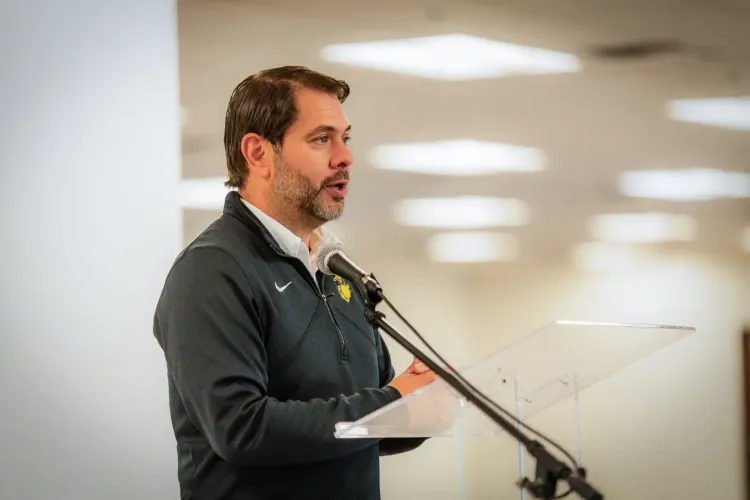
Senators Ruben Gallego (D-Arizona) and Jim Banks (R-Indiana) warned in a September 29 letter that China could dominate global 6G and satellite spectrum rules at WRC-27 .
The 2027 World Radiocommunication Conference is scheduled for Shanghai in October–November 2027 , with 194 member states participating.
The senators urged Secretary of State Marco Rubio to name a US delegation chief before 30 November 2026 , when regional talks begin in Bogotá, Colombia .
They warned that Huawei proposals could shape 6G standards before US-allied alternatives are coordinated.
A last-minute delegation change ahead of the 2023 WRC cost Washington key coalition-building time — a mistake the senators say cannot be repeated.
The senators requested a written response by 23 October and a closed briefing by spring 2027 .
Two US senators have warned that China could gain a decisive strategic edge in shaping global 6G and satellite communications standards unless the Trump administration swiftly appoints an American delegation leader for the 2027 World Radiocommunication Conference (WRC-27), scheduled to take place in Shanghai in October–November 2027. The bipartisan alert, sent in a letter dated September 29, underscores deepening US anxiety over Chinese influence in the next wave of wireless technology governance.
The Bipartisan Warning
Democratic Senator Ruben Gallego of Arizona and Republican Senator Jim Banks of Indiana jointly wrote to Secretary of State Marco Rubio, urging him to designate a US head of delegation before 30 November, when regional negotiations are set to begin in Bogotá, Colombia. The senators argued that early appointment is not procedural formality — it is a strategic necessity.
'As host, the People's Republic of China (PRC) will enjoy a homefield advantage as it attempts to sway spectrum and technology standards a direction that supports the interests of the Chinese Communist Party (CCP) and its subservient companies such as Huawei,' the senators wrote in their letter.
They added: 'A strong US delegation, coordinating its position well in advance alongside likeminded allies and partners, is the best defense against the CCP's authoritarian agenda.'
What WRC-27 Will Decide
WRC-27 is organised by the International Telecommunication Union (ITU), a specialised agency of the United Nations responsible for global telecommunications coordination. The conference will bring together the United States and 193 other member states to determine binding international rules governing radio spectrum allocation for next-generation wireless networks and satellite communications.
The senators stressed that decisions on 6G are particularly consequential because technical standards for the next generation of wireless communications are still being developed. They warned that proposals aligned with Huawei could shape those standards before the US and its partners establish coordinated alternatives — a scenario they described as extremely difficult to reverse.
The 2023 WRC Lesson
Gallego and Banks specifically cautioned against repeating the difficulties encountered during preparations for the 2023 World Radiocommunication Conference, when the head of the American delegation was replaced at short notice. According to the senators, former delegation members reported that the last-minute change cost Washington valuable time needed to build relationships and regional coalitions. 'We cannot afford to enter WRC-27 under similar conditions,' they wrote.
Progress Made and Gaps That Remain
The senators acknowledged some groundwork already underway. The National Telecommunications and Information Administration (NTIA) and the Federal Communications Commission (FCC) have submitted American proposals to the Inter-American Telecommunication Commission (CITEL). Washington plans to submit its remaining positions at the next meeting of CITEL's Permanent Consultative Committee II, beginning 30 November in Bogotá.
However, the senators argued that having a confirmed delegation chief in place before that meeting was essential so the official could actively participate in shaping the positions the US would eventually defend at WRC-27. They also requested details on how Washington would develop trusted telecommunications supply chains and create alternatives to Huawei and other Chinese companies for nations in the Global South.
What Happens Next
Gallego and Banks requested a written response or briefing from the administration by 23 October, and a closed briefing by spring 2027 on Washington's full counter-strategy for WRC-27. The conference's outcomes will influence how countries worldwide allocate radio frequencies for mobile networks, satellites, and other wireless services for years to come. The rapid expansion of non-geostationary satellite constellations has further raised the stakes, making spectrum coordination more urgent than ever before.
Frequently Asked Questions
What is the 2027 World Radiocommunication Conference (WRC-27)?
WRC-27 is an international conference organised by the International Telecommunication Union (ITU), a UN specialised agency, bringing together 194 member states to set binding rules on radio spectrum allocation for mobile networks, satellites, and wireless services. It is scheduled for October–November 2027 in Shanghai, China.
Why are US senators concerned about China hosting WRC-27?
The senators warn that China, as host, will have a structural advantage in steering negotiations toward outcomes that favour the Chinese Communist Party and companies like Huawei. They argue this could allow Chinese-aligned proposals to shape 6G technical standards before the US and its allies establish coordinated alternatives.
What are Senators Gallego and Banks asking the Trump administration to do?
They are urging Secretary of State Marco Rubio to appoint a US head of delegation before 30 November 2026, when regional negotiations begin in Bogotá, Colombia. They also want details on plans to offer trusted telecom supply chain alternatives to Huawei for countries in the Global South.
What went wrong at the 2023 World Radiocommunication Conference?
According to the senators, the US delegation chief was replaced at short notice before WRC-23, costing Washington critical time needed to build relationships and regional coalitions. The senators specifically warned against repeating this mistake ahead of WRC-27.
What progress has the US already made toward WRC-27?
The National Telecommunications and Information Administration (NTIA) and the Federal Communications Commission (FCC) have submitted American proposals to CITEL, the Inter-American Telecommunication Commission. Washington plans to submit remaining positions at CITEL's Permanent Consultative Committee II meeting starting 30 November in Bogotá.