US states challenge $100,000 OPT fee plan for international students

Synopsis
A California-led coalition of state attorneys general is pushing back hard against a DHS proposal that could cost US universities up to $12.9 billion a year in OPT fees — a figure that would almost certainly ripple back to international students and employers. For the tens of thousands of Indian students who rely on OPT as a bridge to US careers, the stakes could not be higher.
Key Takeaways
A California-led coalition of state attorneys general formally objected to a DHS proposal on 10 November 2025 requiring universities to pay up to $100,000 per international student for OPT authorisation.
Under the plan, institutions would pay $70,000 at initial OPT recommendation and $30,000 for extensions, including the STEM OPT extension.
More than 294,000 international students used OPT in the 2024-25 academic year ; maintaining that level under the proposed fees could cost universities $12.9 billion annually .
The coalition argues the rule violates the Immigration and Nationality Act and the Administrative Procedure Act , and that the 30-day comment period is inadequate.
California alone hosted international students who contributed $6.3 billion and supported 52,000+ jobs in 2024-25.
AGs from New York , New Jersey , Maryland , Massachusetts , Michigan , Illinois , Washington , Virginia , and the District of Columbia joined the challenge.
A California-led coalition of state attorneys general has formally urged the US Department of Homeland Security (DHS) to withdraw a proposal that would require universities to pay up to $100,000 per international student for post-study work training authorisation, warning the measure could suppress foreign enrolment and inflict lasting damage on the American economy. The formal objection was submitted on Monday, 10 November 2025, with California Attorney General Rob Bonta announcing the move on Tuesday.
What the Proposed Rule Would Require
The proposal, published on 8 October, targets Optional Practical Training (OPT) — a programme that permits foreign students on F-1 visas to work in fields directly related to their academic studies. Under its terms, colleges and universities would be required to pay $70,000 when first recommending a student for OPT, and an additional $30,000 for any subsequent recommendation, including the STEM extension available to graduates in science, technology, engineering, and mathematics. Institutions would remit payments directly to DHS, though the rule would allow them to seek reimbursement from students or employers — effectively shifting the financial burden onto graduates entering the job market.
Legal Grounds for the Challenge
The coalition argued that DHS lacked the congressional authority to impose what it characterised as a tax disguised as a fee. According to the attorneys general, the proposal violates both the Immigration and Nationality Act and the Administrative Procedure Act, on the grounds that the government failed to adequately assess the financial costs to states, educational institutions, and the broader economy. The coalition also objected to the 30-day public comment window, calling it insufficient for a policy with potentially sweeping consequences. 'We have already fought and won against this Administration's attempt to impose an unauthorised $100,000 tax on H-1B visas, yet it continues to pursue unlawful overreach at the expense of our students, universities, and economy,' Bonta said. The reference to the H-1B dispute signals a pattern of legal friction between the coalition and the current federal administration over immigration-linked fees.
Scale of the Impact
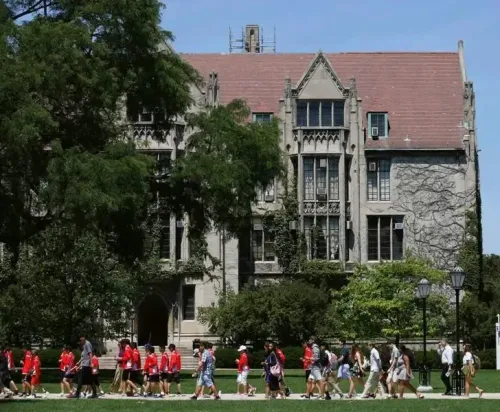
More than 294,000 international students participated in OPT across the United States during the 2024-25 academic year. Maintaining current participation levels under the proposed fee structure is estimated to cost educational institutions a collective $12.9 billion a year, according to figures cited by the coalition. The attorneys general warned that the financial pressure could lead some universities to stop recommending students for the programme altogether, while others may see falling international enrolment, reduced tuition revenue, and reduced capacity to attract skilled graduates. In California alone, international students contributed $6.3 billion to the state economy and supported more than 52,000 jobs during the same academic year.
What It Means for Indian Students
For Indian students weighing American universities, the dispute raises direct questions about access to post-graduation work experience. Though the proposed payment obligation falls formally on institutions, the rule would permit universities to recover costs from students or sponsoring employers. Indian nationals represent one of the largest cohorts of international students and OPT participants in the United States, making the outcome of this legal challenge particularly consequential for prospective and current students from India. 'International students bring diverse perspectives, strengthen our communities, and help drive discoveries and technological advancements that benefit us all,' Bonta said.
Who Joined the Coalition
Attorneys general from New York, New Jersey, Maryland, Massachusetts, Michigan, Illinois, Washington, and Virginia joined California's submission. The District of Columbia was also among the signatories. The proposal has not taken effect and remains under review pending the public comment process.
The next critical milestone will be the close of the public comment period, after which DHS will determine whether to proceed with, revise, or withdraw the rule — a decision that could reshape international student pathways for years to come.
Point of View
Only to be pushed back by state coalitions in court. The H-1B fee battle cited by Bonta was won by the states; this round will likely follow a similar legal trajectory. The deeper issue is that OPT functions as a de facto talent pipeline for US technology and research sectors, and taxing that pipeline at $12.9 billion a year is an economic self-goal dressed up as an administrative reform. For Indian students in particular, who dominate STEM OPT cohorts, the uncertainty alone — even before any rule takes effect — is already a factor in university selection decisions. Washington's ability to attract the world's best students is not guaranteed; it is contested.
NationPress
11 Nov 2026
Frequently Asked Questions
What is the DHS proposal on OPT fees for international students?
The DHS proposal, published on 8 October 2025, would require US colleges and universities to pay $70,000 when recommending an international student for Optional Practical Training (OPT) and an additional $30,000 for any extension, including the STEM OPT extension — totalling up to $100,000 per student. The rule has not yet taken effect.
What is Optional Practical Training (OPT)?
OPT is a federal programme that allows international students on F-1 visas to work in jobs directly related to their field of study for up to 12 months after graduation, with a further 24-month extension available to STEM graduates. More than 294,000 students used the programme in the 2024-25 academic year.
Why are US state attorneys general challenging the proposal?
The coalition argues that DHS lacks congressional authority to impose what amounts to a tax disguised as a fee, and that the rule violates both the Immigration and Nationality Act and the Administrative Procedure Act. The states also contend the 30-day public comment period is too short for a policy with such wide financial consequences.
How would the fees affect Indian students in the US?
Although the payment obligation formally falls on universities, the rule would permit institutions to seek reimbursement from students or employers, potentially shifting the cost to graduates. Indian nationals are among the largest groups of international students and OPT participants in the US, making them disproportionately exposed to any financial or enrolment disruption.
What happens next with the proposal?
The proposal remains open for public comment and has not taken effect. After the comment period closes, DHS will decide whether to proceed, revise, or withdraw the rule. The states' formal objection signals that legal action is likely if DHS moves forward without addressing their concerns.