US expands Pacific Islands push to counter China's growing influence
Synopsis
The Trump administration has moved beyond rhetoric on the Pacific — deploying subsea cables, doubling Coast Guard cutters in Guam, and pitching Western investment as an alternative to Chinese debt. With the Solomon Islands reportedly pivoting away from Beijing, Washington sees a narrow window to reverse China's regional gains. Whether sustained US attention follows is the open question.
Key Takeaways
Assistant Secretary Michael G.
DeSombre told Congress on 26 June that the Pacific Islands are now a top State Department priority.
Washington is deploying foreign assistance for secure subsea communications cables in partnership with Australia and Japan .
US Coast Guard presence in Guam is being doubled from two to four cutters; additional deployments made to Subic Bay, Philippines .
The Solomon Islands ' new leadership is reportedly reassessing ties with Beijing and engaging with traditional security partners.
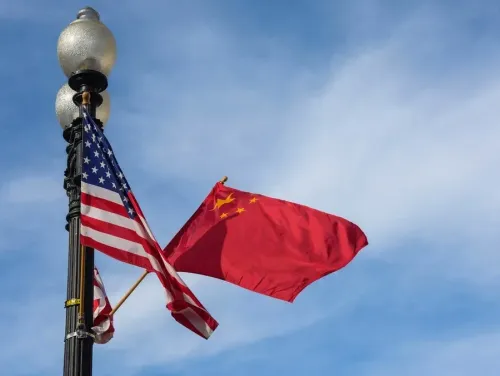
China's growing presence in Fiji , Tonga , the Solomon Islands , and Vanuatu — through infrastructure financing and debt — was cited as the primary concern.
Ship-rider agreements with Pacific nations are being used to police exclusive economic zones against illegal fishing and drug trafficking.
The Trump administration has announced a significant expansion of its diplomatic, economic, and security engagement across the Pacific Islands, framing the region as strategically vital to US national security and a critical front in its competition with China. The move signals Washington's intent to offer Pacific nations a credible alternative to Beijing's deepening footprint in the region.
Key Developments at the House Hearing
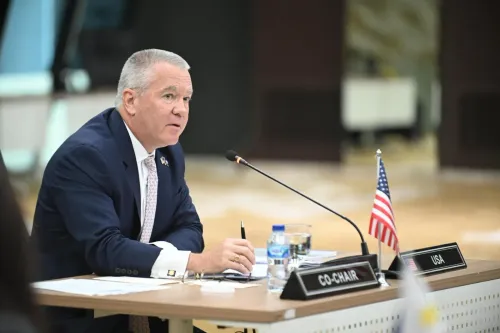
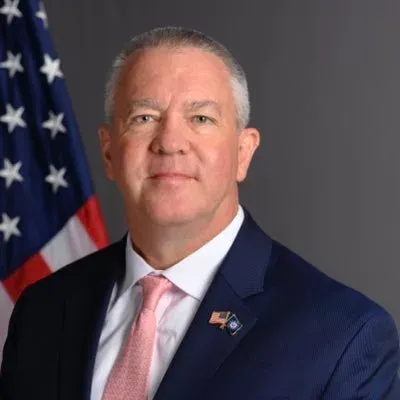
Michael G. DeSombre, Assistant Secretary of State for East Asian and Pacific Affairs, testified before the House Foreign Affairs Subcommittee on East Asia and the Pacific on 26 June, stating that the State Department had elevated the Pacific to one of its top strategic priorities. 'This is an area that is receiving tremendous focus from the State Department,' DeSombre said.
He outlined a two-pronged strategy: building economic resilience in Pacific Island nations and deploying large-scale foreign assistance for infrastructure — particularly secure subsea communications cables. 'We're also really deploying large amounts of foreign assistance to help with various infrastructure and communication, subsea cables being a great example,' he told the subcommittee.
China's Expanding Presence: The Trigger
Congresswoman Aumua Amata Coleman Radewagen of American Samoa raised concerns about China's growing presence in Fiji, Tonga, the Solomon Islands, and Vanuatu, noting that infrastructure financing and rising debt burdens were increasing the islands' dependence on Beijing. She pressed DeSombre on what Washington was actively doing to reduce that dependence.
DeSombre pointed to US efforts to attract American and Western allied investment into Pacific economies as a direct counter. He also highlighted a shift in the Solomon Islands, where the country's new leadership is reportedly reassessing its ties with Beijing and signalling a return to engagement with 'traditional security partners.'
Maritime Security and Coast Guard Surge
Congressman James Moylan of Guam spotlighted the expanding role of the US Coast Guard in the region, particularly in countering illegal fishing, drug trafficking, and other transnational crimes. DeSombre confirmed that Washington is scaling up its Coast Guard presence, moving from two to four Coast Guard cutters stationed at Guam.
Additional deployments have reportedly been made to Subic Bay in the Philippines, and Washington is also considering expanding Coast Guard operations in Australia. Ship-rider agreements with Pacific Island nations — allowing US personnel to assist local authorities in policing exclusive economic zones — have emerged as a key operational tool.
The United States is also working alongside Australia and Japan to ensure Pacific nations are connected through secure undersea communications links that do not route through adversarial networks.
Guam's Strategic Role
DeSombre repeatedly emphasised Guam's centrality to US Pacific strategy. 'Guam is an important gateway to the Pacific,' he said. 'We are a Pacific nation, and Guam is part of us being a Pacific nation.' The remarks underscored Washington's intent to reinforce its territorial and strategic anchors in the region as competition with China intensifies.
Broader Context
The Pacific Islands have become an increasingly contested arena in the US-China strategic rivalry. Beijing has steadily expanded its diplomatic presence, infrastructure investment, and security engagement across the region over recent years, prompting Washington and its allies to accelerate their own outreach. This latest testimony reflects a broader pattern of the US seeking to reassert influence in a region it had, critics argue, long taken for granted. The question now is whether American commitments — in investment, infrastructure, and sustained diplomatic attention — can match the scale and pace of China's regional entrenchment.
Point of View
But the structural imbalance remains: China has been compounding its regional presence for over a decade while US engagement has been episodic. Subsea cables and Coast Guard cutters matter, but they are reactive measures, not a strategic reset. The Solomon Islands pivot is encouraging, yet it is one data point — Beijing's infrastructure financing model has already embedded dependencies across Fiji, Tonga, and Vanuatu that Western investment pledges have not yet matched in scale or speed. The harder test for the Trump administration is whether this congressional testimony translates into sustained, funded commitments, or becomes another cycle of attention that fades when the next geopolitical crisis demands it.
NationPress
26 Jun 2026
Frequently Asked Questions
Why is the US increasing engagement with Pacific Island nations?
The US is expanding its diplomatic, economic, and security presence across the Pacific Islands to counter China's growing influence in the region, which Washington regards as strategically vital to its national security. Beijing has deepened its footprint through infrastructure financing, debt arrangements, and security agreements with several Pacific nations.
What specific steps is the US taking in the Pacific?
Washington is deploying foreign assistance for secure subsea communications cables, doubling Coast Guard cutters in Guam from two to four, expanding ship-rider agreements to police exclusive economic zones, and working with Australia and Japan to attract Western investment as an alternative to Chinese financing.
Which Pacific Island nations are most affected by China's influence?
Congresswoman Aumua Amata Coleman Radewagen specifically cited Fiji, Tonga, the Solomon Islands, and Vanuatu as countries where China has significantly expanded its presence through infrastructure financing and rising debt. The Solomon Islands' new leadership is reportedly now reassessing its ties with Beijing.
What is the role of Guam in the US Pacific strategy?
Guam serves as a key strategic gateway for US operations across the Pacific. The US Coast Guard is expanding its presence there from two to four cutters, and Assistant Secretary DeSombre described Guam as central to America's identity as a Pacific nation.
Who testified before Congress on the US Pacific strategy?
Michael G. DeSombre, Assistant Secretary of State for East Asian and Pacific Affairs, testified before the House Foreign Affairs Subcommittee on East Asia and the Pacific on 26 June, outlining the Trump administration's strategy for the Pacific Islands region.