US strike on Qeshm Island kills family of three, Iran vows response
Synopsis
A US airstrike on a residential building on Qeshm Island in southern Iran reportedly killed a taxi driver, his wife, and their two-year-old son — prompting Iran's Foreign Ministry, parliament speaker, and the IRGC to issue escalating condemnations and warnings of retaliation against US allies across West Asia.
Key Takeaways
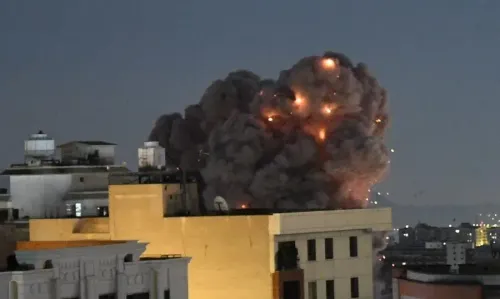
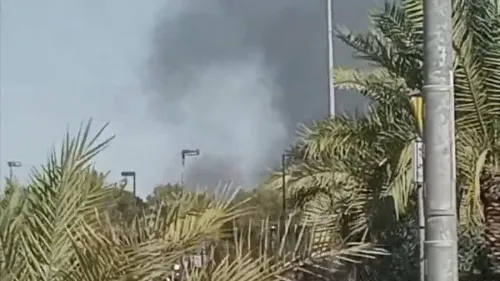
A US airstrike on a residential building on Qeshm Island , southern Iran, reportedly killed three civilians on 31 July .
The victims were taxi driver Qeysar Jafari , his wife Zahra Jafari , and their two-year-old son Sina .
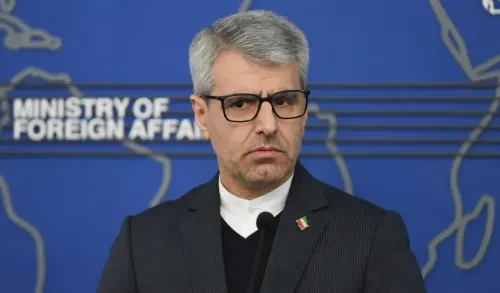
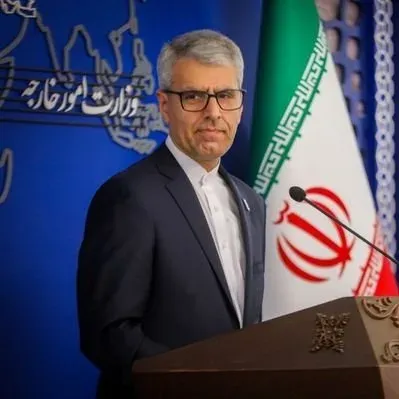
Foreign Ministry spokesman Esmaeil Baghaei condemned the strike in a post on X , comparing it to ISIS-style terrorism.
Parliament Speaker Mohammad Bagher Ghalibaf warned the US would 'pay the price' for targeting civilians.
The IRGC issued a formal warning to US allies in West Asia to change their behaviour or face Iranian retaliation.
Iran's Foreign Ministry spokesman Esmaeil Baghaei on 31 July condemned a US airstrike on a residential building on Qeshm Island in southern Iran, saying the overnight attack killed three civilians — taxi driver Qeysar Jafari, his wife Zahra Jafari, and their two-year-old son Sina — and damaged several homes in the area.
What Baghaei Said
In a post on X, Baghaei described the strike as a 'criminal attack' on 'the homes of the noblest Iranians in Qeshm,' calling the deaths of the Jafari family — including an innocent toddler — an act that 'pains the heart of every conscientious human being.' He drew a direct comparison to militant violence, stating: 'These crimes, which evoke the terrorist actions of ISIS and are carried out under the guise of "peace through force" with the aim of punishing a nation for insisting on its rights, dignity, and independence, will never produce authority or credibility for the criminals.'
Baghaei further warned that every act of aggression was counterproductive to US objectives: 'With every explosion, with every crime, with every sanction, with every threat, with the killing of every child, you only make Iranians more determined and united in defending their homeland.'
Parliament Speaker Joins Condemnation
Iranian Parliament Speaker Mohammad Bagher Ghalibaf also condemned the reported strike, framing it as part of a pattern of attacks on civilian areas. 'The United States stains its hands with a new crime every day,' Ghalibaf said, adding: 'Americans have become accustomed to compensating for the blows they receive on the battlefield by shedding the blood of innocent people. They will pay the price.'
IRGC Issues Warning to US Allies
The Islamic Revolutionary Guard Corps (IRGC) on Thursday issued a formal warning to nations it described as accomplices in US strikes against Iran, according to local media reports. In a statement from the IRGC's Public Relations office, the corps urged US partners in West Asia and beyond to 'change their behaviour' or face retaliation from Iran. The statement signalled a potential broadening of Tehran's response beyond direct US targets.
Context and Escalation Risk
The Qeshm Island strike, if confirmed by independent sources, would mark a significant escalation in direct US military action on Iranian soil. Ghalibaf's remarks described it as a 'continuation of previous attacks on civilian residential areas,' suggesting Tehran views this as part of a sustained campaign rather than an isolated incident. This comes amid already heightened tensions across West Asia, with Iranian proxies and US forces having exchanged fire at multiple flashpoints in recent months. The IRGC's explicit warning to third-party nations signals that Tehran may be preparing to widen the theatre of any retaliatory action.
Point of View
His wife, and a toddler — gives Tehran a potent human narrative at a moment when it needs one. Iran's response architecture is notable: the Foreign Ministry set the moral tone, the parliament speaker issued a political threat, and the IRGC widened the warning to third-party nations in a single news cycle. That sequencing is deliberate. What mainstream coverage risks missing is the IRGC's explicit targeting of US 'accomplices' — a signal that Tehran may be preparing to pressure regional states hosting US assets rather than striking the US directly, which would represent a significant strategic shift in how this conflict is being managed.
NationPress
14 Sept 2026
Frequently Asked Questions
What happened in the US strike on Qeshm Island?
A US airstrike reportedly hit a residential building on Qeshm Island in southern Iran, killing taxi driver Qeysar Jafari, his wife Zahra Jafari, and their two-year-old son Sina. The strike also damaged several neighbouring homes, according to Iran's Foreign Ministry.
How did Iran respond to the Qeshm Island airstrike?
Iran's Foreign Ministry spokesman Esmaeil Baghaei condemned the strike in a post on X, comparing it to ISIS-style terrorism. Parliament Speaker Mohammad Bagher Ghalibaf warned the US would 'pay the price,' while the IRGC issued a formal warning to US allies in West Asia to change their behaviour or face retaliation.
What is the IRGC warning about?
The Islamic Revolutionary Guard Corps issued a statement on Thursday warning nations it described as accomplices in US strikes against Iran to change their behaviour or risk Iranian retaliation. The warning was directed at US partners in West Asia and beyond, suggesting Tehran may seek to widen the scope of any response.
Has the US confirmed the Qeshm Island strike?
The source material does not include a US confirmation or denial of the strike. Iran's condemnations are based on its own government statements; independent verification of the attack had not been reported at the time of publication.
Why is Qeshm Island significant?
Qeshm Island is Iran's largest island, located in the Strait of Hormuz in southern Iran — a strategically critical waterway through which a significant share of global oil shipments pass. A strike on civilian infrastructure there carries both symbolic and geopolitical weight.