US moves to restrict Chinese robots over espionage, AI security fears

Synopsis
The US isn't just restricting Chinese robots — it's racing to prevent a Huawei-scale dependency before it takes root. With China producing 300,000 industrial robots in 2024 against America's 34,000, Washington is betting that strategic denial today is cheaper than decoupling tomorrow, while simultaneously trying to build its own allied AI-physical ecosystem.
Key Takeaways
The US FCC has placed Chinese advanced robotic platforms on its 'Covered' List , citing surveillance, cyberattack, and remote compromise risks.
China produced approximately 300,000 industrial robots in 2024 ; the US installed roughly 34,000 in the same period.
Analysts compare the robot restriction strategy to earlier US actions against TikTok and Huawei .
Washington's approach is described as strategic denial — blocking dependency before deep integration makes removal costly.
The US aims to simultaneously build a US-and-allied AI robotics ecosystem to compete with Chinese deployment scale.
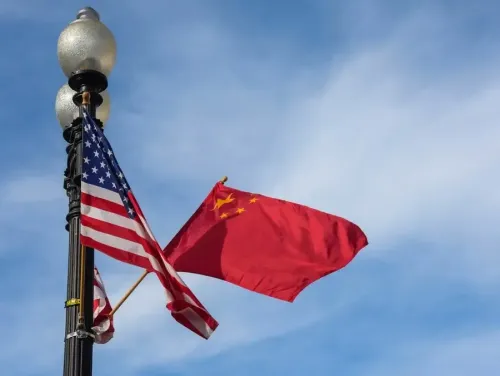
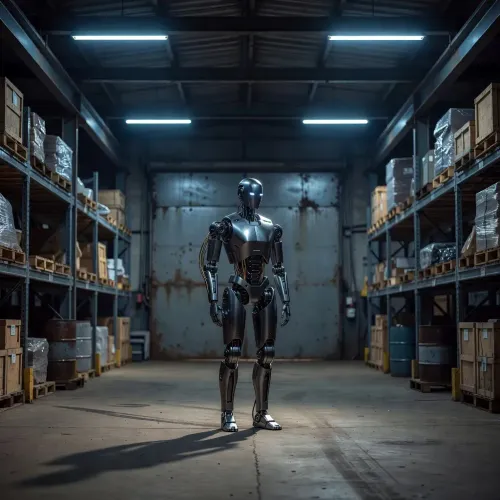
The United States is intensifying efforts to block Chinese-made advanced robots from American factories and ports, driven by fears of espionage, cyberattacks, and strategic dependency — a move analysts say is as consequential as earlier restrictions on TikTok and Huawei, according to a report in Eurasia Review. The emerging contest, the report argues, is less about manufacturing volume and more about who controls the machines, supply chains, and standards linking artificial intelligence to real-world infrastructure.
The FCC's Covered List and What It Signals
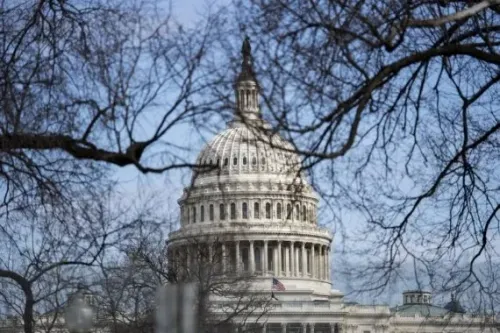
The US Federal Communications Commission (FCC) has placed Chinese advanced robotic platforms on its 'Covered' List, citing risks of surveillance, cyberattack, supply-chain disruption, and remote compromise. The designation effectively restricts federal procurement and signals to private industry the government's posture on these systems.
According to the Eurasia Review analysis authored by Collins Chong Yew Keat, the concern is structural: "The fear is that these will give strategic advantage to adversaries, just like what a Trojan horse could do. All these change the security equation, similar to the threats of cyber warfare and the calculations regarding TikTok and Huawei in the past."
The Scale Gap Between the US and China
The numbers reveal a striking asymmetry. In 2024, China produced approximately 300,000 industrial robots, while the US installed roughly 34,000. While America maintains an edge in AI models, semiconductors, and cloud infrastructure, China leads decisively in manufacturing plants and deployed machines on the ground.
This gap is at the heart of Washington's anxiety. Notably, reported vulnerabilities in Chinese robotic platforms have, according to the article, validated and strengthened security concerns that critics had previously dismissed as overstated.
Washington's Strategy: Denial Before Dependency
The US approach is being characterised as strategic denial — cutting off access before deep integration makes removal politically and economically untenable. The Eurasia Review report draws a sharp lesson from past experience: "The United States has learned an uncomfortable lesson, that dependency is easiest to prevent before it becomes dependency. Once foreign technology has deeply integrated into national infrastructure, jettisoning it will be expensive and politically difficult."
This comes amid broader US efforts to decouple critical technology infrastructure from Chinese suppliers, a policy trajectory that has accelerated since the semiconductor export controls of 2022 and subsequent restrictions on advanced AI hardware.
Building a US-Allied Robotics Ecosystem
The restrictions are only one half of Washington's twin-track approach. The broader objective, the report states, is "to deny Chinese platforms the space to dominate America's robotic and AI infrastructure, while building a competitive US-and-allied embodied and supported AI ecosystem of its own."
Both Washington and Beijing are acutely aware of the stakes. The contest over robots is increasingly seen as a proxy for control over the next generation of AI-physical systems — from autonomous logistics to defence manufacturing — that will define industrial and military capability through the coming decade.
Whether US restrictions will be sufficient to close the deployment gap, or whether allied nations will coalesce around a common robotic supply chain standard, remains an open question as the technology race accelerates.
Point of View
Defence, and critical infrastructure over the next decade. China's lead in deployed machines means it is already shaping those operational norms. US restrictions matter, but without a credible allied production alternative — not just policy declarations — the deployment gap will persist regardless of what the FCC lists.
NationPress
26 Sept 2026
Frequently Asked Questions
Why is the US restricting Chinese-made robots?
The US is restricting Chinese advanced robots over concerns about espionage, cyberattacks, supply-chain disruption, and the risk of remote compromise. The FCC has placed Chinese robotic platforms on its 'Covered' List, reflecting fears that integrated Chinese technology could give strategic advantage to adversaries — analogous to earlier concerns about TikTok and Huawei.
What is the FCC 'Covered' List and what does it mean for Chinese robots?
The FCC's 'Covered' List designates equipment deemed a national security risk, restricting its use in federally funded projects and signalling broader procurement concerns to private industry. Chinese robotic platforms added to the list face significant barriers to deployment in US factories, ports, and public infrastructure.
How does the US compare to China in industrial robot production?
China produced approximately 300,000 industrial robots in 2024, while the US installed roughly 34,000 in the same year. While the US leads in AI models, semiconductors, and cloud infrastructure, China holds a commanding advantage in manufacturing scale and the number of machines already deployed.
What is Washington's broader strategy beyond banning Chinese robots?
Washington is pursuing a two-pronged approach: denying Chinese platforms access to US robotic and AI infrastructure, while simultaneously building a competitive US-and-allied AI ecosystem. The goal is to prevent the kind of entrenched dependency that made unwinding Huawei from global telecom networks so difficult and costly.
How does the robot competition relate to broader US-China tech tensions?
The robotics contest is part of a wider US-China technology rivalry that includes semiconductor export controls, AI hardware restrictions, and limits on Chinese software platforms. Analysts view control over robots — which link AI to physical-world systems — as the next critical frontier in this strategic competition.