US NDAA bans Pentagon from deploying Chinese humanoid robots

Synopsis
The US House has passed an NDAA provision barring the Pentagon from deploying Chinese-made humanoid robots — the first time such restrictions have entered a major military policy bill — while a broader commercial ban via the FCC remains on the legislative table.
Key Takeaways
The US House of Representatives passed the National Defence Authorisation Act (NDAA) containing Section 163 , which bars the Pentagon from procuring or operating humanoid robots tied to China , Russia , or Iran .
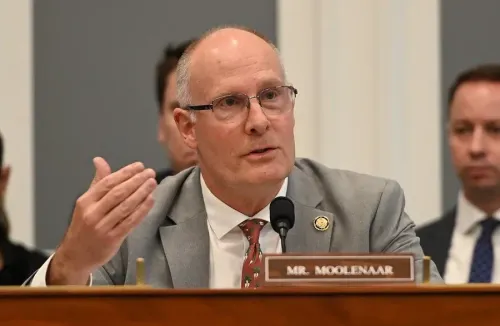
The provision is drawn from the GUARD Act , introduced by Representative John Moolenaar , but excludes the bill's most sweeping measure — an FCC Covered List designation that would ban commercial sales.
Commercial sales of Chinese humanoid robots in the US remain unrestricted under the current NDAA language.
Chinese firms including Unitree Robotics and AgiBot compete in a global market alongside US players such as Tesla , Figure AI , and Agility Robotics .
The bill must clear the US Senate before becoming law, leaving room for the scope of restrictions to expand or contract.
The US House of Representatives has passed the National Defence Authorisation Act (NDAA), embedding provisions that bar the Pentagon from procuring, leasing, or operating humanoid robots linked to designated foreign adversaries — a move that directly targets Chinese robotics manufacturers amid intensifying US-China tech rivalry.
What the NDAA provision says
Section 163 of the defence bill prohibits the US military from deploying covered humanoid robotic systems connected to foreign adversaries, explicitly naming China, Russia, and Iran. The restrictions are grounded in national security and data privacy concerns, reflecting growing anxiety in Washington over autonomous systems that could harvest sensitive operational data.
The bill's passage marks the first time restrictions on humanoid robots have been codified into a major annual military policy framework, signalling that the robotics sector is now firmly inside the perimeter of the broader technology decoupling effort.
The GUARD Act connection
The NDAA provision draws from the proposed Guarding the US Against Adversarial Robotics Dominance (GUARD) Act, introduced last summer by Representative John Moolenaar, chairman of a House select committee focused on competition with China. The GUARD Act in its full form would have directed the Federal Communications Commission (FCC) to evaluate Chinese humanoid and quadruped 'robot dog' systems for inclusion on its 'Covered List' — a designation that strips devices of wireless communication licences and effectively bans their commercial sale across the US market.
However, lawmakers opted for a narrower approach: Section 163 limits restrictions strictly to military procurement, leaving commercial sales of Chinese robots — from companies such as Unitree Robotics and AgiBot — untouched for now.
Why it matters
Chinese humanoid robot makers have rapidly expanded their global footprint, competing against US players including Tesla, Figure AI, and Agility Robotics. The legislative move, even in its diluted form, signals that Washington is prepared to extend export-control and procurement-restriction logic — already applied to semiconductors, drones, and telecoms equipment — into the emerging humanoid robotics market.
According to industry analysts at firms including Counterpoint Research and Omdia, the humanoid robotics sector is approaching an inflection point, with commercial deployments in logistics, manufacturing, and defence support accelerating through 2026.
What's next
The NDAA must still pass the US Senate before being signed into law, and the full scope of Section 163 could be revised during that process. Separately, the broader GUARD Act — with its commercial ban mechanism via the FCC Covered List — remains a live legislative proposal that could be reintroduced or attached to future bills.
The critical question for the industry is whether commercial restrictions follow: if the FCC Covered List route is eventually pursued, Chinese humanoid and quadruped robot makers could face the same market-exclusion fate as Huawei and ZTE in telecoms equipment. Investors and manufacturers on both sides of the rivalry will be watching the Senate deliberations closely.
Point of View
Then use the FCC Covered List as a commercial chokepoint. What mainstream coverage underplays is the deliberate sequencing — by keeping commercial sales intact for now, lawmakers preserve diplomatic flexibility while still signalling intent to the market. The exclusion of the GUARD Act's full framework is a tactical retreat, not an ideological one; the FCC route remains available and has precedent. For Chinese humanoid robot makers, the more immediate risk is not this bill but the chilling effect it creates among US enterprise buyers who will self-censor procurement ahead of any formal ban.
NationPress
22 Oct 2026
Frequently Asked Questions
What does the US NDAA say about Chinese humanoid robots?
Under Section 163 of the NDAA passed by the US House of Representatives , the Pentagon is prohibited from procuring, leasing, or operating humanoid robotic systems linked to designated foreign adversaries including China , Russia , and Iran . The restriction is based on national security and data privacy concerns.
Does the NDAA ban Chinese robots from being sold commercially in the US?
No — the current NDAA language limits restrictions to military procurement only, leaving commercial sales of Chinese humanoid robots in the US market unrestricted. The broader GUARD Act , which would have enabled a commercial ban via the FCC Covered List , was not fully incorporated into the defence bill.
What is the GUARD Act and how does it relate to this legislation?
The GUARD Act — short for Guarding the US Against Adversarial Robotics Dominance — was introduced by Representative John Moolenaar last summer. It proposed placing Chinese humanoid and quadruped robots on the FCC's Covered List , which would strip their wireless licences and effectively ban commercial sales; the NDAA adopted only its narrower military-procurement elements.
Which Chinese humanoid robot companies are affected?
Chinese manufacturers including Unitree Robotics and AgiBot are among the companies whose products could fall under the military procurement ban. Their US commercial sales are not currently restricted, but a future expansion of the GUARD Act or an FCC Covered List action could change that.
What happens next with this legislation?
The NDAA must pass the US Senate before it can be signed into law, and the scope of Section 163 may be revised during that process. The standalone GUARD Act remains a live proposal and could be reintroduced or attached to future legislation, potentially extending restrictions to commercial markets.