US lawmakers push GUARD Act to block Chinese robots from critical infrastructure
Synopsis
US lawmakers are sounding the alarm that China's 90% grip on global humanoid robot shipments is not just a market story — it is a national security threat. The GUARD Act hearing laid out a chilling case: connected robots can map, surveil, collect audio, and physically act inside American factories, hospitals, and military bases. Congress wants to move before the installed base makes action too costly.
Key Takeaways
A bipartisan US House subcommittee advanced the GUARD Act on 25 July to block Chinese-made humanoid and quadruped robots from America's critical infrastructure.
AUVSI chief Michael Robbins testified that Chinese firms control 'roughly 90 percent of global humanoid shipments.' Witnesses warned connected robots are 'mapping, surveilling, and collecting audio' and sending data back to the PRC .
Former White House adviser Lindsay Gorman cautioned that AI is 'massively expanding the cyberattack surface' in favour of attackers.
Lawmakers called for allied coordination with Japan , South Korea , Taiwan , Israel , Australia , and European partners to counter Chinese scale.
A bipartisan group of US lawmakers moved forward this week with legislation designed to prevent Chinese-made humanoid and quadruped robots from gaining a foothold in America's critical infrastructure, warning that Beijing is deploying the same industrial strategy it used to dominate the global drone market — and that connected robots could be exploited for espionage and physical sabotage.
What the GUARD Act Proposes
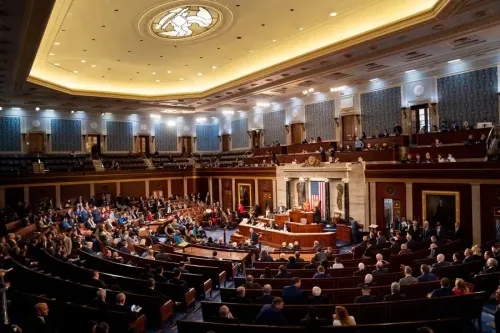
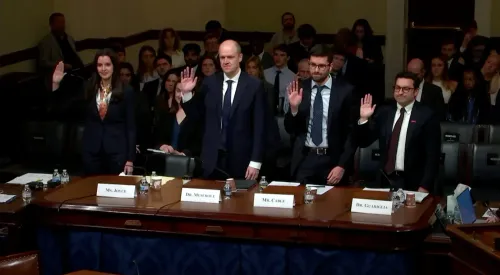
The legislation, known as the GUARD Act, was the centrepiece of a House Energy and Commerce Communications and Technology Subcommittee hearing held on 25 July. The session examined a range of bills covering communications security, artificial intelligence, broadband deployment, and illegal robocalls. Lawmakers from both parties argued the United States must act before Chinese robotics achieve widespread adoption across American industry.
Key Warnings From the Hearing
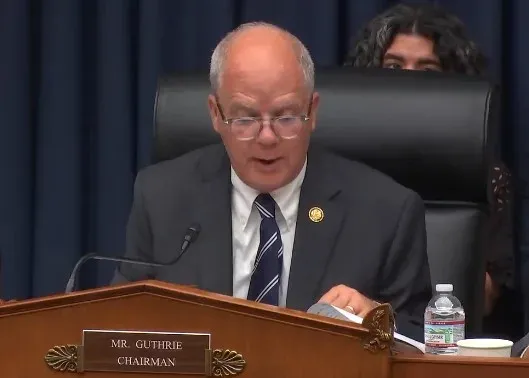
Committee Chairman Brett Guthrie noted that Congress had previously acted against telecommunications equipment and drones from Chinese manufacturers. He cited 'recent reports of a China-linked plot to cripple communications networks' as evidence that threats to American infrastructure remain active, adding that lawmakers are 'committed to protecting our critical infrastructure and safeguarding Americans' data.'
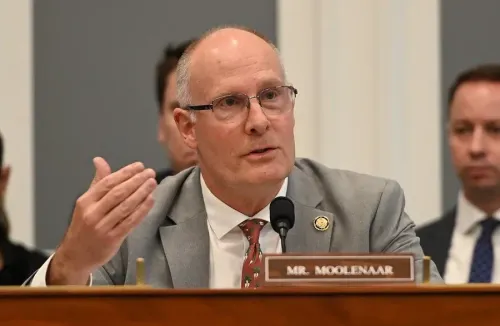
Michael Robbins, President and Chief Executive Officer of the Association for Uncrewed Vehicle Systems International (AUVSI), urged swift action. 'The same PRC playbook used for drones is now aimed at robotics,' Robbins told the panel. 'The humanoid and quadruped market is still relatively new.' He warned that Chinese firms already account for 'roughly 90 percent of global humanoid shipments' and that American research institutions have shifted toward 'subsidised, artificially low-cost Chinese systems.'
Robbins drew a stark distinction between conventional cyber threats and robot-specific risks. 'A compromised laptop can expose data. A compromised robot can expose data and also move, surveil, and act physically inside a factory, a hospital, a power plant, or a military base,' he said. 'Every such system is therefore a Trojan horse on American soil.' He also testified that connected systems are 'known to be directing data directly back to the PRC' and that robots are 'mapping, surveilling, and collecting audio through sensors,' with software updates potentially enabling physical disruption.
The AI Dimension
Former White House technology adviser Lindsay Gorman cautioned that artificial intelligence has fundamentally altered the cybersecurity landscape. 'AI is massively expanding the cyberattack surface and risks tipping the offense-defense balance in favour of the attacker,' she said. Gorman argued that the US needs 'lower-cost alternatives for export and a vibrant open-source AI ecosystem at home' to compete with inexpensive Chinese AI models being promoted globally, warning that many countries could adopt them purely on cost grounds.
The Case for Allied Coordination
Robbins also pressed for closer cooperation with trusted partners, identifying Japan, South Korea, Taiwan, Israel, Australia, and European allies as key collaborators. 'We are much stronger when working together to take on China's authoritarian scale than when any single democratic nation tries to take on China's authoritarian scale alone,' he said. He cautioned that delaying policy action would deepen dependence on Chinese technology and make future restrictions considerably more costly.
Broader Agenda at the Hearing
Beyond robotics, the subcommittee also examined proposals to deploy AI to strengthen communications networks, improve federal broadband coordination, and crack down on illegal foreign robocalls — threats that witnesses increasingly linked to organised criminal networks operating overseas. The hearing signals a broadening legislative push to address technology security risks across multiple sectors simultaneously.
Point of View
Not incidental; legislation alone will not reverse it without a credible domestic or allied alternative at competitive price points. Congress is right to be alarmed, but a ban without a substitute risks stalling automation in sectors where the US cannot afford to fall further behind.
NationPress
23 Oct 2026
Frequently Asked Questions
What is the GUARD Act targeting Chinese robots?
The GUARD Act is US legislation designed to prevent Chinese-made humanoid and quadruped robots from being embedded in America's critical infrastructure, including factories, hospitals, power plants, and military bases. It was the focus of a House Energy and Commerce subcommittee hearing on 25 July, where lawmakers from both parties backed swift action.
Why are US lawmakers concerned about Chinese robots specifically?
Witnesses testified that Chinese-connected robots are reportedly directing data back to the PRC and are capable of mapping, surveilling, and collecting audio through onboard sensors. Unlike a compromised laptop, a compromised robot can also move and physically disrupt the environment it operates in, making it a more serious security risk.
How dominant are Chinese firms in the humanoid robot market?
According to AUVSI President Michael Robbins, Chinese companies already account for roughly 90 percent of global humanoid robot shipments. He warned that American research institutions have increasingly shifted toward subsidised, artificially low-cost Chinese systems, mirroring the trajectory seen in the drone industry.
What role does artificial intelligence play in the security threat?
Former White House technology adviser Lindsay Gorman testified that AI is massively expanding the cyberattack surface and risks tilting the offense-defense balance toward attackers. She also warned that China is promoting low-cost AI models globally, and that many countries may adopt them purely due to cost advantages.
Which countries has the US identified as trusted partners on robotics security?
AUVSI's Michael Robbins identified Japan, South Korea, Taiwan, Israel, Australia, and European partners as key collaborators for countering China's scale in robotics. He argued that no single democratic nation can effectively take on China's authoritarian industrial scale alone.