US Military Issues Urgent Safety Advisory for Iranian Civilians Amid Ongoing Drone Strikes
Synopsis
The US military has urgently advised Iranian civilians to stay indoors due to ongoing drone and missile attacks from Iranian forces in populated areas. The situation poses significant risks to innocent lives, prompting international concern.
Key Takeaways
US military warns Iranian civilians to stay indoors due to ongoing attacks.
Iranian forces are launching drones and missiles from populated areas.
Use of civilian zones for military operations raises international legal concerns.
Over 32,000 Americans have returned safely since the crisis began.
State Department is assisting with evacuation efforts.
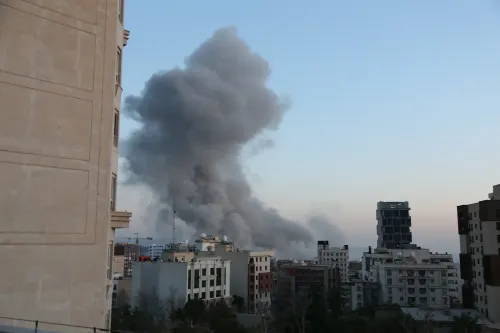
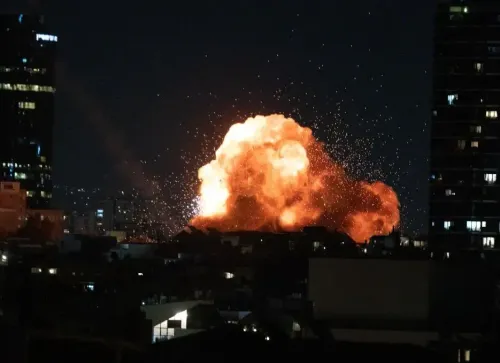
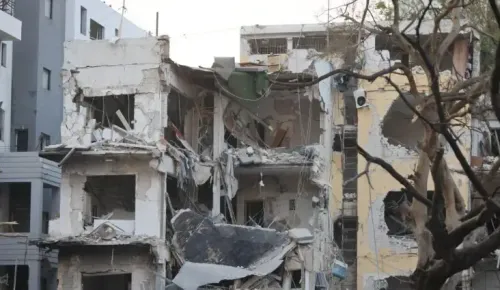
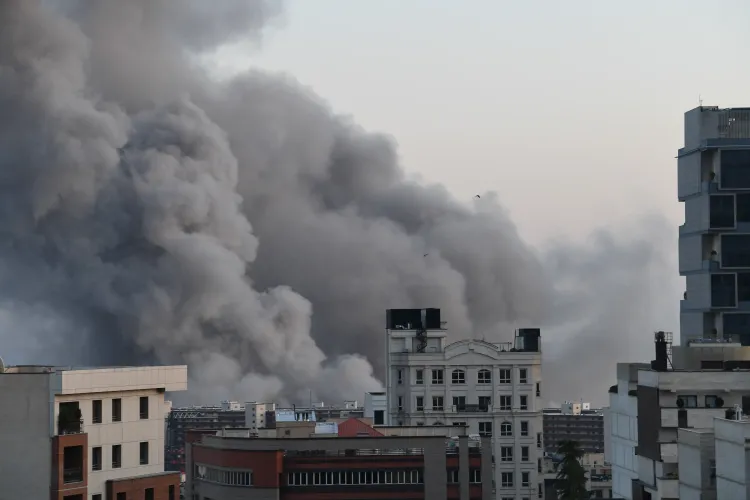
Washington, March 8 (NationPress) - On Sunday, the US military cautioned Iranian civilians to remain indoors as Iranian forces persist in their drone and ballistic missile attacks launched from heavily populated urban areas. US officials have expressed concerns that this tactic is endangering millions of innocent lives.
The US Central Command reported that the Iranian military has been executing operations from crowded cities such as Dezful, Esfahan, and Shiraz, from which drones and missiles have recently been deployed.
“The Iranian regime is utilizing highly populated civilian zones to conduct military actions, including the launch of one-way attack drones and ballistic missiles,” stated CENTCOM.
American officials have raised alarms about the implications of using residential areas for military purposes, warning that such actions could expose these locales to counterattacks as per international law.
“This perilous strategy jeopardizes the lives of all civilians in Iran, as sites employed for military objectives lose their protected status and may become legitimate military targets under international law,” CENTCOM added.
The statement urged civilians throughout Iran to stay indoors as the conflict escalates.
“US forces strongly advise civilians in Iran to remain at home,” the statement declared, emphasizing that the Iranian government is “deliberately putting innocent lives at risk.”
Furthermore, American officials accused Iranian forces of targeting civilian infrastructure in other regions.
According to CENTCOM, Iranian forces have been “intentionally and indiscriminately targeting civilian airports, hotels, and residential neighborhoods” across various parts of the Middle East, thereby endangering innocent populations in neighboring countries.
Adm. Brad Cooper, commander of US Central Command, remarked that Tehran’s actions are endangering both its own citizens and regional allies.
“The Iranian terrorist regime is openly disregarding civilian lives by attacking Gulf partners while compromising the safety of their own population,” Cooper stated.
U.S. officials indicated that Iran has executed hundreds of ballistic missile launches and thousands of one-way attack drone deployments since February 28. However, they noted that the frequency of these launches has begun to decline following sustained military pressure.
“Launch rates have significantly decreased as US and allied forces diminish Iran’s military capabilities,” CENTCOM reported.
The US military stated it is making efforts to minimize civilian harm but warned that it cannot ensure safety near facilities utilized by Iranian forces.
“The US military takes every reasonable measure to mitigate harm to civilians but cannot guarantee civilian safety in or around areas used by the Iranian regime for military purposes,” the statement emphasized.
“In contrast to the Iranian regime, US forces do not target or intentionally endanger civilians.”
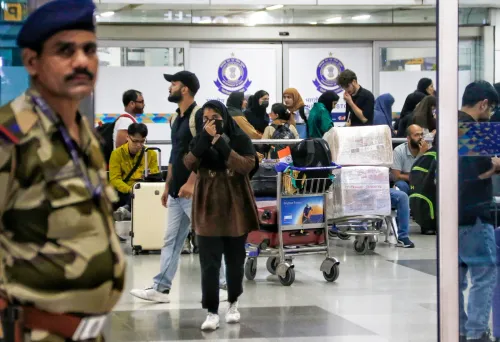
Simultaneously, the US State Department announced it is executing a comprehensive initiative to assist Americans in departing the region as tensions rise.
Assistant Secretary Dylan Johnson noted that over 32,000 Americans have successfully returned to the United States since the onset of the crisis.
“Since February 28, more than 32,000 American citizens have safely returned to the United States from the Middle East,” Johnson stated.
The State Department has organized nearly twenty charter flights and facilitated the evacuation of thousands of Americans from the region, as the availability of commercial flights across the Middle East slowly improves.
Through its continuous task force, the department has directly assisted over 19,000 Americans overseas by providing security advice and travel assistance.
The evacuation program encompasses Americans in Oman, Kuwait, Bahrain, the United Arab Emirates, Qatar, Saudi Arabia, and Israel who may need help leaving the region.
Officials also highlighted that more than half of the Americans who sought assistance ultimately declined government-arranged transport when reached. Some opted to stay in the region, while others preferred to organize their own departures.
Point of View
The ongoing situation in Iran represents a serious humanitarian concern, with the actions of the Iranian regime placing civilians at grave risk. The international community must be vigilant in monitoring these developments to ensure civilian safety and uphold international law.
NationPress
2 Oct 2026
Frequently Asked Questions
Why did the US military issue a warning to Iranian civilians?
The US military warned Iranian civilians to stay indoors due to ongoing drone and missile attacks from Iranian forces launched from populated urban areas, which pose a significant risk to civilian lives.
What has CENTCOM reported about Iranian military operations?
CENTCOM reported that the Iranian military is conducting operations from crowded cities, including Dezful, Esfahan, and Shiraz, using heavily populated civilian areas for military actions.
What are the international implications of using civilian areas for military purposes?
Using residential areas for military operations can lead to these locations losing their protected status under international law, making them legitimate military targets and exposing civilians to greater risk.
How many Americans have returned to the US since the crisis began?
Since the crisis began on February 28, over 32,000 Americans have safely returned to the United States from the Middle East.
What assistance is the US State Department providing to Americans abroad?
The US State Department is organizing charter flights and offering security guidance and travel support to assist Americans in evacuating from the Middle East.