USS George Washington exits Middle East, US carriers in region drop to two
Synopsis
The USS George Washington has left the Middle East after three months, trimming the US carrier presence there from three to two — even as the USS Theodore Roosevelt just arrived. With diplomacy stalled and Trump keeping the door open to fresh strikes on Iran, Washington is recalibrating its force posture without fully standing down.
Key Takeaways
The USS George Washington has departed the Middle East after a three-month deployment , returning to 7th Fleet operations in the Asia-Pacific.
US carrier strike groups in the region have dropped from three to two , with the USS George H.W.
Bush and USS Theodore Roosevelt remaining.
The USS Theodore Roosevelt arrived in the CENTCOM area of responsibility on Sunday , partially offsetting the reduction.
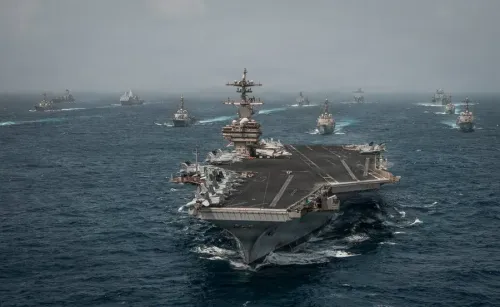
The US naval presence in the Arabian Sea includes 2 carriers , 13 destroyers , 2 cruisers , and a littoral combat ship .
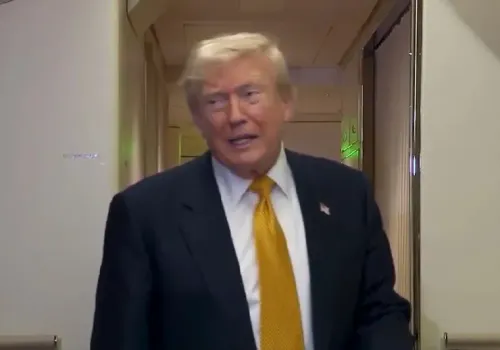
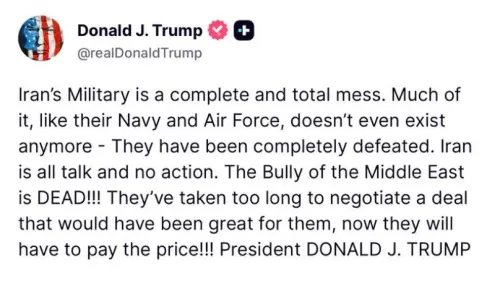
President Donald Trump last week said US forces remain ready for further military action, though the likelihood of large-scale renewed strikes on Iran is reportedly low.
The US-Israel coordinated strikes on Iran on 28 February triggered the ongoing conflict that has disrupted regional shipping and pushed up global energy prices.
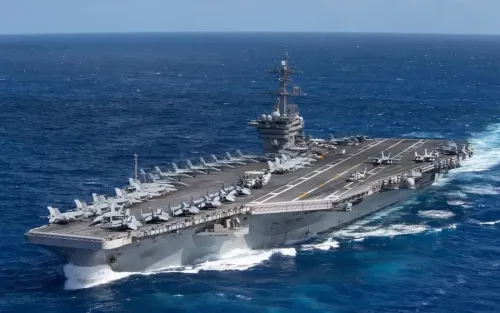
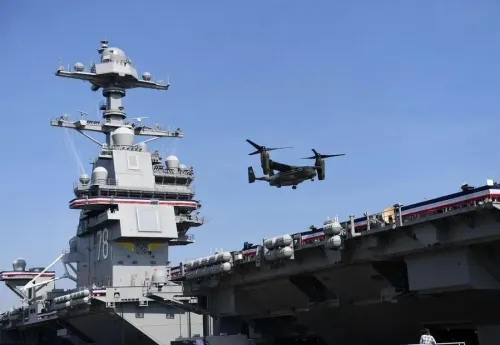
The USS George Washington, a Nimitz-class nuclear-powered aircraft carrier, has departed the Middle East, reducing the number of US carrier strike groups in the region from three to two, a US Pacific Fleet spokesperson confirmed on Wednesday. The Japan-based carrier has returned to the 7th Fleet and is now conducting what the Navy described as 'routine operations' in the Asia-Pacific region.
The Redeployment
Commander Katie Koenig, spokesperson for the US Pacific Fleet, confirmed that the USS George Washington had completed a three-month deployment in the Middle East before resuming its normal 7th Fleet operations. The carrier had been operating in the region since August, according to US media reports. Its departure now leaves the USS George H.W. Bush and the USS Theodore Roosevelt as the two active carrier strike groups in the area.
USS Theodore Roosevelt Fills the Gap
The USS Theodore Roosevelt arrived in the area of responsibility of the US Central Command (CENTCOM) on Sunday, a US official confirmed. Its arrival, reported on Monday, came amid continued tensions with Iran and effectively maintained the overall carrier presence in the region even as the George Washington prepared to exit. The USS George H.W. Bush has been operating in the Middle East since April.
US Naval Footprint in the Arabian Sea
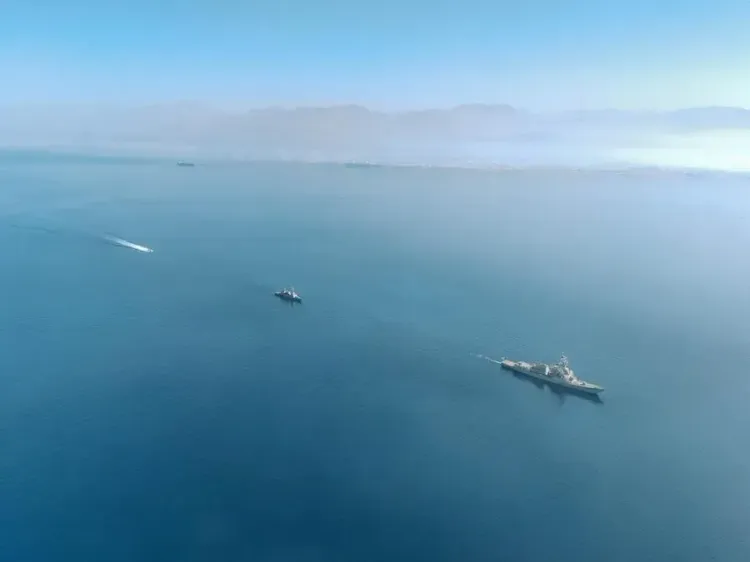
According to US media reports, the American naval presence in the Arabian Sea currently comprises two aircraft carriers, 13 destroyers, two cruisers, and a littoral combat ship. During the ongoing US-Iran conflict, aircraft carriers have reportedly played a central role in enforcing a naval blockade of Iranian ports, disrupting regional shipping and contributing to elevated global energy prices.
Diplomatic Stalemate and Threat of Further Strikes
The redeployment comes as diplomatic efforts between Washington and Tehran remain stalled. President Donald Trump said last week that US forces remained ready for further military action, though analysts and officials suggest the probability of large-scale renewed strikes on Iran is currently low. The United States and Israel launched coordinated strikes on Iran on 28 February, triggering a prolonged conflict that has disrupted maritime trade and driven up global energy prices. The current naval configuration reflects a measured posture — maintaining deterrence while avoiding an immediate escalatory signal.
What to Watch
The strategic calculus in the region will hinge on whether the Trump administration moves toward a diplomatic opening with Tehran or opts for renewed military pressure. With two carrier strike groups and a substantial surface fleet still in place, the US retains significant force projection capability. Any shift in the Iran nuclear or sanctions negotiation track, or a resumption of hostilities, could prompt a rapid reversal of the George Washington's departure.
Point of View
But the timing — with diplomacy deadlocked and Trump publicly reserving the military option — makes it a signal worth reading carefully. Washington is thinning its carrier presence just enough to avoid the optics of an open-ended occupation of the Arabian Sea, while the Theodore Roosevelt's simultaneous arrival ensures no actual capability is lost. The real question is whether this repositioning is a prelude to de-escalation or a tactical pause before the next pressure cycle on Tehran. Either way, the global energy market, still rattled by the February strikes, will be watching every carrier movement as a leading indicator.
NationPress
19 Nov 2026
Frequently Asked Questions
Why has the USS George Washington left the Middle East?
The USS George Washington completed its three-month deployment in the Middle East and has returned to 7th Fleet operations in the Asia-Pacific, where it is now conducting routine operations. The Japan-based carrier's departure reduces the number of US carrier strike groups in the region from three to two.
How many US aircraft carriers remain in the Middle East?
Two US aircraft carriers — the USS George H.W. Bush and the USS Theodore Roosevelt — remain in the Middle East as of Wednesday. The USS Theodore Roosevelt arrived in the CENTCOM area of responsibility on Sunday, replacing the departing George Washington.
What is the current US naval presence in the Arabian Sea?
According to US media reports, the US Navy currently has two aircraft carriers, 13 destroyers, two cruisers, and a littoral combat ship operating in the Arabian Sea. The force has been enforcing a naval blockade of Iranian ports during the ongoing conflict.
What triggered the US-Iran conflict mentioned in the article?
The United States and Israel launched coordinated military strikes on Iran on 28 February, triggering a prolonged conflict that has disrupted regional shipping and driven up global energy prices. Diplomatic efforts between Washington and Tehran have since remained stalled.
Is the US likely to launch further military strikes on Iran?
President Donald Trump said last week that US forces remained ready for further military action against Iran, but the likelihood of renewed large-scale strikes is reportedly low. Diplomatic efforts between Washington and Tehran are currently at a standstill.