USTR report cites India manufacturing gains under Modi push
Synopsis
A new USTR report credits Narendra Modi’s manufacturing drive with turning India from a mobile-phone importer into a net exporter, with output at 330 million units in 2023-24 against 58 million in 2014-15. It also notes medical devices, 4G and 5G gear, and solar capacity. Washington still says India has not fully met its manufacturing and export ambitions.
Key Takeaways
The USTR on Wednesday documented gains from Prime Minister Narendra Modi’s manufacturing push, in a report released in Washington on 25 November .
India’s phone output rose from 58 million in 2014-15 to 330 million in 2023-24 , with exports close to 50 million and imports down to 3 million .
Domestic electronics value addition is about 18 per cent to 20 per cent , according to the report.
India now makes 39 types of medical devices locally and is the world’s third-largest pharmaceutical producer by volume.
Steelmaking capacity grew 26.2 per cent between 2019 and 2024 , largely on domestic demand; India ranks third in solar-cell and module capacity behind China and the US.
The USTR says India has yet to fully achieve its manufacturing and export ambitions.
The Office of the US Trade Representative (USTR) on Wednesday documented gains from Prime Minister Narendra Modi’s manufacturing drive, saying India has increased production and exports in mobile phones, medical equipment and electronics. The report, released in Washington on 25 November, charts India’s shift from a major mobile-phone importer to a net exporter, while stating that the country has yet to fully achieve its manufacturing and export ambitions.
From importer to net exporter of phones
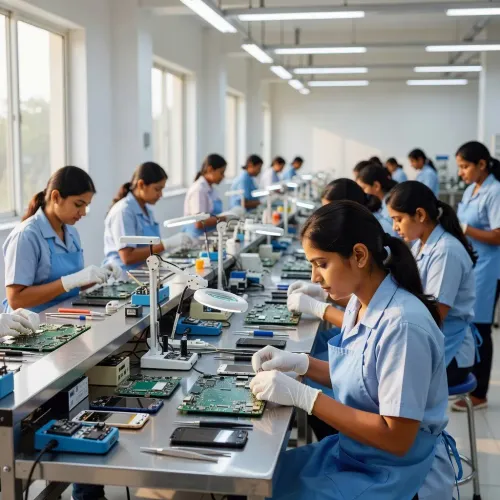
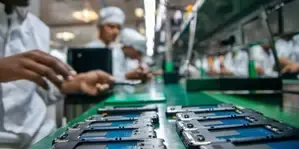
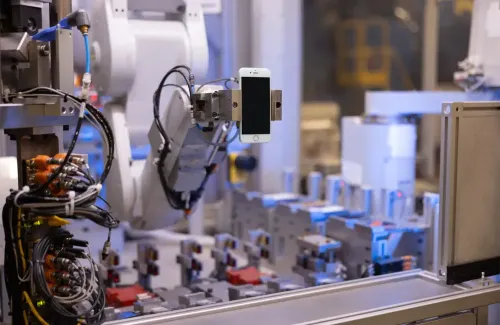
Mobile phones offer the clearest illustration of the decade-long shift. Citing Invest India, the government’s investment promotion agency, the USTR says India produced 58 million phones and imported 210 million in the 2014-15 financial year. By 2023-24, domestic production had reached 330 million, imports had fallen to 3 million, and exports were close to 50 million.
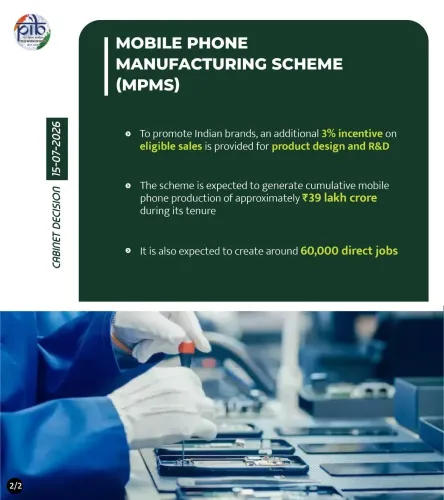
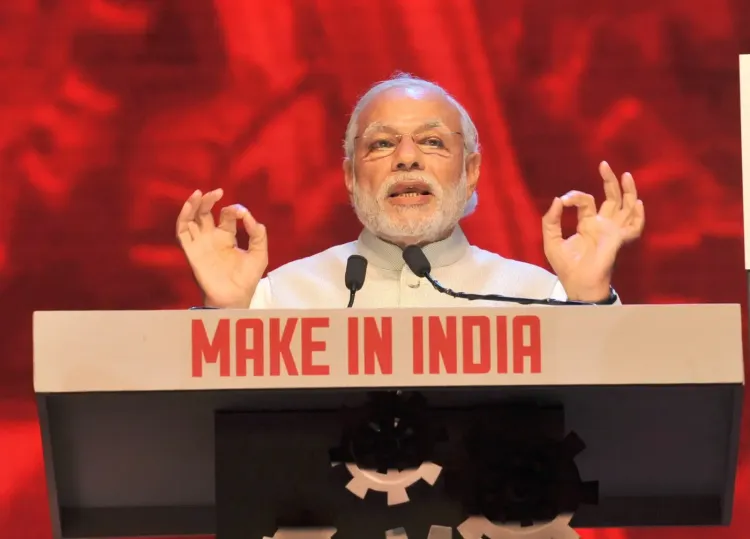
The figures describe a change over nearly a decade, rather than new production totals for 2026. Notably, the same period coincides with the launch of Make in India in 2014 and the production-linked incentive (PLI) programme in 2020. The latter pays eligible manufacturers financial incentives based on increases in sales. This is the policy spine the USTR discussion places alongside the production data.
Electronics value addition and components
The USTR also records progress in making more of the parts that go into electronic devices. Domestic value addition — the share of a product’s value created inside India — has risen to about 18 per cent to 20 per cent, according to the report. It links that rise to efforts to expand manufacturing across finished goods, components, materials and production equipment.
This comes amid a broader attempt to move beyond final assembly. At 18 to 20 per cent value addition, a large share of the electronics bill of materials still originates overseas, which is why the report simultaneously credits progress and withholds a clean bill of health on export ambitions. The distinction between assembling handsets and capturing the value of chips, displays and precision parts is the gap New Delhi has been trying to close.
Medical devices, pharma and telecom
In health care, the USTR reproduces Invest India’s account of international firms transferring technology for advanced equipment, including CT scanners and MRI machines. Those transfers have enabled India to manufacture 39 types of medical devices locally, according to that account.
The report also cites domestic production of pharmaceutical ingredients, including penicillin G, and India’s position as the world’s third-largest pharmaceutical producer by volume. In telecommunications, citing Invest India, the USTR says global technology companies have set up manufacturing operations in the country, helping India become an exporter of 4G and 5G equipment. Together, these strands show a manufacturing story that is no longer confined to consumer handsets.
Steel, solar and the domestic market
On steel, the assessment acknowledges the weight of India’s internal market. Steelmaking capacity grew 26.2 per cent between 2019 and 2024, and much of that expansion was driven by domestic demand rather than overseas orders. In solar manufacturing, the USTR cites research placing India third behind China and the United States in existing and planned solar-cell and module capacity.
The investigation recognises India’s economic strengths, including “a large, young, and growing workforce, a large internal market, and significant technological and educational advances.” Those structural advantages have underpinned the production ramp-up even as deeper localisation remains incomplete. A large home market can fill furnaces; it does not automatically create a surplus for export.
What the USTR caveat means
The USTR’s finding that India has yet to fully achieve its manufacturing and export ambitions is the report’s most consequential line for New Delhi. Phone assembly, device localisation and capacity additions in steel and solar show scale. The still-modest value-addition band and the demand-led character of steel growth show the unfinished part of the story.
What happens next will be watched in both capitals. For Indian industry, the test is whether PLI-style incentives deepen component manufacturing rather than only finished-goods volumes. For US trade officials, the same data will feed a wider conversation on supply-chain diversification. Policymakers in New Delhi are likely to read the Washington document as external validation of Make in India — and as a reminder that export scale and domestic value capture are not the same thing.
Point of View
But the USTR is not handing out a blank cheque. The phone story is real: output from 58 million to 330 million in a decade is a structural shift, not a rounding error. The more revealing numbers are the 18 to 20 per cent domestic value addition and steel capacity that expanded largely on home demand — evidence that India has mastered assembly and scale faster than deep localisation and export muscle. Until component manufacturing and net exports catch up with finished-goods headlines, the USTR’s caveat that ambitions remain unmet will keep returning in every bilateral trade round.
NationPress
25 Nov 2026
Frequently Asked Questions
What did the USTR report say about India’s manufacturing under PM Modi?
The USTR report released on Wednesday said Prime Minister Narendra Modi’s manufacturing push has helped India raise production and exports in mobile phones, medical equipment and electronics. It documents India’s shift from a major phone importer to a net exporter, while adding that India has yet to fully achieve its manufacturing and export ambitions.
How much did India’s mobile phone production grow according to the USTR?
According to the USTR, citing Invest India, India produced 58 million phones and imported 210 million in 2014-15. By 2023-24, production had reached 330 million, imports had fallen to 3 million, and exports were close to 50 million.
What is the production-linked incentive programme mentioned in the USTR report?
The production-linked incentive programme, introduced in 2020, offers financial incentives to eligible manufacturers based on increases in sales. The USTR discusses it alongside Make in India, which was launched in 2014.
Has India fully achieved its manufacturing ambitions, according to the USTR?
No. The USTR says India has yet to fully achieve its manufacturing and export ambitions, even as it recognises strengths such as a large young workforce, a large internal market, and technological and educational advances. Domestic value addition in electronics is cited at about 18 to 20 per cent.
Which sectors besides mobile phones did the USTR highlight?
The report cites local production of 39 types of medical devices, pharmaceutical ingredients including penicillin G, and 4G and 5G telecom equipment. It also notes a 26.2 per cent rise in steelmaking capacity between 2019 and 2024 and India’s third-place ranking in existing and planned solar-cell and module capacity behind China and the United States.