Vance backs Alaska gas pipeline to Asia amid South Korea uncertainty
Synopsis
Vice President JD Vance has put the White House's full backing behind an Alaska natural gas pipeline to Asia — but South Korea says no deal is done yet. With Japan cited as a keen buyer and decades of failed pipeline proposals in the background, the gap between political will and commercial reality is the story here.
Key Takeaways
Vice President JD Vance on 6 October 2026 expressed strong support for a major Alaska natural gas pipeline targeting Asian markets.
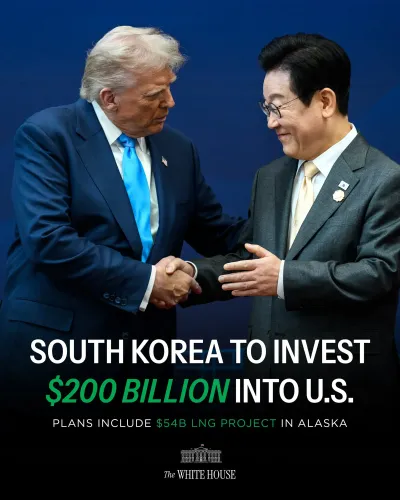
Vance cited Japan and other East Asian economies as key demand drivers, noting they have 'suffered from higher natural gas prices.' South Korea has publicly stated a deal on the pipeline has not been finalised , and Vance acknowledged negotiations are ongoing.
Alaska's North Slope gas reserves have generated pipeline interest for decades; no previous proposal has reached construction.
Vance separately deferred to CIA Director John Ratcliffe on whether Iran was involved in the FlyDubai hijacking attempt.
The Vice President was visiting Alaska to campaign for Republican Senator Dan Sullivan .
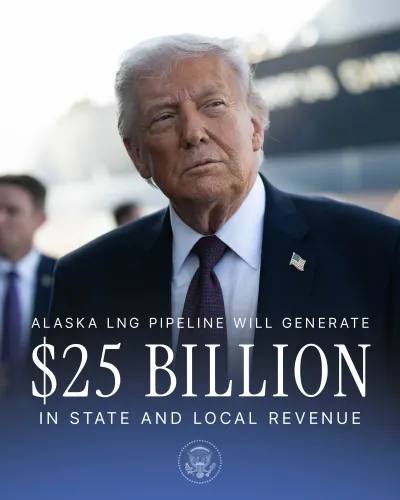
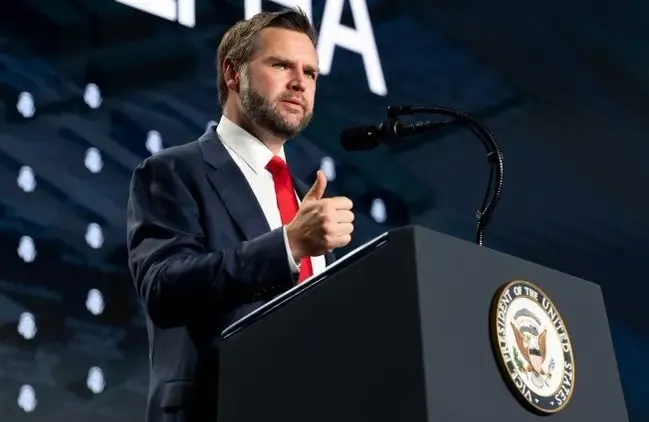
US Vice President JD Vance on 6 October 2026 said the Trump administration is firmly committed to advancing a major Alaska natural gas pipeline project targeting Asian markets, pointing to strong demand from Japan and other East Asian economies even as negotiations with South Korea remain unresolved.
Vance's Pipeline Push
Speaking to reporters before departing aboard Air Force Two for Alaska, Vance was emphatic about the administration's ambitions. 'The pipeline is something that we really want to see happen and a lot of our Asian friends want to see happen as well,' he said.
He broadened the case beyond South Korea, pointing to broader regional appetite: 'It's not just the South Koreans — the Japanese would love to see this pipeline. A lot of the East Asian economies that have suffered from higher natural gas prices would love to see more American gas flowing into their economies.'
Vance acknowledged that details are still being worked through. 'I think it's something that's going to happen — obviously, you still got to work out some of the details,' he said, adding that strong demand for American natural gas would ultimately drive the project forward.
South Korea's Position and Remaining Hurdles
The Vice President's comments come after South Korea stated publicly that a deal on the pipeline had not yet been finalised — a signal that diplomatic and commercial gaps persist. Vance stopped short of contradicting Seoul, instead framing demand-side momentum as the key variable. Analysts note that without a committed anchor buyer, large-scale LNG infrastructure projects routinely stall at the financing stage.
Alaska's vast reserves on the North Slope have for decades attracted interest from developers and governments seeking to channel liquefied natural gas to Pacific markets. The state has seen multiple pipeline proposals floated since the 1970s, none of which has reached construction. This project represents the latest attempt to break that pattern, now backed by explicit White House endorsement.
Iran, FlyDubai Hijacking, and UK Security Concerns
Vance's pre-departure remarks ranged widely beyond energy policy. Asked whether Iran was connected to a recently reported attempted hijacking of a FlyDubai flight, he deferred to CIA Director John Ratcliffe and other intelligence officials. 'I don't want to get ahead of any announcements there, but it's certainly something we're looking at — but I wouldn't say I've seen anything conclusive just yet,' he said.
He added that the incident was prompting a review of screening procedures for individuals who may pose flight risks. Separately, on reports of a suspected security threat in Britain that led to US bombers being repositioned from an airbase, Vance said the administration was acting out of caution. 'We do feel with some confidence that the Iranians are — they're trying to do what the Iranian state has done for 49 years, which is engage in acts of terrorism against the United States and against a lot of other people as well,' he said.
Alaska Senate Race and Ranked-Choice Voting
The Vice President was travelling to Alaska to campaign for Republican Senator Dan Sullivan, whom he described as 'a really great guy, a Marine Corps veteran.' Vance noted that Alaska's political character makes Senate contests competitive across partisan cycles. He also commented, with candour, on the state's electoral rules: 'They obviously have the kind of weird ranked choice voting system that I don't fully understand,' he said.
What to Watch Next
With the administration signalling intent but negotiations still open, the next milestones will be whether South Korea re-engages formally and whether Japan — already cited by Vance as an enthusiastic potential customer — moves to formalise any commitment. A concrete offtake agreement from a major Asian buyer would significantly de-risk the project and set the stage for financing discussions.
Point of View
Not a diplomatic formality; anchor buyers are the linchpin of LNG project economics, and without one, enthusiasm rarely converts to steel in the ground. The administration's framing of demand-side momentum as the decisive factor sidesteps the harder question of who bears the construction risk on a multi-billion-dollar greenfield project. Japan's interest, if it hardens into a contractual commitment, changes that calculus — but Vance offered no timeline or structure, only intent.
NationPress
6 Oct 2026
Frequently Asked Questions
What is the Alaska natural gas pipeline that JD Vance is backing?
It is a proposed large-scale pipeline designed to move natural gas from Alaska's North Slope to export terminals where it can be shipped as liquefied natural gas to Asian markets, primarily Japan and South Korea. The Trump administration has publicly signalled it wants the project to proceed, though commercial and diplomatic details remain unresolved.
Why is South Korea's position on the pipeline significant?
South Korea has stated that a deal on the pipeline has not been finalised, undercutting earlier signals of momentum. Major LNG pipelines require committed offtake agreements from buyers to secure financing, so Seoul's position is a material obstacle, not merely a procedural one.
Which Asian countries are most interested in the Alaska pipeline?
Vance specifically named Japan as strongly supportive, describing East Asian economies broadly as having 'suffered from higher natural gas prices.' South Korea has been discussed as a potential partner but has not confirmed a deal. Japan's formal commitment, if secured, would significantly strengthen the project's financing prospects.
What did Vance say about Iran and the FlyDubai hijacking incident?
Vance said the administration was looking into whether Iran was involved in the attempted FlyDubai hijacking but deferred to CIA Director John Ratcliffe for any conclusions, saying he had not seen anything 'conclusive just yet.' He also said the incident was prompting a review of screening procedures for individuals who pose flight risks.
Why was Vance travelling to Alaska?
Vance was visiting Alaska to campaign for Republican Senator Dan Sullivan, describing him as 'a really great guy, a Marine Corps veteran.' He also noted Alaska's historically competitive Senate races regardless of the national partisan environment.