Gulf allies call Trump's Iran deal 'transformative': JD Vance
Synopsis
JD Vance's White House briefing on the Trump Iran deal had one recurring argument: trust the Gulf states, because they have the most to lose. Their embrace of this deal — versus their fierce opposition to the 2015 JCPOA — is being positioned as the administration's most powerful proof of concept. The Strait of Hormuz security framework and UAE-led economic integration add structural ambition that goes well beyond a standard nuclear agreement.
Key Takeaways
US Vice President JD Vance stated on 18 June that Gulf Arab nations view the Trump administration's Iran deal as 'transformative' for regional stability.
Vance contrasted Gulf support for the current deal with their strong opposition to the 2015 JCPOA , which they believed empowered Iran.
The deal's memorandum of understanding (MOU) envisions a multilateral security framework for the Strait of Hormuz involving Iran , Oman , and Gulf states.
Broader economic relief for Iran is contingent on verified compliance; the UAE was cited as a potential future investor if sanctions are eased.
Vance argued that Gulf economic integration with Iran would itself serve as leverage against future Iranian destabilisation.
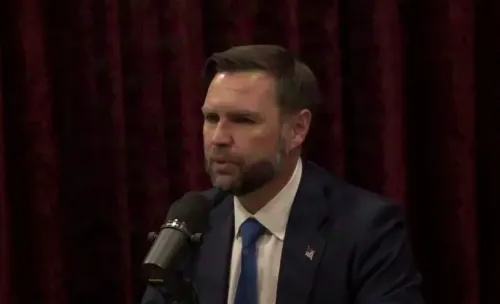
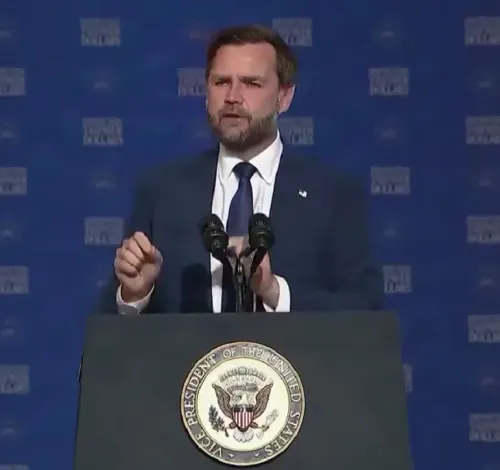
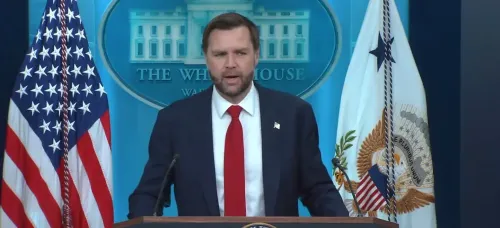
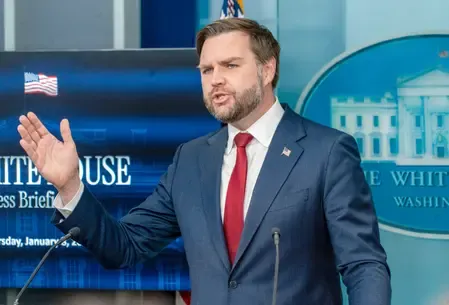
US Vice President JD Vance on Thursday, 18 June declared that Gulf Arab nations are firmly behind the Trump administration's Iran agreement, stating that regional governments view it as a 'transformative' development that could weaken Tehran's destabilising influence and anchor long-term stability across the Middle East. Speaking at a White House briefing, Vance framed the Gulf's endorsement as the deal's most credible validation.
Gulf States Contrast Deal with 2015 JCPOA
Vance drew a sharp distinction between Gulf reactions to the current agreement and their deep opposition to the 2015 Joint Comprehensive Plan of Action (JCPOA) negotiated under the Obama administration. He argued that Gulf governments believed the earlier accord had empowered Iran and enabled its proxy networks across the region.
'Back then, they hated that deal,' Vance said. 'They felt like it empowered the Iranians to be bad actors across the region, and of course, that's exactly what happened. They were right about that.'
By contrast, he said Gulf states now see Iran as having emerged from recent conflict in a substantially weakened position — and view the current framework as locking in that disadvantage.
A Win-Win Structure, Vance Argues
The vice president contended that the agreement is structured to benefit the US and its regional partners regardless of whether Tehran honours its commitments. 'Either way, we and the broader region win,' he said. 'Iran is weakened, their nuclear program destroyed, their economy in desperate straits, and if they change their behavior, big things are going to happen for Iran and for the world.'
He added that broader economic relief for Iran would only be unlocked through verified compliance. 'If they don't, no skin off our backs either way, we win, and that's the way the President has set up this deal and this negotiation,' Vance said.
Strait of Hormuz Security Framework Envisioned
A central pillar of the administration's longer-term vision is a multilateral security arrangement centred on the Strait of Hormuz, one of the world's most strategically critical waterways. Vance said the memorandum of understanding (MOU) envisions future talks among Iran, Oman, and Gulf Arab states to establish a framework preventing disruptions to international shipping.
'The MOU contemplates that the Omanis, the Iranians and the Gulf Coast coalition together will figure out a proper security framework for the Straits in the future,' he said. The objective, he added, is to ensure the strait is never again used as a chokepoint for global trade and energy flows.
Economic Integration as Leverage Over Tehran
Vance also suggested that Gulf nations — and potentially outside investors — could become significant economic partners for Iran if it demonstrates sustained compliance. He cited the United Arab Emirates (UAE) as a country that could participate in future development projects should sanctions be eased.
'If they behave and if the Emiratis themselves want to build a power plant, then we will do the sanctions relief necessary to make that possible,' he said. Rather than framing such investment as a concession, Vance argued that deeper economic integration would itself serve as leverage. 'A world where the Gulf Coast coalition has greater leverage in the Iranian economy is a world where the Iranians are going to be heavily prevented from misbehaving,' he said.
Regional Endorsement as the Deal's Strongest Argument
Throughout the briefing, Vance returned repeatedly to Gulf backing as the deal's most compelling endorsement. 'The Gulf Coast coalition loves this deal because they think that it makes Iran weaker,' he said. 'They know more about this, and they have more to lose than anybody, including the United States of America.'
Gulf states have long been among the most vocal critics of Iran's support for armed groups across the Middle East. Whether the agreement translates into the durable regional realignment the administration envisions will depend heavily on Iranian compliance and the durability of Gulf consensus in the months ahead.
Point of View
While genuine, is not unconditional; these governments are hedging, not committing. The Strait of Hormuz framework is the deal's most ambitious element and also its most fragile: a trilateral security arrangement involving Iran, Oman, and the GCC has no precedent and enormous implementation risk. The economic integration argument — that UAE investment in Iran creates leverage — is analytically interesting but historically untested in this context. The administration is selling a structural realignment; what it has, so far, is a memorandum of understanding.
NationPress
19 Sept 2026
Frequently Asked Questions
What did JD Vance say about Gulf states and the Trump Iran deal?
Vance said Gulf Arab nations view the Trump administration's Iran agreement as 'transformative', arguing it weakens Tehran in ways the 2015 JCPOA did not. He repeatedly cited Gulf endorsement as the deal's strongest validation, noting these governments have the most to lose from Iranian destabilisation.
How does the Trump Iran deal differ from the 2015 JCPOA?
According to Vance, Gulf states opposed the 2015 JCPOA because they believed it empowered Iran and enabled its regional proxy networks. The current deal, by contrast, is framed as locking in Iran's weakened position, with economic benefits only unlocked through verified compliance.
What is the proposed Strait of Hormuz security framework?
The deal's memorandum of understanding envisions future talks among Iran, Oman, and Gulf Arab states to establish a multilateral security framework for the Strait of Hormuz. The goal is to prevent the strategically critical waterway from being used as a chokepoint for global trade and energy flows.
What role could the UAE play under the Iran deal?
Vance cited the UAE as a country that could participate in future development projects in Iran — such as building power plants — if sanctions are eased following sustained Iranian compliance. He framed such economic integration as a source of leverage rather than a concession.
What happens if Iran does not comply with the agreement?
Vance said the deal is structured so that Iran only receives broader economic benefits upon compliance. If Tehran fails to follow through, he argued, the US and its Gulf partners still benefit from Iran's current weakened state — including its degraded nuclear programme and strained economy.