Vance warns against endless Iran bombing, backs diplomacy over military force
Synopsis
Vance's Joe Rogan appearance was a rare public break from the hawks inside Washington's foreign policy establishment. By saying bombing Iran indefinitely 'does not actually have a solution,' the Vice President signalled that the Trump administration's Iran strategy is more nuanced — and more contested internally — than its military strikes suggest. The Hormuz framework's partial unravelling at the hands of Iranian hardliners is the real test of whether diplomacy can hold.
Key Takeaways
US Vice President J.D.
Vance defended Iran negotiations on 16 July , warning that open-ended bombing would not secure the Strait of Hormuz .
Vance said the Trump administration is combining military force, economic pressure, and diplomacy to prevent Iran from developing a nuclear weapon.
A memorandum of understanding with Iran initially restored oil traffic through Hormuz, but Iranian hardliners later resumed attacks on ships.
Vance ruled out deploying US ground troops to achieve regime change in Iran, citing the Libya precedent.
He sharply criticised foreign policy hawks whose 'proposal is to bomb and bomb and bomb,' saying they 'do not actually have a solution.' Negotiations over Iran's longer-term nuclear programme are reportedly continuing.
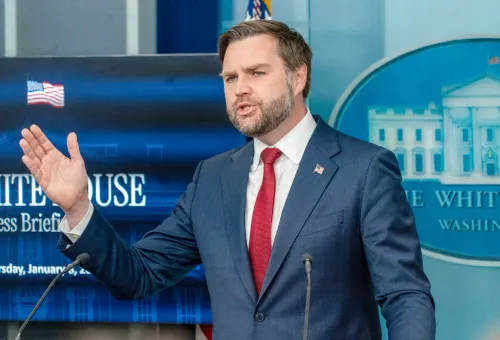
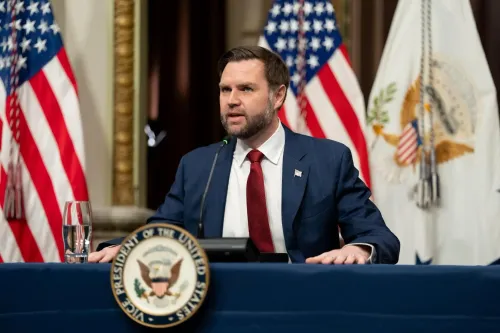
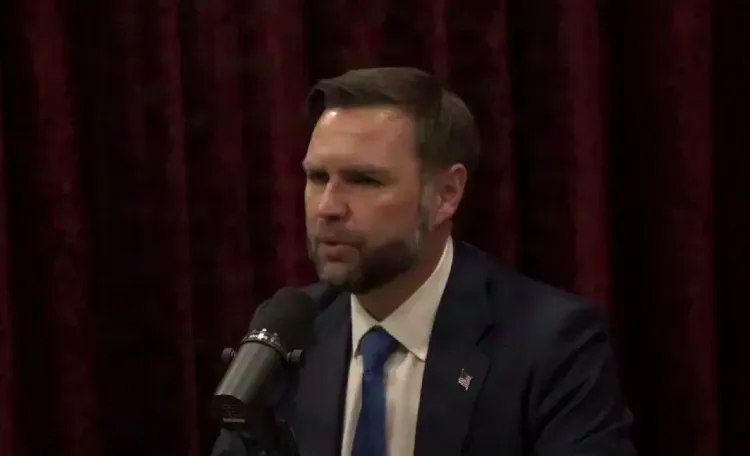
US Vice President J.D. Vance on 16 July defended the Trump administration's negotiations with Iran, arguing that a sustained bombing campaign would neither secure the Strait of Hormuz nor deliver lasting stability in the Middle East. Speaking on The Joe Rogan Experience, Vance outlined a multi-pronged strategy combining military pressure, economic leverage, and active diplomacy to prevent Tehran from acquiring a nuclear weapon.
Vance's Case for Talks
Vance was unambiguous about the limits of military force. 'The military is one tool, but diplomacy is another tool,' he said. 'So you've gotta actually be willing to talk and to try to figure out the problem.' He acknowledged having been initially less enthusiastic about the US military campaign against Iran but said his role as Vice President was to advise President Donald Trump and then implement the President's decision.
'My approach to this is not to Monday morning quarterback a decision that was made three months ago,' Vance said. 'My approach to it is to try to make it as successful as possible.'
The Hormuz Framework and Its Limits
Vance said a memorandum of understanding reached with Iran was designed to reopen the Strait of Hormuz, end attacks on shipping, and establish a framework for negotiations over Tehran's nuclear programme. The initial agreement, he noted, did succeed in restoring oil traffic through the critical waterway. However, Iranian hardliners subsequently feared that Tehran had surrendered its primary source of leverage and resumed attacks on vessels, complicating the diplomatic track.
'What we're doing is a delicate diplomatic dance where we're using economic leverage points,' Vance said. 'We're using carrots and sticks. We're trying to talk to the pragmatists. And then of course, when they commit acts of violence, we're responding to it.'
Nuclear Facilities and Energy Flows
Vance said Iran's nuclear facilities remained destroyed and that sufficient oil and gas was moving through the Strait of Hormuz to avert a global energy crisis. Longer-term negotiations over Tehran's nuclear question, he added, were still ongoing. This comes amid sustained international concern over Iran's nuclear ambitions and the strategic importance of Hormuz — through which roughly 20% of global oil supply transits.
Sharp Rebuke of Foreign Policy Hawks
Vance directed pointed criticism at US foreign policy hawks who oppose diplomatic engagement with Tehran and advocate continued military strikes. 'I think that their proposal is to bomb and bomb and bomb,' he said. 'And the honest view, Joe, is that they do not actually have a solution.' He explicitly ruled out deploying US ground forces to topple Iran's government, warning against repeating what he described as the consequences of intervention in Libya.
'We're not gonna send 150,000 ground troops in, in order to accomplish a change in a regime,' Vance said. 'We're not in that business anymore.'
What Comes Next
The administration's dual-track approach — maintaining military readiness while pursuing negotiated outcomes — faces pressure from both domestic hawks and Iranian hardliners who have already disrupted the first phase of the Hormuz agreement. Whether the pragmatist faction in Tehran retains enough influence to sustain talks remains the central uncertainty going forward.
Point of View
But Hormuz remains contested and a durable settlement is nowhere in sight. The Libya warning is telling: it signals the administration has internalised the lesson that military decapitation without a political plan produces chaos. The harder question is whether Tehran's pragmatists can survive domestic pressure long enough to deliver a nuclear framework — and whether Washington's hawks will let them try.
NationPress
15 Oct 2026
Frequently Asked Questions
What did J.D. Vance say about bombing Iran?
Vance said that advocates of continued military strikes against Iran 'do not actually have a solution,' warning that an open-ended bombing campaign would not secure the Strait of Hormuz or produce lasting regional stability. He made the remarks during an interview on The Joe Rogan Experience on 16 July.
What is the US memorandum of understanding with Iran about?
According to Vance, the memorandum of understanding was designed to reopen the Strait of Hormuz, halt attacks on shipping, and create a framework for negotiations over Iran's nuclear programme. The initial agreement helped restore oil traffic through the strait, but Iranian hardliners later resumed ship attacks.
Has Vance ruled out US ground troops in Iran?
Yes. Vance explicitly ruled out deploying US ground forces to overthrow Iran's government, warning against repeating the consequences of intervention in Libya. 'We're not gonna send 150,000 ground troops in, in order to accomplish a change in a regime,' he said.
What is the status of Iran's nuclear facilities?
Vance said Iran's nuclear facilities remained destroyed as of his 16 July interview. He added that negotiations over the longer-term nuclear question were continuing, and that enough oil and gas was moving through the Strait of Hormuz to prevent a global energy crisis.
Why did the Hormuz agreement partially break down?
According to Vance, Iranian hardliners feared that Tehran had surrendered its main source of leverage under the memorandum of understanding and subsequently resumed attacks on ships passing through the Strait of Hormuz, complicating the diplomatic framework.