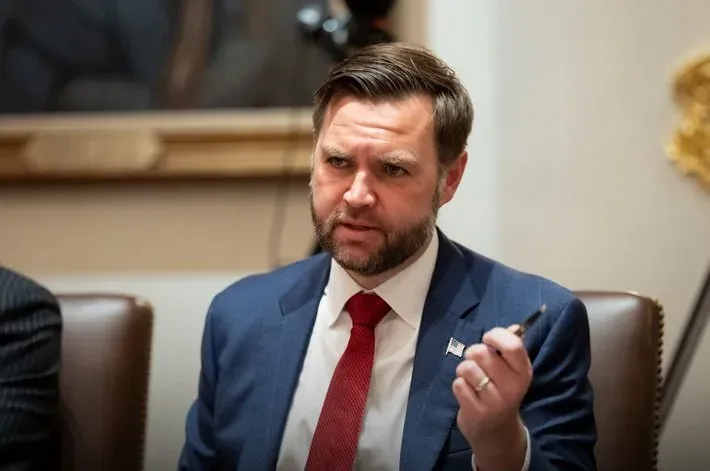
JD Vance leads Iran nuclear talks as bipartisan criticism mounts
Synopsis
JD Vance has been handed the most consequential diplomatic assignment of his career — leading US-Iran nuclear talks in Switzerland while absorbing fire from both Republicans and Democrats. With Trump publicly joking he will 'blame JD' if it fails, the 60-day window is as much a test of Vance's political durability as it is of American diplomacy.
Key Takeaways
Vice President JD Vance is leading US-Iran nuclear negotiations in Switzerland , serving as the Trump administration's chief public messenger on the talks.
President Trump announced a memorandum of understanding with Iran last week, triggering a 60-day formal negotiating period.
Democratic Senator Cory Booker called the deal 'an abject surrender,' while Republican Senators Ted Cruz, John Cornyn, Tom Cotton , and Bill Cassidy raised concerns about Iran rebuilding military capabilities.
UN Ambassador Mike Waltz defended the talks as unprecedented in securing direct engagement with senior Iranian officials.
Former Defence Secretary Mark Esper urged caution but said the process deserved a chance to play out.
The outcome is seen as a defining moment for Vance 's national security credentials and broader political ambitions.
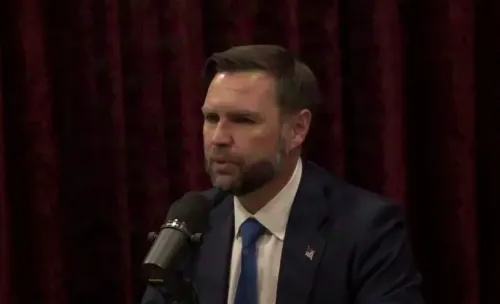
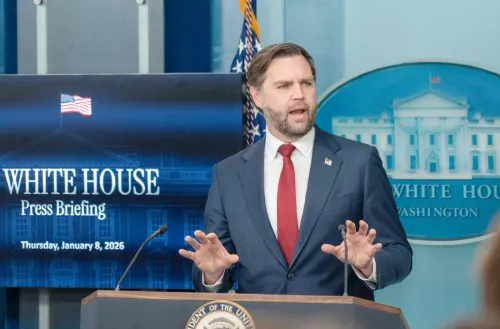
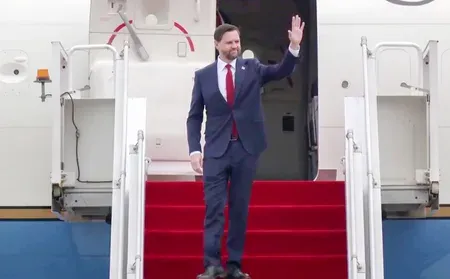
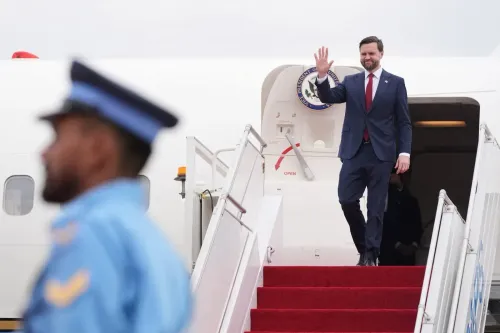
US Vice President JD Vance has stepped forward as the public face of President Donald Trump's high-stakes diplomatic push with Iran, assuming lead responsibility for negotiations that could fundamentally alter the geopolitical landscape of the Middle East. As technical discussions on Iran's nuclear programme got underway in Switzerland on 22 June, Vance found himself at the centre of an effort the Trump administration has framed as a historic opening with Tehran after nearly four months of conflict.
Vance's Expanding Role
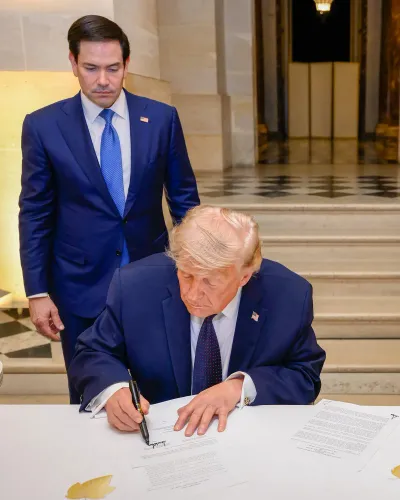
The vice president's prominence in the talks grew markedly after Trump announced a memorandum of understanding with Iran last week. With senior figures including Secretary of State Marco Rubio largely absent from public view, Vance has become the administration's chief messenger and lead negotiator on the file.
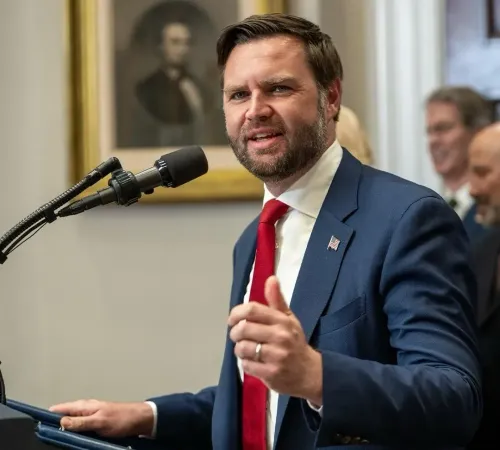
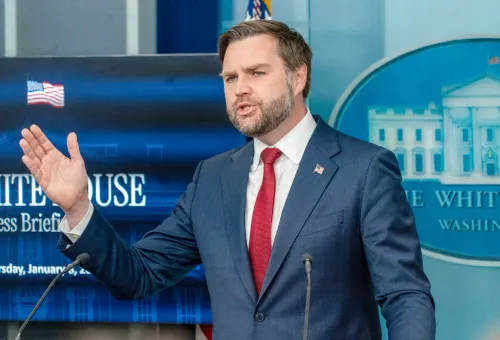
'What the president has asked us to do is turn over a new leaf to transform our relationship with the people of Iran and to extend an outstretched hand,' Vance said ahead of the talks. He indicated that the United States was prepared to 'fundamentally transform our relationship' with Iran provided its leadership abandoned regional destabilisation and nuclear weapons ambitions.
Trump himself underscored Vance's centrality — and the political exposure that comes with it. Speaking before the talks commenced, the president quipped: 'If it works out, I'm going to take the credit, if it doesn't work out, I'm blaming JD. You better be careful JD.'
Bipartisan Criticism of the Deal
The negotiations are unfolding against a backdrop of mounting scepticism across party lines in Washington. Democratic Senator Cory Booker described the agreement as 'an abject surrender,' saying 'Iran gets all of the benefits, literally billions and billions of dollars,' and calling it 'a cataclysmic failure.'
Republican dissent has also surfaced. Senators Ted Cruz, John Cornyn, Tom Cotton, and Bill Cassidy have reportedly expressed concern that Iran could leverage new economic resources to rebuild its military capabilities and reinforce regional proxies — a criticism that cuts directly at the deal's strategic rationale.
This is not the first time a US administration has faced hawkish pushback over Iran engagement. The 2015 Joint Comprehensive Plan of Action (JCPOA) under President Obama drew similar fire, and its eventual collapse under Trump's first term set the stage for the current confrontation.
Administration Defends the Process
US Ambassador to the United Nations Mike Waltz pushed back against critics, arguing the talks marked 'a step forward that no other administration has ever been able to do' by securing direct engagement with senior Iranian officials. 'We need to give this process a chance. We need to give peace a chance,' Waltz said.
Former Defence Secretary Mark Esper, while voicing reservations about certain elements of the memorandum, stopped short of outright opposition. 'I think as the Vice President said, let's give it a shot and see if it works,' Esper said, suggesting a degree of cautious openness even among sceptics.
What's at Stake for Vance
The political calculus for Vance is considerable. As one of Trump's most visible lieutenants and a leading figure within the Republican Party, he now bears responsibility for defending a deal that remains deeply contentious among foreign-policy hawks and segments of the Republican base.
The outcome of the 60-day negotiating window carries consequences well beyond Iran. A successful agreement would significantly bolster Vance's national security credentials ahead of what many observers expect will be an eventual presidential run. Failure, by contrast, would expose him to sustained criticism from both sides of the aisle, making these talks arguably the most consequential diplomatic assignment of his political career to date.
Point of View
While Republican hawks worry about proxy empowerment. Both critiques echo objections to the 2015 JCPOA, suggesting the administration has not yet articulated a structural answer to the core hawk concern — verification and enforcement. If the 60-day window produces a framework with credible inspection mechanisms, Vance emerges as a serious foreign-policy figure. If it collapses, he absorbs the downside while Trump claims distance. That asymmetry is worth watching.
NationPress
20 Sept 2026
Frequently Asked Questions
Why is JD Vance leading the Iran nuclear talks?
Vice President JD Vance has taken on the lead public role in US-Iran nuclear negotiations after President Trump announced a memorandum of understanding with Iran. With Secretary of State Marco Rubio largely out of public view, Vance has become the administration's chief negotiator and messenger on the file.
Where are the Iran nuclear talks taking place?
Technical talks on Iran's nuclear programme are being held in Switzerland. The negotiations follow a memorandum of understanding announced by the Trump administration and are set within a 60-day negotiating window.
What is the bipartisan criticism of the Iran deal?
Democratic Senator Cory Booker called it 'an abject surrender,' arguing Iran receives 'billions and billions of dollars' in benefits. Republican Senators Ted Cruz, John Cornyn, Tom Cotton, and Bill Cassidy have reportedly raised concerns that Iran could use new economic resources to rebuild its military and support regional proxies.
What did Mike Waltz say in defence of the talks?
US Ambassador to the United Nations Mike Waltz said the negotiations marked 'a step forward that no other administration has ever been able to do' because they involved direct engagement with senior Iranian officials. He called on critics to give the process a chance.
What are the political stakes for JD Vance?
A successful outcome would strengthen Vance's national security credentials and elevate his standing as a potential future presidential contender. Failure would expose him to sustained criticism from both supporters and opponents of the administration's Iran approach, making it one of the most high-stakes assignments of his political career.